Category Archives: Uncategorized

USA – 41 with E. coli Likely Linked to Chipotle in Washington and Oregon

E.coli Blog

Public health officials in Washington, Oregon, and Minnesota are investigating an outbreak of Shiga toxin-producing Escherichia coli O26 (STEC O26) infections. CDC and the U.S. Food and Drug Administration are assisting with the investigation. As of November 6, 2015:

  • 41 ill people have been reported from Washington (28) and Oregon (13).
  • 14 people have been hospitalized in Washington (10) and Oregon (4).
  • There have been no reports of hemolytic uremic syndrome (HUS) and no deaths.

Laboratory testing is ongoing to determine the DNA fingerprint of the STEC O26 bacteria making people sick. These DNA fingerprints are uploaded to the CDC PulseNet database as they become available.

16 isolates from ill people in Washington (13) and Oregon (3) have been uploaded to the CDC PulseNet database. All 16 people were infected with STEC O26 that has the same DNA fingerprint. Laboratory testing is continuing.

Ireland – Recall of a Batch of Caterway Ground Almonds due to Salmonella Contamination

FSAI

Summary
Category 2: For Information
Alert Notification: 2015.26
Product: Caterway Ground Almonds
Batch Code: best before date: 03/2016
Country Of Origin: United States

Message:

Caterway is recalling the above batch of ground almonds due to the detection of Salmonella in a pack. This may make the batch unsafe for consumers.

USA – FDA Recalls – Italian Pine Nuts Because of Possible Salmonella – Ground Flax Seed Meal Because of Possible Salmonella

FDA

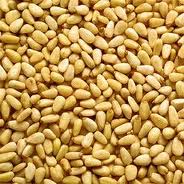
World Variety Produce, Inc. of Los Angeles, CA is voluntarily recalling Italian Pine Nuts 2oz and 3oz, because it has the potential to be contaminated with Salmonella, an organism which can cause serious and sometimes fatal infections in young children, frail or elderly people, and others with weakened immune systems. Healthy persons infected with Salmonella often experience fever,diarrhea (which may be bloody), nausea, vomiting and abdominal pain. In rare circumstances, infection with Salmonella can result in the organism getting into the bloodstream and producing more severe illnesses such as arterial infections (i.e., infected aneurysms), endocarditis and arthritis.

Italian Pine Nuts were distributed through retailers in Arizona, Arkansas, California, Florida, Georgia, Illinois, Kansas, Kentucky, Maryland, Massachusetts, Michigan, Minnesota, Missouri, Nevada, New Jersey, New York, North Carolina, North Dakota, Ohio, Oklahoma, Oregon, Pennsylvania, Tennessee, Texas, Virginia, and Washington.

No illnesses have been reported to date.

FDA

Zenobia Company LLC. of Yonkers, NY is recalling Ground Flax Seed Meal, because they have the potential to be contaminated with Salmonella, an organism which can cause serious and sometimes fatal infections in young children, frail or elderly people, and others with weakened immune systems. Healthy persons infected with Salmonella often experience fever, diarrhea (which may be bloody), nausea, vomiting and abdominal pain. In rare circumstances, infection with Salmonella can result in the organism getting into the bloodstream and producing more severe illnesses such as arterial infections (i.e., infected aneurysms), endocarditis and arthritis.

Product was distributed nationwide through online mail order between dates of 6/15/15 – 11/4/15.

This product is labeled Ground Flax Seed Meal packaged in resealable plastic bags of the following sizes: 4 oz. and 16 oz. or 50 pounds bulk. UPC #’s 00575004, 00575016, 00575111

No illnesses have been reported to date.

USA – Recall – Pine Nuts for Salmonella Risk

Food Safety News pine nuts

Wegmans Food Markets Inc. of Gates, NY, has announced recalls of Wegmans Italian Classics Pine Nuts and Kozy Shack Indulgent Recipe Salted Caramel pudding cups because of Salmonella concerns and an unlisted allergen, respectively.

The recalled pine nuts, sold in 3-ounce containers, contain the UPC 77890-24823. Only packages with best-by dates of April 10 and April 17, 2016, are affected, Wegmans stated.

Research – Growth of Staphylococcus aureus in Cooked Potato and Potato Salad—A One-Step Kinetic Analysis

Wiley Online Library

Staphylococcus aureus is a Gram-positive spherically-shaped bacterium capable of producing heat-stable enterotoxins that cause acute gastrointestinal diseases. The growth of this pathogen in food is a major threat to public health worldwide. Potato salad is a frequent vehicle for infection and food poisoning caused by S. aureus. Therefore, the objective of this study was to investigate the growth kinetics of S. aureus in cooked potato and potato salad.

Samples of potato cubes and potato salad inoculated with S. aureus were incubated at temperatures between 8 and 43 °C to observe its growth for developing growth models. No growth was observed at 8 °C. The experimental results showed that the growth curves did not exhibit lag phases, and can be described by a 3-parameter logistic model.

A one-step kinetic analysis approach was used to simultaneously analyze all growth curves by direct construction of both the primary and secondary (Ratkowsky square root) models using nonlinear regression to minimize the global residual error. The estimated nominal minimum growth temperature of S. aureus was 6.12 °C in potato cubes and 8.80 °C in potato salad. The estimated maximum growth temperatures of S. aureus in potato cubes and potato salad were very close to each other (46.3 and 46.8 °C, respectively). On the average, the specific growth rates of S. aureus in potato cubes were approximately 70% higher than those in potato salad.

This study suggests that cooked potato and potato salad should be stored below 6 °C or above 47 °C to prevent the growth of S. aureus. The mathematical models and kinetic parameters can be used to accurately evaluate the effect of temperature abuse on the growth of S. aureus and conduct risk assessments of S. aureus in cooked potato and potato salad.

Research – Foodborne Pathogens Prevention and Sensory Attributes Enhancement in Processed Cheese via Flavoring with Plant Extracts

Wiley Online Library

Cheese contaminations with foodborne bacterial pathogens, and their health outbreaks, are serious worldwide problems that could happen from diverse sources during cheese production or storage. Plants, and their derivatives, were always regarded as the potential natural and safe antimicrobial alternatives for food preservation and improvement. The extracts from many plants, which are commonly used as spices and flavoring agents, were evaluated as antibacterial agents against serious foodborne pathogens, for example Listeria monocytogenes, Salmonella Typhimurium, Staphylococcus aureus, and Escherichia coli O157:H7, using qualitative and quantitative assaying methods. Dairy-based media were also used for evaluating the practical application of plant extracts as antimicrobial agents. Most of the examined plant extracts exhibited remarkable antibacterial activity; the extracts of cinnamon, cloves, garden cress, and lemon grass were the most powerful, either in synthetic or in dairy-based media. Flavoring processed cheese with plant extracts resulted in the enhancement of cheese sensory attributes, for example odor, taste, color, and overall quality, especially in flavored samples with cinnamon, lemon grass, and oregano. It can be concluded that plant extracts are strongly recommended, as powerful and safe antibacterial and flavoring agents, for the preservation and sensory enhancement of processed cheese.

RASFF Alert – Flatbread Dough – Moulds

Food Testing - Eurofins

RASFF-missing import declaration for frozen flatbread dough from Pakistan infested with moulds in the UK

RASFF Alert – Listeria monocytogenes – Basil Pesto Sauce

Food Testing - Eurofins

RASFF-Listeria monocytogenes (329 CFU/g) in basil pesto sauce from Italy in Germany

RASFF Alerts – Aflatoxin – Hazlenut – Dried Figs – Peanut – Pistchio – Groundnut

Food Testing - Eurofins

RASFF-aflatoxins (B1 = 13.9; Tot. = 48 µg/kg – ppb) in hazelnut kernels from Turkey in the UK

RASFF-aflatoxins (B1 = 13.6; Tot. = 15 µg/kg – ppb) in dried figs from Turkey in Spain

RASFF-aflatoxins (B1 = 49.1 µg/kg – ppb) in peanut halva from Ukraine in Lithuania

RASFF-aflatoxins (B1 = 54.3 / B1 = 70.1 µg/kg – ppb) in dried figs from Turkey in Italy

RASFF-aflatoxins (B1 = 16 Tot. = 20 µg/kg – ppb) in dried figs from Turkey in France

RASFF-aflatoxins (B1 = 20; Tot. = 22 µg/kg – ppb) in pistachio paste from Italy in Slovenia

RASFF-aflatoxins (B1 = 9.4; Tot. = 10.4 µg/kg – ppb) in dried figs from Turkey in France

RASFF-aflatoxins (B1 = 2.8; Tot. = 3 / B1 = 23.6; Tot. = 24.5 µg/kg – ppb) in pistachio kernels from Turkey  in Greece

RASFF-aflatoxins (B1 = 3.14 / B1 = 2.56 µg/kg – ppb) in groundnut kernels from Brazil in Poland

RASFF-aflatoxins (B1 = 6.8 / B1 = 6.7 µg/kg – ppb) in blanched groundnuts from Brazil in the Netherlands

RASFF-aflatoxins (B1 = 25.4; Tot. = 60.6 µg/kg – ppb) in dried figs from Turkey in Germany

RASFF Alert – Animal Feed – Salmonella – Wheat

RASFF-Logo

RASFF – Salmonella Indiana (presence /25g) in wheat from the Czech Republic in Germany