Category Archives: Uncategorized

RASFF Alerts – Animal Feed – Aflatoxin – Bird Feed

RASFF-Logo

RASFF-aflatoxins (B1 = 60.3 µg/kg – ppb) in peanuts for bird feeding from Brazil in the UK

UK Research -A large Great Britain-wide outbreak of STEC O157 phage type 8 linked to handling of raw leeks and potatoes

Cambridge Journals Ecoli Istock

Between December 2010 and July 2011, 252 cases of STEC O157 PT8 stx1 + 2 infection were reported in England, Scotland and Wales. This was the largest outbreak of STEC reported in England and the second largest in the UK to date. Eighty cases were hospitalized, with two cases of haemolytic uraemic syndrome and one death reported. Routine investigative data were used to generate a hypothesis but the subsequent case-control study was inconclusive. A second, more detailed, hypothesis generation exercise identified consumption or handling of vegetables as a potential mode of transmission. A second case-control study demonstrated that cases were more likely than controls to live in households whose members handled or prepared leeks bought unwrapped [odds ratio (OR) 40, 95% confidence interval (CI) 2·08-769·4], and potatoes bought in sacks (OR 13·13, 95% CI 1·19-145·3). This appears to be the first outbreak of STEC O157 infection linked to the handling of leeks.

Research – State of Infectious Diseases in the Netherlands, 2014

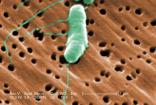
Barf Blog Vibrio_vulnificus_01a

State of Infectious Diseases in the Netherlands, 2014

The global Ebola epidemic was the most striking infectious disease this year. In the Netherlands, no Ebola patients were identified, but much time was spent on preventative measures. In addition, there was an outbreak of measles in the Netherlands, which began in 2013 and ended in the first months of 2014. In this, 2,700 patients were reported and €3.9 million was spent to control the epidemic. The largest cost items were the work of the relevant public health services and the hospitalisation of seriously ill patients.These facts are included in State of Infectious Diseases in the Netherlands, 2014, an annual report that provides insight into trends in infectious diseases in the Dutch population. In addition, each year, developments in the field of infectious diseases in foreign countries that are relevant to the Netherlands are described. This annual publication provides information to policy makers at the Ministry of Health, Welfare and Sport (VWS). This year’s theme is the cost of the treatment, prevention and control of infectious diseases.To provide relevant insight, these costs were calculated for the measles epidemic and the outbreak of Salmonella Thompson in smoked salmon in 2012. These two major events were selected because they caused illness across the country. The costs of the Salmonella Thompson outbreak, whose 1,149 cases were identified using laboratory diagnostics, amounted to €1.7 million. The largest cost items were the work of the Dutch Food Safety Authority (NVWA) in tracing the source of the contamination and the hospitalisation of seriously ill patients.The study also describes how the cost and health outcomes of different interventions can be compared. Cost-effectiveness studies can be used to determine the most effective use of health care budgets. In this report, the most common methods of measuring outcomes and cost-effectiveness are explained.

USA -Taylor Farms Pacific, Inc. Recalls Celery Products Because Of Possible Health Risk – E.coli O157

FDA

Taylor Farms Pacific, Inc. of Tracy, CA, is recalling the products listed below because they may include celery which could potentially contain E. coli 0157:H7. The products listed below are being recalled out of an abundance of caution due to a Celery and Onion Diced Blend testing positive for E. coli 0157:H7 in a sample taken by the Montana Department of Health. The Celery and Onion Diced Blend tested by the state of Montana was used in a Costco Rotisserie Chicken Salad that has been linked to a multi-state E. coli 0157:H7 outbreak.

Escherichia coli O157:H7 is a bacterium that causes a diarrheal illness often with bloody stools. Although most healthy adults can recover completely within a week, some people can develop a form of kidney failure called Hemolytic Uremic Syndrome (HUS). HUS is most likely to occur in young children and the elderly. The condition can lead to serious kidney damage and even death.


Canada -Inverloch Cheeses recalled due to Listeria monocytogenes

CFIA

The food recall warning issued on November 21, 2015 has been updated to include additional product information. This additional information was identified during the Canadian Food Inspection Agency’s (CFIA) food safety investigation.

Glen Echo Fine Foods is recalling Inverloch cheeses imported from Scotland from the marketplace due to possible Listeria monocytogenes contamination. Consumers should not consume and distributors, retailers and food service establishments should not sell or use the recalled products described below.

The recalled products may have been sold in smaller packages, cut and wrapped by some retailers. Consumers who are unsure if they have purchased the affected products are advised to contact their retailer.

USA -Pet Food – Recall One Lot of Cub Size Wilderness Wild Chews Bones Due to Potential Salmonella Health Risk

FDA

Blue Buffalo Company is voluntarily recalling one production lot of Cub Size Wilderness Wild Chews Bones. This is being done in an abundance of caution, as the product has the potential to be contaminated with Salmonella.

Salmonella can affect animals eating the product and there is risk to humans from handling contaminated pet products, especially if they have not thoroughly washed their hands after having contact with the products or any surfaces exposed to these products.


USA – E.coli O157 – Chicken Salad – Updates

CDPHE E__Coli_0157

DENVER – The Colorado Department of Public Health and Environment is working with other western states and the CDC to investigate illnesses due to E. coli O157:H7 from chicken salad purchased at Colorado Costco stores in late October.
Consumers with “Chicken Salad made with Rotisserie Chicken” – item number 37719 – purchased from Costco in Colorado should discard it.
Four cases of E. coli O157:H7 have been confirmed in Colorado, including two cases in Jefferson County and one each in Arapahoe and Routt counties. One person was hospitalized; all have recovered. The individuals purchased the product on Oct. 25 and 26 and became ill between Oct. 28 and Nov. 3.
The FDA, USDA-FSIS, and CDC are working with Costco to determine the source of contamination.
Other states with confirmed E. coli cases linked to the chicken salad include Utah, Montana and Washington.
“We are working with Costco,” said Alicia Cronquist, an epidemiologist at the Colorado Department of Public Health and Environment. “FDA reported to us the product has been removed from the shelves and no longer is for sale in Colorado.”
People who have eaten the product and feel ill should consult with their health care provider.
The Colorado Department of Public Health andEnvironment (CDPHE) is investigating an E. coli O157:H7 outbreak linked to chicken salad purchased at Costco stores in that state in late October. At least four people have been sickened with E. coli O157:H7 infections in Colorado. Other states with confirmed E. coli cases linked to Costco chicken salad are Utah, Montana, and Washington.
An E. coli outbreak linked to chicken salad sold Costco stores has sickened 19 people in seven states.  Five people have been hospitalized, two of them have hemolytic uremic syndrome (HUS), a life-threatening complication that causes kidney failure, seizure, stroke and coma.
CDC, the U.S. Food and Drug Administration, the U.S. Department of Agriculture Food Safety and Inspection Service, and public health officials in several states are investigating an outbreak of Shiga toxin-producing Escherichia coli O157:H7 (STEC O157:H7) infections.A total of 19 people infected with the outbreak strain of Shiga toxin-producing STEC O157:H7 have been reported from 7 states. The majority of illnesses have been reported from states in the western United States. The number of ill people reported from each state is as follows: California (1), Colorado (4), Missouri (1), Montana (6), Utah (5), Virginia (1), and Washington (1).

Research – http://www.foodmag.com.au/news/anti-salmonella-and-anti-listeria-food-packaging

Food Magazine

Erze Ambalaj, the largest producer of expanding foam packaging for food in Turkey, together with Parx Plastics has developed antimicrobial packaging that significantly reduces the growth of Salmonella, Listeria, E.Coli and Staphylococcus Aureus in food packaging.


USA-Chipotle STEC E.coli Spreads Again

Food Poisoning Journal

Forty-five people infected with the outbreak strain of STEC O26 have been reported from 6 states. The majority of illnesses have been reported from Washington and Oregon. The number of ill people reported from each state is as follows: California (2), Minnesota (2), New York (1), Ohio (1), Oregon (13), and Washington (26).

USA Research – What Foods Will Make You Sick

Fortune

An E. coli outbreak that sickened at least 42 people and shuttered Chipotle restaurants in Oregon and Washington was another recent reminder of the impact of food-related or foodborne illness. In the next year, studies suggest that nearly one in 30 Americans — 10 million people — will get sick from a foodborne pathogen, and one in 250,000 will die.

The U.S. economy will take a $15.5 billion dollar hit through lost income, lost revenue, healthcare-related costs and some intangibles, like “pain and suffering,” according to the U.S. Department of Agriculture.