Category Archives: Uncategorized

Image

Happy Christmas to You All

christmas_card_w_words

Australia – Mackay food poisoning stats ring alarm bells

Daily Mercury

FOOD poisoning is on the rise with an increase in food poisoning cases in the Mackay region in the past year.

Queensland Health has issued a warning to residents after alarming statistics have revealed only 1% of people know eggs should never be washed before cooking and only 21% of people know washing uncooked chicken is a health risk.

Health figures showed about 252 people have presented with food poisoning within the Mackay Hospital and Health Service district this year.

This is 45 more cases than the previous year, when 207 cases were recorded in the same period.

These figures were based on the number of cases of campylobacter – the most common cause of food poisoning in Australia.

Research – UV Light -Control of Food Pathogens

American Society of Microbiology

Using UVC Light-Emitting Diodes at Wavelengths of 266 to 279 Nanometers To Inactivate Foodborne Pathogens and Pasteurize Sliced Cheese

UVC light is a widely used sterilization technology. However, UV lamps have several limitations, including low activity at refrigeration temperatures, a long warm-up time, and risk of mercury exposure. UV-type lamps only emit light at 254 nm, so as an alternative, UV light-emitting diodes (UV-LEDs) which can produce the desired wavelengths have been developed. In this study, we validated the inactivation efficacy of UV-LEDs by wavelength and compared the results to those of conventional UV lamps. Selective media inoculated with Escherichia coli O157:H7, Salmonella enterica serovar Typhimurium, and Listeria monocytogenes were irradiated using UV-LEDs at 266, 270, 275, and 279 nm in the UVC spectrum at 0.1, 0.2, 0.5, and 0.7 mJ/cm2, respectively. The radiation intensity of the UV-LEDs was about 4 μW/cm2, and UV lamps were covered with polypropylene films to adjust the light intensity similar to those of UV-LEDs. In addition, we applied UV-LED to sliced cheese at doses of 1, 2, and 3 mJ/cm2. Our results showed that inactivation rates after UV-LED treatment were significantly different (P < 0.05) from those of UV lamps at a similar intensity. On microbiological media, UV-LED treatments at 266 and 270 nm showed significantly different (P < 0.05) inactivation effects than other wavelength modules. For sliced cheeses, 4- to 5-log reductions occurred after treatment at 3 mJ/cm2 for all three pathogens, with negligible generation of injured cells.

American Society of Microbiology

Fundamental Characteristics of Deep-UV Light-Emitting Diodes and Their Application To Control Foodborne Pathogens

Low-pressure mercury UV (LP-UV) lamps have long been used for bacterial inactivation, but due to certain disadvantages, such as the possibility of mercury leakage, deep-UV-C light-emitting diodes (DUV-LEDs) for disinfection have recently been of great interest as an alternative. Therefore, in this study, we examined the basic spectral properties of DUV-LEDs and the effects of UV-C irradiation for inactivating foodborne pathogens, including Escherichia coli O157:H7, Salmonella enterica serovar Typhimurium, and Listeria monocytogenes, on solid media, as well as in water. As the temperature increased, DUV-LED light intensity decreased slightly, whereas LP-UV lamps showed increasing intensity until they reached a peak at around 30°C. As the irradiation dosage and temperature increased, E. coli O157:H7 and S. Typhimurium experienced 5- to 6-log-unit reductions. L. monocytogenes was reduced by over 5 log units at a dose of 1.67 mJ/cm2. At 90% relative humidity (RH), only E. coli O157:H7 experienced inactivation significantly greater than at 30 and 60% RH. In a water treatment study involving a continuous system, 6.38-, 5.81-, and 3.47-log-unit reductions were achieved in E. coli O157:H7, S. Typhimurium, and L. monocytogenes, respectively, at 0.5 liter per minute (LPM) and 200 mW output power. The results of this study suggest that the use of DUV-LEDs may compensate for the drawbacks of using LP-UV lamps to inactivate foodborne pathogens.

USA -New strain of Norovirus in Minnesota

Food Safety News Norwalk_Caspid

Health officials say common intestinal illness often comes from eating contaminated food, can be avoided with vigilant handwashing and food handling

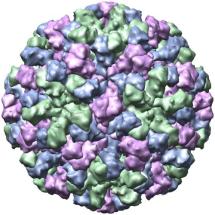
A new strain of norovirus, the most common cause of sudden intestinal illness, has shown up in Minnesota, and that could mean more norovirus illnesses this winter, state health officials warned today.

The new strain, called GII.17 Kawasaki, caused many outbreaks in Asia last winter before arriving in the U.S. MDH has investigated more than 20 outbreaks caused by norovirus since the beginning of September.


Philippines -Food poisoning: Girl dead, 26 sick after Negros Occidental party

Rappler

NEGROS OCCIDENTAL, Philippines – A 5-year-old girl was killed while 26 others, including 19 minors, were hospitalized due to alleged food poisoning in Calatrava town in this province.

Negros Occidental health officer Dr Ernell Tumimbang said that the victims ingested a coconut juice served at the Christmas party of a 2nd grade class in Dolis Elementary School on Wednesday, December 16.

Research -University of MN Identifies New Strain of Antibiotic Resistant Bacteria

Food Poisoning Bulletin

Dr. Tim Johnson of the University of Minnesota has identified a new strain of antibiotic resistant bacteria. This bacteria, known as Enterobacter cloacae, was reported in a hospital outbreak in Fargo, North Dakota. Whole genome sequencing revealed that 32 of the strains collected from patients in the Upper Midwest were clonal.


UK -UK chicken farming puts workers and food safety at risk

The Guardian imagesCAYZ5I84

Britain’s poultry sector is in the midst of its annual Christmas bonanza as consumers splash out on festive supplies. But as people rush to get their meat they may be unaware of a dark side to this industry. Previous investigations by the Guardian have uncovered a catalogue of alleged hygiene failings in the poultry industry. And now there are also concerns about working conditions.

To keep the production plants operating and the supermarkets stocked has meant some staff are having to work long hours and on low pay in sometimes appalling conditions on Britain’s farms, and in some abattoirs and processing factories.

Information – UK – PHE -Identification of Anaerobic Gram Negative Rods

Public Health England

The taxonomy of the anaerobic bacteria is in a state of continuous change due to the constant addition of new species and the reclassification of the old1. An example of this would be the genus Bacteroides. This genus previously included most of the saccharolytic pigmented species that are now included in the genus Prevotella and the asaccharolytic species which have been assigned to the genus Porphyromonas2,3.

There are more than 20 genera of anaerobic Gram negative rods. The most common human isolates belong to the genera Bacteroides, Fusobacterium, Porphyromonas and Prevotella. Other genera that have been associated with infections in humans are, Parabacteriodes, Odoribacter, Tannerella, Alloprevotella and Mitsuokella1.


Research-Study of resistance mechanism in Enterobacter spp. with special reference to antimicrobials ceftazidime, moxifloxacin and nalidixic acid

African Journal of Microbiology

Microbial resistance to antimicrobials is spreading all over the world making it difficult to treat diseases effectively. This study aims to understand the mechanism of resistance towards the antimicrobials Ceftazidime, Moxifloxacin and Nalidixic acid, by using resistant Enterobacter spp. and sensitive Enterobacter spp. While there was complete inhibition of growth of sensitive Enterobacter spp. at 8 µg/ml Ceftazidime, 0.125 µg/ml of  Moxifloxacin and 16 µg/ml of Nalidixic acid, resistant Enterobacter spp. even tolerated 256, 32 and 1536 µg/ml Ceftazidime, Moxifloxacin and Nalidixic acid respectively. Browthdilution method was used to determine the growth of organisms at different concentrations of antibacterial agents. Mechanism of resistance was found to be present in plasmid. Absence of Beta lactamase enzyme seems to be an important finding in this sudy. B. lactamase enzyme was checked with help of the acidometric and idometric method. Plasmid isolation and analysis was done by agarose gel electrophoresis. Successful curing of plasmid was carried out with 10% sodium dodecyl sulfate (SDS). When colonies after SDS treatment were tested, resistant strains were found which were later converted to sensitive ones. In this study, the resistant Enterobacter spp. executed resistance to three different classes of antimicrobials due to the resistance plasmid. The results obtained in this study support most of the previous study findings who contributed in this field. Therefore, it might be useful to recognize the resistance mechanism, and to determine the correct practicing of drug usage.


New Zealand -The Government Insists Poultry Food Safety System is Robust

Radio New Zealand News

The University of Otago professor wants to see a lower allowable limit for campylobacter contamination on poultry. He also wants data to be published showing which companies have the best and worst rates of contamination and better warning labels on packaging.

Prof Baker said that would lower the high rates of infection in New Zealand.

But a government spokesman claimed the current food safety system was robust, and did protect people from hazards like campylobacter.

Ministry for Primary Industries (MPI) deputy director-general Scott Gallagher said the ministry was not considering any further measures.