Category Archives: Uncategorized

Information -Glowing bacteria biopixels: The sensor displays of the future

ExtremeTech

Genetically engineering e. coli bacteria to do cool things is the latest craze in the science world. The latest, sci-fiesque case in point: Biologists and bioengineers at UC San Diego have created a living neon sign made of e. coli bacteria that will glow based on triggered reactions, completely in unison.

Bacteria communicate by a method known as quorum sensing, which means that they actually pass molecules between them to coordinate and trigger behavior. With knowledge of how to manipulate those triggers, the bacteria can be made to react in predictable ways. In this case, some genetic engineering caused that reaction to be a fluorescent glow by adding a particular protein to the bacteria’s biological clock. That in itself is an amazing accomplishment, but quorum sensing isn’t a large or fast enough process to work quickly on millions of bacteria together, so microfluidic chips (below right) were designed to harness the localized trigger and broadcast it to the plethora of shared colonies existing on the chip
Genetically engineering e. coli bacteria to do cool things is the latest craze in the science world. The latest, sci-fiesque case in point: Biologists and bioengineers at UC San Diego have created a living neon sign made of e. coli bacteria that will glow based on triggered reactions, completely in unison.

Bacteria communicate by a method known as quorum sensing, which means that they actually pass molecules between them to coordinate and trigger behavior. With knowledge of how to manipulate those triggers, the bacteria can be made to react in predictable ways. In this case, some genetic engineering caused that reaction to be a fluorescent glow by adding a particular protein to the bacteria’s biological clock. That in itself is an amazing accomplishment, but quorum sensing isn’t a large or fast enough process to work quickly on millions of bacteria together, so microfluidic chips (below right) were designed to harness the localized trigger and broadcast it to the plethora of shared colonies existing on the chip
Hong Kong -CHP Investigates Food Poisoning Outbreak – Norovirus?

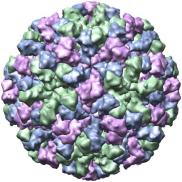
7th Space Interactive Norwalk_Caspid

Hong Kong (HKSAR) – The Centre for Health Protection (CHP) of the Department of Health is today (January 12) investigating a food poisoning outbreak and reminds the public to maintain personal, food and environmental hygiene to prevent food-borne diseases.

The outbreak has affected three women, all aged 27. They developed vomiting, abdominal pain, diarrhoea and fever about 24 to 40 hours after having dinner in a food premises in Quarry Bay in the evening of January 3. The trio then sought medical attention and no hospitalisation was required.

They have remained in stable condition.

The stool specimen of one of them tested positive for norovirus upon laboratory testing by the hospital. The CHP’s initial enquiries revealed that the trio had consumed raw oysters.

“The case has been referred to the Centre for Food Safety of the Food and Environmental Hygiene Department for follow-up,” a spokesman for the CHP said.

Information -USA -Why your food might not be as safe as you think

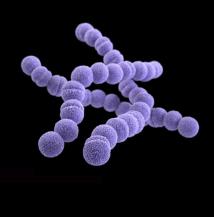
Gant News Strepa

Think the government is keeping a watchful eye on your food supply?

Officials say they are but critics contend an enormous amount of U.S. foods are being imported from other countries, raising all kinds of health and safety concerns.

Food imports have exploded in recent years, totalling $119 billion in 2014, according to the USDA. That’s nearly triple the value of imports from 15 years earlier.

The problem is that food safety regulations in other countries might not be as tight as those in the United States. And U.S. regulators are challenged to keep up with the massive number of producers and shipments.

Australia -Customers Push Coles, Aldi to Refrigerate Eggs Over Salmonella Risk

Yahoo7 News EGGS

Coles and Aldi have come under fire from social media users who are pushing for the supermarket giant to refrigerate their eggs to reduce the risk of salmonella.

Members of the public have taken to Twitter to question both supermarket chains about their storage procedures, highlighting the fact that Woolworths now keeps all of their eggs in refrigerated cabinets.

Information – New York City – Food Safety or Poisoning Complaint

New York City Website

You can make a complaint about food safety practices in service establishments, including unsanitary conditions, pets, and insect infestations. You can also report food poisoning from anything prepared by a commercial establishment, or from eating at parties, weddings, banquets, or other gatherings. Symptoms of food poisoning include vomiting, diarrhea, and abdominal cramps.

You can file a food safety complaint against:

  • Supermarkets
  • Farmers markets
  • Fish markets
  • Beverage stores
  • Bodegas
  • Warehouses
  • Delis
  • Bakeries
  • Cafeterias
  • Food carts (including Green Carts), stands, or trucks
  • Restaurants

If you are reporting food poisoning, you must indicate how many people became sick and the food that you think caused the illness. If possible, keep a sample of the food so it may be collected and tested.

The Department of Health will issue violations or warnings when appropriate.

Research – Bottle feeding E. coli to calves could prevent food poisoning

CBC News 19243

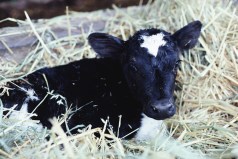
Scientists in Nova Scotia are trying to come up with a way to prevent cattle from hosting the toxic strain of E. coli that can make humans sick if they eat meat contaminated with the bacteria.

Food safety research scientist Martin Kalmokoff, who works at the Atlantic Food and Agriculture Research Centre in Kentville, said the research is trying to figure out why certain types of E. coli multiply in the guts of cows.

The idea is eventually farmers will be able to feed to young calves a harmless type of E. coli in liquid form, either through a bottle or syringe, that will prevent the more toxic strains from flourishing.

The hope is the mixture would out-compete the toxic E. coli O157 for space in the gut.


Information – USA -Spread of algal toxin through marine food web broke records in 2015

Science Daily

Researchers monitoring the unprecedented bloom of toxic algae along the west coast of North America in 2015 found record levels of the algal toxin domoic acid in samples from a wide range of marine organisms. The toxin was also detected for the first time in the muscle tissue or filet of several commercial fish species.

Investigations led by scientists at the University of California, Santa Cruz, help explain the extraordinary duration and intensity of the 2015 domoic acid event, the spread of the toxin through the marine food web, and its persistence in Dungeness crab months after the algal bloom disappeared from coastal waters. Ocean scientist Raphael Kudela, the Lynn Professor of Ocean Health at UC Santa Cruz, will present the latest research findings at the American Geophysical Union (AGU) Fall Meeting in San Francisco on Friday, December 18.

Domoic acid is a potent neurotoxin produced by a type of microscopic algae called Pseudo-nitzschia that occurs naturally in coastal waters. Blooms of the toxic algae along the California coast typically occur in the spring and fall and last just a few weeks. This year, however, unusual oceanographic conditions (unrelated to El Niño) led to the largest and longest-lasting bloom ever recorded.

UK – HPS -Shellfish official controls: high E. coli event along South and South West coasts of England

Health Protection Scotland Mussels

On 6 January, The Food Standards Agency (FSA) published four investigative reports commissioned following an event that occurred in July 2015 where exceptionally high levels of E.coli were recorded at shellfish beds along the South and South West coasts of England.

Due to the high magnitude of the results and the wide geographical spread of the affected beds, the FSA instigated a multi-agency investigation to try to determine a potential cause. A full evaluation of the investigation reports has been carried out by the FSA and other key regulatory partners to assess the findings. Although no conclusive cause for the event has been identified, a number of possible causes have been ruled out and recommendations from the reports are also being considered.

The FSA is holding a stakeholder event at the end of January 2016 to review findings from the reports with the shellfish industry and other agencies. [Source: FSA News Release, 6 January 2016 http://www.food.gov.uk/news-updates/news/2016/14781/shellfish-official-cont…]


Research -How blue and green clays kill bacteria

Science Daily Salm2

Since prehistoric times, clays have been used by people for medicinal purposes. Whether by eating it, soaking in a mud bath, or using it to stop bleeding from wounds, clay has long been part of keeping humans healthy. Certain clays have also been found with germ-killing abilities, but how these work has remained unclear.

A new discovery by Arizona State University scientists shows exactly how two specific metallic elements in the right kinds of clay can kill troublesome bacteria that infect humans and animals.

“We think of this mechanism like the Trojan horse attack in ancient Greece,” said Lynda Williams, a clay-mineral scientist at ASU’s School of Earth and Space Exploration (SESE). “Two elements in the clay work in tandem to kill bacteria.”

She explained, “One metallic element — chemically reduced iron, which in small amounts is required by a bacterial cell for nutrition — tricks the cell into opening its wall. Then another element — aluminum — props the cell wall open, allowing a flood of iron to enter the cell. This overabundance of iron then poisons the cell, killing it as the reduced iron becomes oxidized.”

“It’s like putting a nail in the coffin of the dead bacteria,” said Keith Morrison, Williams’ former doctoral student, who is now at Lawrence Livermore National Laboratory.

Canada – British Columbia – Hepatitis A Outbreak

Food Safety News Virusds

British Columbia health authorities are monitoring a Hepatitis A outbreak in Dawson Creek, B.C. and trying to identify the source of the viral infection. Northern Health’s chief medical officer Dr. Sandra Allison said there have been five confirmed cases.

Allison said the health teams are trying to identify where the infected people have been and eaten in the past seven weeks after exposure, as the virus has a long incubation period – from three to 70 days.

Hepatitis A is an infection of the liver spread through fecal-oral contact. The virus is ingested by mouth from fecal-contaminated food or drink or through close personal contact with an infected person. Symptoms include fever, fatigue, and loss of appetite, nausea, vomiting, abdominal discomfort, dark urine, clay-colored bowel movements, joint pain and jaundice. They can last for several weeks but usually not beyond two months.