Category Archives: Uncategorized

Australia -Bakery shut down after at least 40 people suffer food poisoning in Sydney’s south – Salmonella?

9 News

A bakery in Sydney’s south has been closed down pending an investigation after up to 40 people fell ill with food poisoning over the past week, with 13 admitted to hospital for treatment.

The Box Village Bakery in Sylvania has been closed as the Food Authority investigates whether it could be the source of the outbreak.

There are reports that those who fell ill may have eaten chicken rolls or chicken schnitzel rolls from the bakery.

Dr Mark Ferson, public health director for south-east Sydney, told 2UE radio that as of yesterday there had been 40 people who attended Sutherland and St George hospitals with symptoms of food poisoning.

He said salmonella had been found in some of the patients.
Read more at http://www.9news.com.au/health/2016/01/26/08/45/up-to-100-people-reportedly-sick-with-food-poisoning-in-sydneys-south#QOdwTAvvhmskUvOg.99


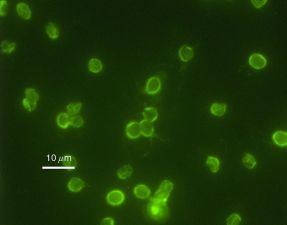
UK -Cryptosporidiosis in England, Wales and Scotland 2015

Health Protection Scotland 763px-Cryptosporidium_parvum_01

Cryptosporidiosis can vary quite substantially in annual occurrence and causation. Between 2005 and 2014 cases recorded annually ranged from 3099 to 6013 (mean 4147)* with many outbreaks linked to drinking water, swimming pools, person-to-person spread, animal contact, and food.

Cases in 2015 were much increased over most previous years (the exceptions being 2009 and 2012). In September 2015 there was an increase in cryptosporidiosis across England, Wales and Scotland that peaked in week 38 and was investigated using specialist testing and descriptive epidemiology, and a hypothesis-generating trawling questionnaire. Typing at the Cryptosporidium Reference Unit (CRU) and Scottish Parasite Diagnostic and Reference Laboratory (SPDRL) showed the predominant species to be Cryptosporidium hominis GP60 subtype IbA10G2 and infections were found in both children and adults. No common activity or exposure was identified in patients who were interviewed. While the increase coincided with a rise in cases linked to travel to Spain, there was no analytical evidence that this was the cause of the increase.

In November 2015 cryptosporidiosis cases again began to increase across England, Wales and Scotland, peaking in week 47, and cases were again investigated using descriptive epidemiology and specialist testing. The CRU and SPDRL identified that the outbreak was caused by Cryptosporidium parvum GP60 subtype IIdA24G1 and was predominantly in adults. A hypothesis-generating trawling questionnaire identified a number of potential risk factors and these are being used to conduct a case-control study across England, Wales and Scotland aimed at identifying the source, vehicle and route of transmission in this outbreak.

Cryptosporidium is a particular problem because of the resistance of its oocysts to chlorine. Outbreaks linked to drinking water, which were of regular occurrence in the 1990s, have declined since the turn of the century as a result of improvements in mains water treatment and are now uncommon in the UK. A large outbreak in May 2012 was traced to bagged salad (see Current note 47/1302 at http://www.hps.scot.nhs.uk/ewr/redirect.aspx?id=54463), suggesting that nationally distributed foods may be a less well recognised source of infection. Swimming pool outbreaks remain an important and regular occurrence, particularly in the second half of the year. Travel-related disease can also be important, but can be rather difficult to investigate. The C. parvum outbreak is over, but cases of C. hominis remain above what has been normally seen in previous years. [Source – Text adapted from Health Protection Report, 22 January 2016. https://www.gov.uk/government/publications/health-protection-report-volume-…]

*Figures quoted here are for England and Wales.


Research -Health Check: do we really have to pay attention to ‘use-by’ and ‘best-before’ dates?

The Conversation

Most foods degrade and decay over time due to reactions with oxygen, decomposition of the food’s structure or flavour compounds, or microorganisms (or “microbes”) causing the food to spoil. The result can be food that is rancid, smelly, slimy, has lost its colour or flavour, or is growing things like mould.

We apply our understanding of spoilage mechanisms to extend the shelf life of foods by slowing the rate of spoilage. We exclude oxygen by packaging, slow reaction rates by refrigerating, gently heat foods (blanching, pasteurisation) to stop enzymes and to kill microbes. Nonetheless, as consumers we want “fresher”, more natural foods but many fresh and lightly preserved foods will degrade quickly.

Food quality can deteriorate before we perceive obvious signs of spoilage. If allowed to grow to high levels, some microbes that may contaminate foods (collectively called “pathogens”) can cause foodborne illness, or “food poisoning”. Often these microbes don’t visibly spoil the food so we can’t tell if a food has become unsafe.


UK -Indefinite Ban for Owners of Plaistow Restaurant that Poisoned 32 People

Newham Recorder

A catering couple found guilty of giving 32 people food poisoning at a community event have been banned from running a food business indefinitely.


Research -Listeria monocytogenes in food: Control by monitoring the food processing environment

African Journal of Microbiology

Listeria monocytogenes is a foodborne pathogen that is widely dispersed in the environment; it is found in soil, water and plant material, and can grow at refrigeration temperature and at unfavourable conditions of pH (up to pH 4.7) and salt (up to 10%). It can persist in the harsh conditions of the food processing environment from which it can contaminate food. Listeriosis, infection with L. monocytogenes, can be mild but the ability of the pathogen to cross the epithelial barrier of the intestinal tract, the blood brain barrier and the feto-placental barrier can also result in more severe illness including bacteremia and meningitis or spontaneous miscarriage. Although relatively rare, infection with L. monocytogenes can have a mortality rate of up to 30%, resulting in a serious hazard, particularly for the high risk groups of the elderly and immunocompromised individuals. As consumer demand for less processed, less preserved, longer shelf-life ready-to-eat food increases, the threat of L. monocytogenes to public health and the food industry continues to rise. In addition to being a public health threat, L. monocytogenes is a major economic burden on industry in terms of costs of analysis and potential product recalls. Awareness of its ubiquitous nature and understanding of its physiology and survival are important aspects of its control in the food processing environment with the aim of reducing the public health concern. Appropriate methodologies are required for its detection and isolation. Characterisation of strains by pulsed field gel electrophoresis (PFGE) and other genotypic methods can facilitate identification of putative contamination routes. Whole genome sequencing (WGS) of outbreak strains is becoming a part of outbreak investigation. Such WGS will lead to a greater understanding of the physiology of the organism as well as contribute to understanding epidemiology and pathogenicity. However, despite the advances, the best mechanism of public health protection is still prevention. Awareness of its presence, and control by conventional hygiene methods or by novel biocontrol methods such as bacteriocins and bacteriophage will help prevent cross-contamination of food from the environment and therefore reduce the public health burden.

USA -Ceese company pleads guilty in listeria outbreak

Delaware Online

A specialty cheese manufacturer in Kenton, Delaware, has pleaded guilty to violating federal food and drugs laws during a 2014 outbreak of listeria infections from Hispanic-style cheese.

After a criminal and civil complaint was filed this week, Roos Foods Inc., has pleaded guilty to distribution of adulterated food in interstate commerce, a misdemeanor, U.S. Attorney Charles M. Oberly III said in a statement Friday.

The company and its principals, Ana A. Roos and Virginia Mejia, also have agreed to a permanent injunction, which requires them to stop processing and distributing food products unless they bring the operations into compliance with federal laws, he said. The company’s Kenton facility has been closed since 2014.

Information – What is Listeria?

Food Poisoning Journal Eurofins Food Testing UK

An Introduction to Listeria

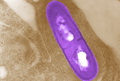
Listeria (pronounced liss-STEER-ē-uh) is a gram-positive rod-shaped bacterium that can grow under either anaerobic (without oxygen) or aerobic (with oxygen) conditions. [4, 18] Of the six species of Listeria, only L. monocytogenes (pronounced maw-NO-site-aw-JUH-neez) causes disease in humans. [18] These bacteria multiply best at 86-98.6 degrees F (30-37 degrees C), but also multiply better than all other bacteria at refrigerator temperatures, something that allows temperature to be used as a means of differentiating Listeria from other contaminating bacteria. [18]

Read the full article at the link above

Canada -Certain Dole brand pre-packaged chopped salads, salad blends and kits and leafy greens and certain PC Organics brand leafy greens recalled due to Listeria monocytogenes

CFIA

Ottawa, January 22, 2016 – Dole Fresh Vegetables Inc., is recalling various pre-packaged chopped salads, salad blends and kits, and leafy green products from the marketplace due to possible Listeria monocytogenes contamination. Consumers should not consume and distributors, retailers and food service establishments such as hotels, restaurants, cafeterias, hospitals and nursing homes should not sell or use the recalled products described below.

This recall applies to all products manufactured from the Dole facility located in Springfield, OH. Affected product can be identified with a product code beginning with the letter “A” in the upper right-hand corner of the package.

The products listed below may have been repackaged or transformed into various in-store produced products, such as in-store made salads. Consumers who are unsure if they have purchased the affected products are advised to contact the retailer.

Recalled products

Brand Name Common Name Size Code(s) on Product UPC
Dole Classic Iceberg Salad 340 g All codes that begin with “A” 0 71430 01063
Dole Classic Iceberg Salad 1361 g All codes that begin with “A” 0 71430 00810
Dole Classic Romaine 255 g All codes that begin with “A” 0 71430 01069
Dole Greener Selection 340 g All codes that begin with “A” 0 71430 00965
Dole Colorful Cole Slaw 397 g All codes that begin with “A” 0 71430 01715
Dole Colorful Cole Slaw 1361 g All codes that begin with “A” 0 71430 00320
Dole American Blend 340 g All codes that begin with “A” 0 71430 00933
Dole Chopped Romaine 454 g All codes that begin with “A” 0 71430 01082
Dole Chopped Romaine 907 g All codes that begin with “A” 0 71430 00951
Dole Field Greens 198 g All codes that begin with “A” 0 71430 00961
Dole Hearts of Romaine 255 g All codes that begin with “A” 0 71430 00956
Dole Italian Blend 255 g All codes that begin with “A” 0 71430 00819
Dole Mediterranean Blend 227 g All codes that begin with “A” 0 71430 00959
Dole Spring Mix 1361 g All codes that begin with “A” 0 71430 01030
Dole Very Veggie 340 g All codes that begin with “A” 0 71430 01005
Dole Baby Spinach 312 g All codes that begin with “A” 0 71430 01071
Dole Baby Spinach 283 g All codes that begin with “A” 0 71430 00020
Dole Spring Mix 312 g All codes that begin with “A” 0 71430 01068
Dole Spring Mix 283 g All codes that begin with “A” 0 71430 00019
Dole Baby Arugula with Spinach 142 g All codes that begin with “A” 0 71430 06067
Dole Baby Romaine 142 g All codes that begin with “A” 0 71430 06068
Dole Baby Spinach with Tender Reds 142 g All codes that begin with “A” 0 71430 06069
Dole Sassy Baby Blend 142 g All codes that begin with “A” 0 71430 06071
Dole Spring Mix 142 g All codes that begin with “A” 0 71430 01077
Dole Sweet Baby Lettuces 142 g All codes that begin with “A” 0 71430 01079
Dole Baby Spinach 142 g All codes that begin with “A” 0 71430 01080
Dole Arugula 142 g All codes that begin with “A” 0 71430 01081
Dole 50/50 Blend 283 g All codes that begin with “A” 0 71430 01099
Dole 50/50 Blend 142 g All codes that begin with “A” 0 71430 01093
Dole Salade Kit Caesar 216 g All codes that begin with “A” 0 71430 01026
Dole Salade Kit Light Caesar 218 g All codes that begin with “A” 0 71430 01028
Dole Salade Kit Ultimate Caesar 252 g All codes that begin with “A” 0 71430 01716
Dole Salade Kit Asian Island Crunch 305 g All codes that begin with “A” 0 71430 01721
Dole Salade Kit Southwest Salad 298 g All codes that begin with “A” 0 71430 01711
Dole Salade Kit Ultimate Caesar 252 g All codes that begin with “A” 0 71430 01718
Dole Salade Kit Spinach Cherry Almond Bleu 181 g All codes that begin with “A” 0 71430 01727
Dole Salade Kit Endless Summer 179 g All codes that begin with “A” 0 71430 01725
Dole Salade Kit Kale Caesar 191 g All codes that begin with “A” 0 71430 01728
Dole Salade Kit Sweet Kale 198 g All codes that begin with “A” 0 71430 01726
Dole Ready-to-Eat Spring Mix & Fruit 82 g All codes that begin with “A” 0 71430 00111
Dole Ready-to-Eat Four Cheese Caesar 153 g All codes that begin with “A” 0 71430 00109
Dole Ready-to-Eat Italienne Herb 156 g All codes that begin with “A” 0 71430 00110
Dole Chop Chop Salade Kit BBQ Ranch 301 g All codes that begin with “A” 0 71430 00039
Dole Chop Chop Salade Kit Italienne 286 g All codes that begin with “A” 0 71430 00038
Dole Chop Chop Salade Kit Chipotle & Cheddar 295 g All codes that begin with “A” 0 71430 00037
Dole Chop Chop Salade Kit Sesame Ginger 301 g All codes that begin with “A” 0 71430 01729
Dole Chop Chop Salade Kit Asian Blend 340 g All codes that begin with “A” 0 71430 00040
Dole Chop Chop Salade Kit Confetti Blend 340 g All codes that begin with “A” 0 71430 00041
PC Organics Baby Spinach 312 g All codes that begin with “A” 0 60383 82943
PC Organics Field Greens Salad Mix 312 g All codes that begin with “A” 0 60383 82942
PC Organics Field Greens & Herbs Salad Mix 142 g All codes that begin with “A” 0 60383 85451
PC Organics Field Greens 142 g All codes that begin with “A” 0 60383 99155
PC Organics Baby Spinach 142 g All codes that begin with “A” 0 60383 99157
PC Organics Baby Arugula 142 g All codes that begin with “A” 0 60383 99154
PC Organics Baby Romaine 142 g All codes that begin with “A” 0 60383 99156
PC Organics Baby Kale 142 g All codes that begin with “A” 0 60383 04452
PC Organics Super Greens 142 g All codes that begin with “A” 0 60383 04753

What you should do

Check to see if you have recalled products in your home. Recalled products should be thrown out or returned to the store where they were purchased.


USA – FDA Recall -Dole Fresh Vegetables Announces Voluntary Withdrawal for Salads – Listeria monocytogenes

FDA

Dole Fresh Vegetables, Inc., is temporarily suspending operations at its Springfield, Ohio production facility, and is voluntarily withdrawing from the market all Dole-branded and private label packaged salads processed at that location (see the product list at http://www.cdc.gov/listeria/outbreaks/) Products subject to the voluntary withdrawal are identified with a product code beginning with the letter “A” in the upper right-hand corner of the package (see example below), and are sold in the following states and Canadian provinces noted below. This suspension and withdrawal is being performed voluntarily by Dole out of an abundance of caution, in collaboration with the Food and Drug Administration and Centers for Disease Control. See more about this withdrawal at www.cdc.gov/listeria/outbreaks/

No additional Dole facilities are affected. Other Dole products, including fresh fruit, fresh vegetables and packaged salads from Dole’s other processing facilities (with product codes beginning with the letters “B” or “N”), are not part of this voluntary withdrawal.

Retailers and consumers who have any remaining product with an “A” code should not consume it, and are urged to discard it. Retailer and consumer questions about the voluntary withdrawal should be directed to the Dole Food Company Consumer Response Center at 800-356-3111) (hours are 8:00am-8:00pm Eastern Time, Monday through Friday). Media inquiries should be directed to Bil Goldfield at 818-874-4647.

Retailers which carry Dole products produced in its Springfield, OH plant (with the product code beginning with the letter “A” in the upper right-hand corner of the package) should check their store shelves and warehouse inventories to confirm that no withdrawn product is available for purchase by consumers. Dole Fresh Vegetables’ customer service representatives have been contacting retailers, and are in the process of confirming that the withdrawn product has been removed from the supply chain.

Dole Fresh Vegetables is coordinating closely with regulatory officials.


Australia -Recall – Ham – Listeria monocytogenes

FSANZ

Pastoral Ham & Beef P/L has recalled Easy Cut Shoulder Ham from Costco stores in NSW, ACT, QLD, VIC, SA due to microbial (Listeria Monocytogenes) contamination. Listeria may cause illness in pregnant women and their unborn babies, the elderly and people with low immune systems. Any consumers concerned about their health should seek medical advice. The product can be returned to the place of purchase for a full refund.

Date notified to FSANZ

25/01/2016