Category Archives: Uncategorized

Information: The Reality of Food Poisoning

Dayton Daily News

To Rich Hopkins, listeriosis is much more than dry statistics on hospitalizations and deaths attributed to the infection caused by listeria bacteria.

For him, it means the loss of his grandchild, a death that has devastated the Englewood man and his wife, Kristin, and their daughter Delaney Thompson and her husband, Blake.

Thompson, who lives in Athens and attends Ohio University, called her parents with terrible news last July.

“She said, ‘Mom, they can’t find the baby’s heartbeat,’ ” Hopkins recalled. “We were two hours away. There’s nothing you can do.”

Rich and Kristin immediately drove to the hospital in Athens, where their daughter delivered her stillborn son, Oliver. She was six months pregnant.

“It was just permeated with sadness,” said Hopkins, who is the communications manager for the city of Vandalia.

The family was told that the cause of death was listeriosis, a foodborne illness that sickens about 1,600 Americans a year, killing 260.
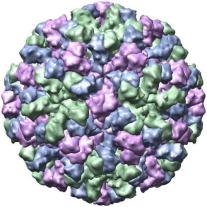
USA – Norovirus Oubreak Update – 400 Ill

41KSHB- Kansas Norwalk_Caspid

Department of Health and Environment’s ongoing investigation has uncovered more than 390 individuals – almost four times as many as initially identified – who have reported illness after attending the New Theatre Restaurant between Jan. 15 and the present.

In light of this information, the KDHE is asking all people who attended performances at New Theatre since Jan. 15, whether they have since become sick or not, to fill out a confidential online survey.

Government agencies are still investigating the source of the norovirus outbreak.

Information – How Does Listeria get onto Salads

Food Poisoning Bulletin

The answer lies in the food distribution system in this country. Because most of the food we buy is grown in far-off fields, then collected and processed at large plants and shipped around the country, contamination in one crop from one field can contaminate food that is sold in many different states. And problems at one plant can be spread throughout the country, as we have seen.

Noted food safety attorney Fred Pritzker said, “Listeria bacteria thrive in cool, moist processing environments. Listeria organisms can also survive cold temperatures. They are capable of forming protective colonies in drains, cracks and crevices which makes this organism particularly difficult to destroy.”

These processing plants use a lot of water to clean and preserve produce. And when water collects in drains and areas around the plant and doesn’t dry out, that’s the perfect environment for Listeria growth. Cleaning systems must be extremely thorough and all parts of the plant must be cleaned often, using tested methods and cleaners.

Research -Isolation and Characterization of Spore-Forming Bacilli (SFB) from Shepherd’s Purse (Capsella bursa-pastoris)

Wiley Online Library iStock_000008493122Small

Abstract

Shepherd’s purse (Capsella bursa-pastoris), native to Europe, is commonly consumed fresh and sometimes inadequately washed before consumption in Korea. The objective of this study was to characterize isolates of spore-forming bacilli (SFB) in samples of fresh Shepherd’s purse. Three genera were identified: Bacillus (9 species), Paenibacillus (3 species), and Brevibacillus (1 species). None of the genes of the hemolysin BL (HBL) and nonhemolytic enterotoxin (NHE) complexes, or of the emetic toxin, was detected in the 25 SFB isolates, except for 2 Bacillus pseudomycoides isolates, where all 3 genes of the HBL enterotoxin complex were detected. There were significant sequence variations between the 2 species (Bacillus cereus and B. pseudomycoides) in the 3 genes of the HBL enterotoxin complex. These findings may provide insights into the diverse characteristics of the B. pseudomycoides HBL enterotoxin complex. Antibiotic resistance was assessed using 8 antibiotics. Among the 25 SFB isolates, 11 showed resistance to antibiotics, of which 5 were multiresistant. Assessment of the spoilage potential showed that all 25 SFB isolates could produce enzymes that can cause spoilage of foods. In conclusion, our findings may serve as integrative information for food research and industrial sectors.

Practical Application

A total of 25 spore-forming bacillus isolates, including 9 Bacillus species, 3 Paenibacillus species, and 1 Brevibacillus species, were isolated from fresh Shepherd’s purse. Among the 25 isolates, all 3 genes (hblA, hblC, and hblD) of the HBL enterotoxin complex were detected in 2 Bacillus pseudomycoides isolates. Among the 25 isolates, 5 showed multiple-antibiotic resistance.

UK – Gov.uk – Norovirus and rotavirus: summary of surveillance

Gov.uk

National report summarising laboratory surveillance of norovirus and rotavirus, including norovirus activity in prisons.

RASFF Alerts – Salmonella – Sesame Seed – Betel Leaves -Chicken -Dried Peppers – Praew Leaf

RASFFa

RASFF-Salmonella (present /25g) in sesame seed from India in Greece

RASFF-Salmonella Agona (in 2 out of 5 samples /25g) in hulled sesame seeds from India in Greece

RASFF-Salmonella (present /25g) in betel leaves from India in the UK

RASFF-Salmonella (presence /25g) in betel leaves from India in the UK

RASFF-Salmonella (in 1 out of 5 samples) in betel leaves from India in the UK

RASFF-Salmonella (3 out of 5 samples /25g) in betel leaves from India in the UK

RASFF-Salmonella in betel leaves from India in the UK

RASFF-Salmonella (in 1 out of 5 samples /25g) in betel leaves from India in the UK

RASFF-Salmonella (serotype O:6,8) in frozen salted chicken inner fillets from Thailand in Germany

RASFF-Salmonella in dried peppers (Capsicum spp) from Uganda in Spain

RASFF-Salmonella (3 out of 5 samples /25g) and too high count of Escherichia coli (8000 CFU/g) in praew Leaf (Polygonum odoratum) from Laos, via Vietnam in the UK.


RASFF Alert – Norovirus -Oysters

RASFFa

RASFF-norovirus (GII) in chilled oysters from the Netherlands, via Denmark in Norway

RASFF Alert – Ochratoxin -Dried Figs

RASFFa

RASFF-ochratoxin A (52.6 µg/kg – ppb) in dried figs from Turkey in Germany

RASFF Alerts – E.coli -Mussels

RASFFa

RASFF-too high count of Escherichia coli (460 MPN/100g) in chilled mussels (Mytillus galloprovincialis) from Spain in Italy

RASFF Alerts – Aflatoxin – Groundnuts – Pistachios -Hazlenuts – Whole Chilli – Nutmeg -Peanuts – Hot Pepper

RASFFa

RASFF-aflatoxins (B1 = 10.3; Tot. = 12.3 µg/kg – ppb) in groundnuts in shell from Egypt in Italy

RASFF-aflatoxins (B1 = 73.9; Tot. = 81.7 µg/kg – ppb) in groundnuts in shell from Egypt in Greece

RASFF-aflatoxins (B1 = 19.42; Tot. = 21.62 µg/kg – ppb) in pistachio kernels in sweet mixed nuts from Iran  in Germany

RASFF-aflatoxins (B1 = 40; Tot. = 44 / B1 = 24; Tot. = 28 µg/kg – ppb) in pistachio kernels from Iran in France

RASFF-aflatoxins (B1 = 18.6; Tot. = 29.8 µg/kg – ppb) in hazelnuts in shell from Georgia in Italy

RASFF-aflatoxins (B1 = 28.6; Tot. = 32.9 µg/kg – ppb) in raw pistachios from Iran in Bulgaria

RASFF-aflatoxins (B1 = 450; Tot. = 490 µg/kg – ppb) in raw in shell pistachios from Iran, via Turkey in Belgium

RASFF-aflatoxins (B1 = 26.4; Tot. = 29.8 / B1 = 22.9; Tot. = 26 µg/kg – ppb) in groundnut kernels from China in Greece

RASFF-aflatoxins (B1 = 7.9 µg/kg – ppb) in whole chilli from India in the UK

RASFF-aflatoxins (B1 = 6.4; Tot. = 9.5 µg/kg – ppb) in nutmeg powder from China in Greece

RASFF-aflatoxins (B1 = 172.4; Tot. = 210.6 µg/kg – ppb) in shelled nutmeg from Sri Lanka in Greece

RASFF-aflatoxins (B1 = 22.63; Tot. = 28.71 µg/kg – ppb) in pistachios in salted mixed nut kernels from Iran in Germany

RASFF-aflatoxins (B1 = 14.0; Tot. = 16.2 / B1 = 14.0; Tot. = 16.2 / B1 = 53.9; Tot. = 60.1 µg/kg – ppb) in peanuts in shell from Egypt in Bulgaria

RASFF-aflatoxins (B1 = 17.3 µg/kg – ppb) in ground hot pepper from India in Croatia