Author Archives: RM

China: More than 100 sick because of food poisoning at Hong Kong restaurant

FSN

More than 130 people have fallen sick after eating at a restaurant in Hong Kong.

The Centre for Health Protection (CHP) of the Department of Health has recorded 138 cases linked to food served on different days at the Golden Lilies International Banquet Hall in Kowloon Bay.

Four clusters are under investigation. The latest involves 18 people, including one male and 17 females. They had lunch at the restaurant on Jan. 11 and developed symptoms of food poisoning including vomiting, diarrhea, nausea, abdominal pain and fever, six to 68 hours later.

In total, 54 males and 84 females are sick. Among them, 65 people sought medical advice, while three required hospitalization and were discharged after treatment. Patients are aged between 25 and 91.

Illness investigations
An investigation by the CHP revealed sick people had consumed a variety of items, including “siu Mei,” such as roasted piglet and chicken and other hot dishes. The CHP and the Centre for Food Safety (CFS) of the Food and Environmental Hygiene Department have taken food samples for testing, and examined the cooking process and hygiene of the restaurant.

This revealed the roasted piglet and chicken was prepared too early in advance and was not reheated before consumption. The risk of cross-contamination during the preparation process could also not be ruled out. 

CFS told the premises to stop serving all “siu mei” involved, suspend the operation of this section, clean and disinfect the premises, improve food preparation processes and hygiene, and provide food safety and environmental hygiene education to staff.

CHP appealed to people who dined at the restaurant between Jan. 8 and 12 and developed gastrointestinal symptoms to call its hotline for a health assessment.

CHP is also investigating another food poisoning cluster affecting 22 people.

Five males and 17 females aged between 28 and 65, developed abdominal pain, diarrhea, nausea, vomiting and fever about 11 to 51 hours after having dinner at Kyukyoku Do at the Circle Tower in Tang Lung Street, Causeway Bay, on Jan. 12.

Fifteen people sought medical advice but none of them were hospitalized. Stool specimens from two patients were positive for Norovirus upon laboratory testing. Epidemiological findings suggest raw oysters and crab salad as the likely source.

USA: State orders raw milk dairy to stop production because of outbreak

he Connecticut Department of Agricultural has issued a “stop sale” and recall on raw milk from Nature View Dairy because of two cases of illness tied to the dairy’s unpasteurized  milk were confirmed.

The two patients developed Campylobacter infections after drinking the farm’s raw milk. The farm is complying with the shut down of its raw milk operations and is cooperating with the state’s investigation, which included additional samples which also tested positive for the bacterium common in raw milk and a cause of foodborne illness, according to the agricultural department.

“Consumers should be cautious when ingesting raw milk products, especially those in high-risk categories,” said Agriculture Commissioner Bryan P. Hurlburt.

Food and beverages contaminated with Campylobacter may not look, smell or taste bad.

Symptoms of Campylobacter infection can include diarrhea, fever, and stomach cramps that may be accompanied by vomiting and nausea. Symptoms usually start two to five days after the person ingests campylobacter bacteria and last about one week. 

The state Department of Public Health advises anyone who has those symptoms more than two days after drinking milk from the farm should consult with their doctor.

The farm sells at farm and natural food stores and grocers in the state.
Consumers who have purchased bottled raw milk from Nature View Dairy should discontinue use, and either discard, or return the bottle to where they purchased the raw milk for a full refund. Consumers with questions should contact Nature View Dairy at 860-355-3276 during the daytime hours.

Research: Risk Perception, Communication and Behaviour Towards Food Safety Issues

mdpi

1. Introduction

“In spite of over 100 years of research and millions of dollars spent, food safety remains a worldwide public health issue (Christoper Griffith cited in Yiannas (2009) [1])”. This emblematic statement continues to reflect the current challenges posed by food safety issues. It is estimated that unsafe food costs low- and middle-income countries around 110 billion USD a year [2]. Developed countries also face a similar challenge. Pathogens such as Salmonella spp., Escherichia coli and Listeria monocytogenes continue to jeopardise societal health, and pose a significant risk to food safety in the United States and Europe [3,4,5]. In this sense, it is reasonable to ask the question why do foodborne illnesses still exist in a connected world despite technological advancements, including the advent of artificial intelligence and various technological devices? There is no direct answer to this question, but many authors in the field would agree that this is because food, at least the majority of it, is farmed, produced, handled and distributed by humans. This ongoing challenge underscores the critical role of the human factor in the entire food production and consumption chain. We do not yet have a one-size-fits-all solution for food safety. But there are some interesting approaches that focus on human behaviour which are promising, even if there are still some obstacles to overcome.

In recent years, research on organisational factors affecting food safety, particularly in relation to food safety culture, has increased significantly [6]. Food safety culture is a deeply rooted organisational construct that encompasses shared beliefs, behaviours and assumptions among all employees within an organisation [7]. The theoretical framework of food safety culture emphasises the importance of effective communication, active leadership and adequate risk perception in promoting a strong food safety culture within an organisation. However, understanding risk perception is a complex endeavour, even within the specific field of food safety research [8]. Risk perception is the judgement of an individual when they are asked to characterise and evaluate an action, practice or technology that is considered hazardous [9]. Experts typically define risk in terms of mortality rates; however, the public perception of risk is influenced by a broader range of factors that go beyond mere danger [10,11]. These factors include perceptions of fairness, control, familiarity and moral implications. Consequently, the risks that pose the greatest threat to human life are not necessarily perceived as the most frightening by the public (see, for example, the COVID-19 pandemic). Furthermore, risk assessments based on technical or scientific data do not always match public perception [11]. This discrepancy often results from the “affect heuristic”, a cognitive bias in which people rely heavily on emotions to guide their judgements and decisions [12]. Consequently, effectively influencing public risk perception presents a significant challenge for us as specialists.

In light of these factors, it is clear that risk is characterised by a series of deliberate decisions made by people who want to achieve the best possible outcome for themselves, or others, given the resources and circumstances available to them [13]. Often, the most desirable outcome takes precedence over efficiency, practicality or feasibility over purely health-related or supportive considerations. Consequently, examining how risk perception, communication strategies and various cognitive variables influence food safety behaviour is both timely and important. The articles presented in this Special Issue contribute significantly to our understanding of how to effectively communicate with the public to improve food safety.

FDA steps up import enforcement for milk from China and seafood

FSN

The Food and Drug Administration uses import alerts to enforce U.S. food safety regulations for food from foreign countries. The agency updates and modifies the alerts as needed.

Recent modifications to FDA’s import alerts, as posted by the agency, are listed below.

Use the chart below to view import alerts. Click here to go to the FDA page with links to details on specific alerts.

Canadian Salmonella outbreak sickens 61; mini pastries recalled nationwide

FSN

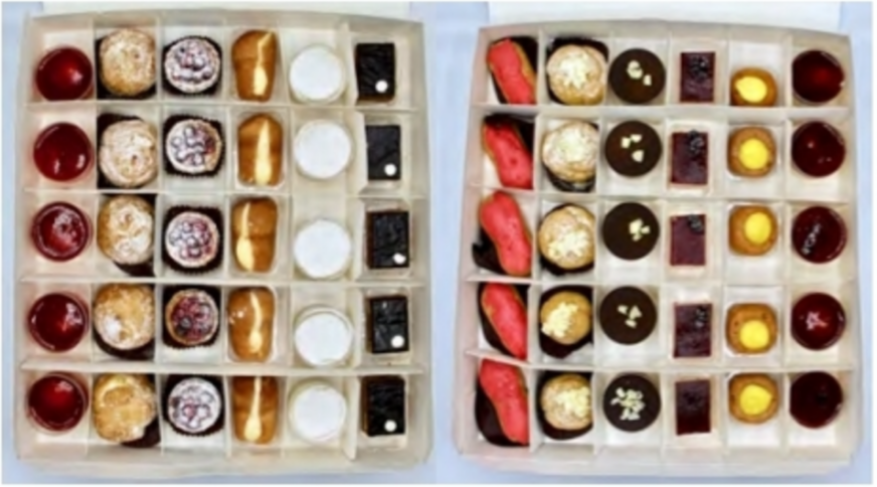
An outbreak of Salmonella Enteritidis in Canada has been traced to mini pastries. The implicated pastries have been recalled nationwide.

As of Jan. 19, there were 61 confirmed patients, according to Public Health Canada. Seventeen people have required hospitalization. The sick people are between age 3 and age 88. Patients became ill between late September 2024 and mid-December 2024 

Many people who became sick reported eating mini pastries at catered events or other establishments where the recalled products were served, according to the health department. The affected provinces and number of sick people in them are British Columbia with 4, Alberta with 2, Ontario with 21, Quebec with 33, and New Brunswick with 1.

Although the pastries have been recalled, there will likely be more people identified as outbreak patients because there is a period between when a person becomes ill and when the illness is reported to public health officials. For this outbreak, the illness reporting period is between 16 and 41 days.

There is concern that businesses may still have the recalled products in their freezers because of their long shelf life, which extends into November this year. This outbreak may not be limited to the provinces or territories with known illnesses. The recalled mini pastries were distributed to: British Columbia, Alberta, Ontario, Quebec and Nova Scotia.

Recall, Sweden: Sevan recalls Tahini and Halva – may contain salmonella

livsmedelsverket

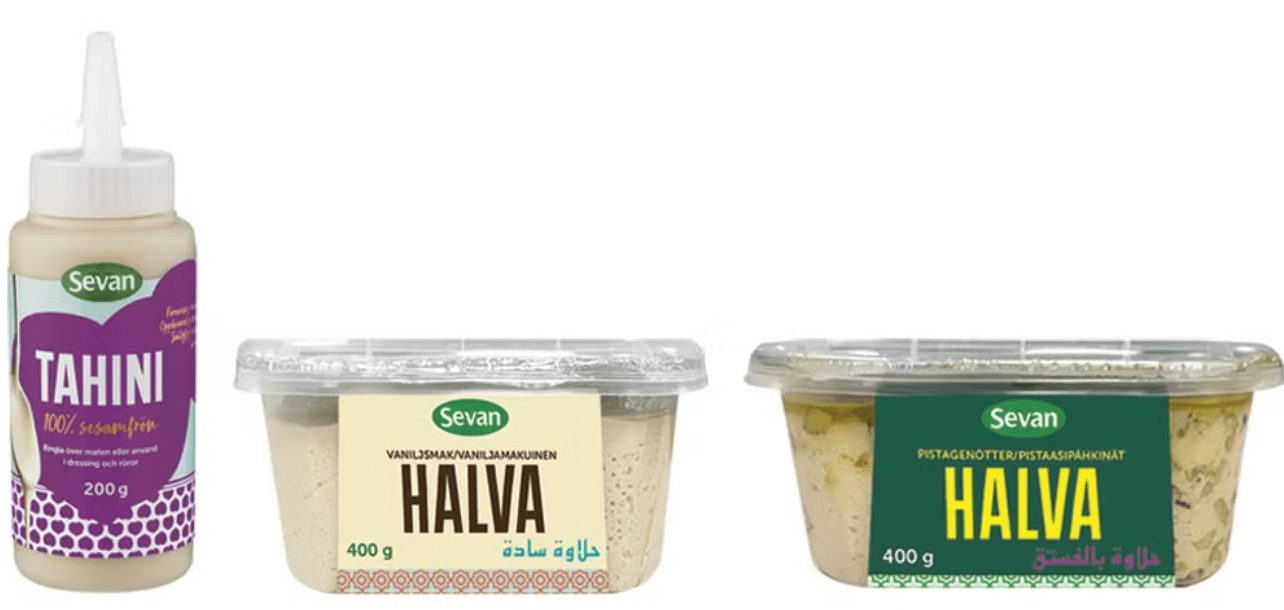
After salmonella was detected during sampling, Sevan recalls Tahini in a 200g bottle and Half vanilla and Half pistachio in a 400g jar.

Salmonella has been confirmed in a few samples and as a precautionary measure, all products with a best before date are being recalled as below. Salmonella is a health risk and we urge consumers who purchase any of the affected products not to consume them but instead to throw away the product.

Consumers who are affected by any compensation for discarded products are welcome to contact our consumer contact via a form on our website https://sevan.se/om-oss/kontakta-oss/reklamation

– At Sevan, we always carry out thorough quality checks on all our products and the safety of our consumers is a top priority. After salmonella was found in tahini and halva, both we and our supplier have introduced extended sampling before release for sale. We regret the incident and take the situation very seriously,” says Elin Ingves Pyk, CEO.

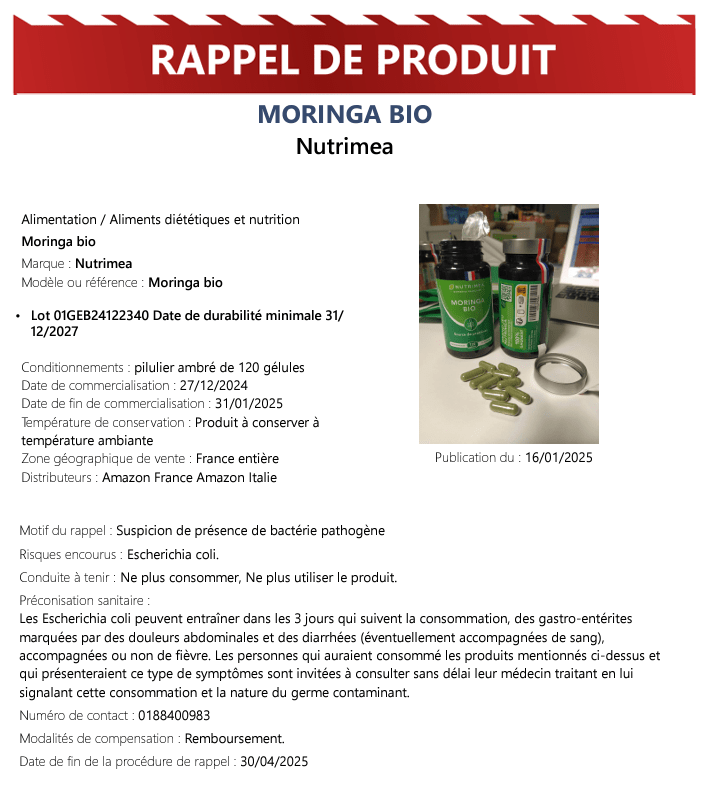
Recall, France: Organic Moringa

Rappel

Suspected presence of pathogenic bacteria
Escherichia coli

Recall, Norway: Taga Foods AS withdraws Salami from Tuscany after discovery of Salmonella

Taga Foods AS withdraws LSF Salami from Tuscany with a best before date of 03.05.2025. The reason is that salmonella has been detected in the product.

The product is sold in selected Rema 1000 stores and through Oda.

Taga Foods AS asks consumers who have purchased the product to throw it away or return it to the store where the product was purchased.

Salmonella can cause illness with symptoms such as diarrhoea, abdominal pain, nausea and possibly even fever. The diarrhoea can in rare cases be prolonged and severe.


 Product Name Salami from Tuscany

Enterprise withdrawing the item

Taga Foods AS

Importer Taga Foods AS

Best before date 01.05.2025

Item number, e.g. EAN numberGTIN: 7070097075734

Lot numbers003

Country of origin Italy

FSA probes why Campylobacter action hasn’t decreased cases

FSN

Experts have suggested reasons why a reduction of Campylobacter in chicken meat has not led to a decrease in infections in the United Kingdom.

Ideas include the selected meat contamination target being the wrong one to focus on as well as the role of other sources of infection and imported poultry meat.

Campylobacter is the leading bacterial cause of foodborne illness in the UK. Cases are frequently attributed to chicken. In 2010, the FSA began a Campylobacter reduction program to reduce contamination levels in poultry.

With help from industry, there was a reduction in the proportion of chickens contaminated with Campylobacter at levels above 1,000 colony forming units per gram (CFU/g) at retail from 19 percent in 2014 to 5 percent in 2017; recent data indicates these levels have been maintained. However, human cases have remained stable at around 100 per 100,000 population between 2014 and 2019.

When setting the original target, modelling suggested that introducing interventions at farm and slaughterhouse level could lead to a 15 to 30 percent reduction in human cases. 

FSA is reviewing its Campylobacter campaign to understand why the reduction in prevalence in chicken meat was not associated with a decrease in sick people.

An expert elicitation exercise was run to generate hypotheses that might explain this finding.

Proposed reasons behind situation
Forty-one experts from the UK, Ireland, Denmark, the Netherlands, and France were recruited with experience in either poultry production or Campylobacter research. More experts from academia, followed by government, were represented compared to industry participants.

They individually generated 157 hypotheses, which later became 25 ideas.

As the campylobacteriosis case trends analysis demonstrated, the UK is not the only country to see case numbers remain steady, or increase, despite public health efforts and industry intervention strategies.

Eight suggestions were put forward as likely explanations for campylobacteriosis case numbers not following the trends seen with levels in chickens at retail.

These included the role of imported poultry meat, other food sources, the low infectious dose meaning the 1,000 CFU/g target was not strict enough, sampling the wrong products or areas, or at the wrong times, and a lack of food hygiene in consumer kitchens.

Ranked hypotheses will be considered by FSA scientists and policy colleagues to help focus the agency’s research and explore new strategies to reduce infections in humans.

In 2019, the Advisory Committee for the Microbiological Safety of Food (ACMSF) published a report on the management of Campylobacter, finding no single practical intervention has been shown to be capable of eliminating it. A 2024 report from the FAO and WHO found combining interventions was necessary to significantly impact Campylobacter levels and prevalence in poultry meat.

Spanish food poisoning cases linked to sandwich; one person dead

FSN

More than 40 people have fallen sick in Spain with a type of sandwich served at a restaurant suspected of causing illness.

The Regional Delegation of Health and Consumption of the Andalusian Government confirmed it is investigating 44 cases of food poisoning from the beginning of January.

A woman in her 60s has died but it is unclear if this is related to the food consumed as part of the outbreak.Health officials in Córdoba said the likely cause is E. coli or Clostridium perfringens.

The agency has not made public the name of the outlet where the poisoning started. However, it has carried out an inspection of the premises where contaminated food was served.

Investigations indicate the cause was a pringá sandwich prepared at the site, since this is the only food consumed by all those affected in the outbreak. A pringá sandwich includes meat that has been cooked slowly for a long time with some bread.