Monthly Archives: March 2018

Research – Toxoplasmosis: University of Glasgow researchers find potential weakness, paving way to drug development

Outbreak News Today Toxoplas

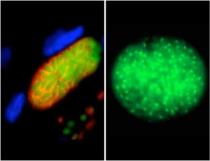
It’s commonly known as the cat parasite and has found itself in the headlines after medication prices recently skyrocketed in America. Now researchers at the University of Glasgow have found a potential new weakness in the toxoplasmosis-causing parasite, potentially paving the way for new drug development for the disease.

In new a study, published in PLOS Pathogens, scientists at the University of Glasgow’s Wellcome Centre for Molecular Parasitology have identified a key enzyme in the Toxoplasma parasite that is crucial for its survival, and may also be a potential new drug target

Information – Zimbabwe – ‘Mycotoxins a Threat to Food Safety’

All Africa

Higher and Tertiary Education Minister Professor Amon Murwira has said that there is need to address the issue of mycotoxins, which are a threat to food safety in the country. Mycotoxins are dangerous fungi that can contaminate food. The subsistence farming populations in Zimbabwe are exposed to this fungi through maize consumption and small children, below five years of age, are highly exposed to mycotoxins, which can have serious consequences on health and nutrition status.

They can affect growth and development in children.

USA – FDA Sampling Fresh Herbs, Guacamole and Processed Avocado

FDA

In its continued efforts to protect consumers and ensure food safety, the U.S. Food and Drug Administration has begun testing fresh cilantro, parsley and basil, as well as processed avocado and guacamole, for certain microbial contaminants. These two large-scale sampling assignments will help the FDA assess the rates of bacterial contamination in these commodities, as well as help to identify possible common factors among the positive samples.

The FDA plans to collect 1,600 samples for each assignment. As of January 1, 2018, the agency had collected 35 domestic samples (4.6 percent) and 104 import samples (12.4 percent) of the total for fresh herbs. None of the domestic samples tested positive. Of the 104 import samples tested, 4 tested positive for Salmonella, 3 tested positive for Shiga toxin-producing E. coli, and none tested positive for E. coli 0157:H7.

As of January 1, 2018, the agency had collected 58 domestic samples (7.3 percent) and 49 import samples (6.1 percent) of the totals for processed avocado/guacamole. Of the 58 domestic samples tested, 3 tested positive for Listeria monocytogenes. Of the 49 imported samples, 1 tested positive for Listeria monocytogenes. It is important to note that no conclusions about overall contamination rates can be made until all of the data are collected, validated and analyzed.

If samples are found to be positive for microbial hazards, the FDA will pursue an appropriate regulatory and enforcement option, which may include encouraging a voluntary recall, ordering a mandatory recall, ordering administrative detention to prevent food from being distributed, issuing public warnings to alert consumers to the potential danger, or, in the case of imported products, refusing their entry into the United States and subjecting future shipments to an import alert. In the case of the positive samples identified in the first quarter of data collection, imported products capable of causing disease were prevented from entry into the United States and domestic products were voluntarily recalled.

The agency chose to sample fresh herbs because they are typically eaten without having undergone a ‘kill step,’ such as cooking, to reduce or eliminate bacteria. These herbs are also often eaten as part of multi-ingredient foods, and thus people may not report having eaten them when they become ill.

From 1996 to 2015, the FDA reported nine foodborne outbreaks linked to basil, parsley and cilantro, which resulted in 2,699 illnesses and 84 hospitalizations. Of the nine outbreaks, seven were attributed to Cyclospora cayetanensis; one was attributed to E. coli O157:H7; and one was attributed to Shigella sonnei. The FDA is seeking to obtain baseline estimates of the prevalence of Salmonella and Shiga toxin-producing E. coli (STEC) in cilantro, basil and parsley. The agency also intends to test for Cyclospora cayetanensis during the summer months, when  Cyclospora-related illnesses typically occur.

The agency chose to sample processed avocado because avocados have a high moisture content and a non-acidic pH level, conditions that can support the growth of harmful bacteria. Processed avocado products, including avocado that is fresh cut, refrigerated and frozen, may be packaged and eaten without having undergone a ‘kill step’ prior to consumption. According to the Centers for Disease Control and Prevention, there were 12 outbreaks of foodborne illness related to avocado, avocado products or guacamole products from 2005 to 2015. Of those 12 outbreaks, nine involved Salmonella and three involved E. coli, resulting in 525 illnesses and 23 hospitalizations. Though no Listeria outbreaks were reported in connection with avocados from 2005 to 2015, a recent sampling assignment by the FDA detected Listeria monocytogenes in samples collected from the fruit’s pulp and skin. The agency is seeking data on the prevalence of Salmonella and Listeria monocytogenes in processed avocado and processed avocado products.

The  assignments are anticipated to last 18 months. The agency will post results on a quarterly basis and also post a comprehensive report once sampling and analysis is complete.

For more information

Canada – Increase in salmonella cases linked to reptiles reported in NE Ontario

Outbreak News Today

There has been an increase in reported salmonella sickness with owners of reptiles and amphibians in the North Bay Parry Sound District Health Unit area. Salmonella germs are naturally found in the digestive tract of some animals, including lizards and amphibians. It is shed in their droppings which spreads the germs onto their bodies and the environment around them.

“When not careful, handling pet lizards and amphibians can cause serious illness in humans,” says Teresina Palangio, public health inspector at the Health Unit. “We encourage all pet owners, no matter the animal, to take precautions to protect their health and that of those around them.”

Australia – Eggs are the strongest link to soaring Slmonella cases in WA

Poultry Med Salmonella Eggs Food Poisoning Food Safety

During the second quarter of 2017 (2Q17), the Western Australian (WA) OzFoodNet team conducted surveillance of enteric diseases, undertook investigations into outbreaks and was involved with ongoing enteric disease research projects. The most common notifiable enteric infections in WA were campylobacteriosis (n=705), salmonellosis (n=622), rotavirus infection (n=236) and cryptosporidiosis (n=89). Compared to the applicable 5-year second quarter means (2QM), there were increases in notifications of campylobacteriosis (23%), salmonellosis (74%), rotavirus infections (134%) and cryptosporidiosis (21%).
The large increase in salmonellosis was primarily driven by an increase in S. Typhimurium MLVA type 03-17-09-12-523 notifications. There were six foodborne outbreaks investigated in the second quarter, all due to Salmonella Typhimurium and four of which were associated with consumption of egg dishes. The number of foodborne outbreaks in the 2Q17 was nearly two times the second quarter 5-year mean (n=3.4). OzFoodNet also conducted surveillance of 34 non-foodborne outbreaks. Of these, the most common mode of transmission was person-to-person (25 outbreaks), with a total of 431 people ill. Norovirus was the most commonly reported pathogen, being identified in 13 outbreaks.

Australia – Listeria outbreak rises to 15 cases, 3 deaths in Australia

Outbreak News Today

In a follow-up to a report yesterday, NSW Health is now confirming 15 listeriosis cases linked to the national rockmelon outbreak, three of whom have died.

RASFF Alerts – Aflatoxin – Shelled Hazlenuts – Pistachios – Dried Figs – Groundnut Kernels – Blanched Peanuts

kswfoodworld food safety poisoning

RASFF-aflatoxins (B1 = 76; Tot. = 92 µg/kg – ppb) in shelled hazelnuts from Azerbaijan in Italy

RASFF-aflatoxins (B1 = 15.4; Tot. = 24.8 µg/kg – ppb) in pistachios from Turkey in Belgium

RASFF-aflatoxins (B1 = 76; Tot. = 83 µg/kg – ppb) in dried figs from Spain in Portugal

RASFF-aflatoxins (B1 = 12.4; Tot. = 59.7 µg/kg – ppb) in groundnut kernels from China in the UK

RASFF-aflatoxins (B1 = 18; Tot. = 21 µg/kg – ppb) in groundnut kernels from India in the Netherlands

RASFF-aflatoxins (B1 = 20.8; Tot. = 87.2 µg/kg – ppb) in hazelnut kernels from Turkey in the UK

RASFF-aflatoxins (B1 = 18.8; Tot. = 21.1 µg/kg – ppb) in groundnuts in shell from Israel in Spain

RASFF-aflatoxins (B1 = 6.7; Tot. = 7.8 µg/kg – ppb) in blanched peanuts from China in Italy

RASFF-aflatoxins (B1 = 10.45; Tot. = 26.09 µg/kg – ppb) in pistachios from Turkey in Germany

RASFF Alert – Foodborne Outbreak – Live Oysters

kswfoodworld food safety poisoning

RASFF-foodborne outbreak suspected to be caused by live oysters from France in the Netherlands

RASFF Alert – Food Outbreak – Norovirus – Live Oysters

kswfoodworld food safety poisoning

RASFF-foodborne outbreak caused by norovirus (presence/ 2g) in live oysters from France in Finland

RASFF Alert- Listeria monocyotgenes – Chilled Nems

kswfoodworld food safety poisoning

RASFF-Listeria monocytogenes (440; 570 CFU/g) in chilled nems from France in France