
 CDC
CDC 
Eating a diet with plenty of fruits and vegetables provides important health benefits, but it’s important that you select and prepare them safely.
Fruits and vegetables add nutrients to your diet that help protect you from heart disease(https://www.cdc.gov/heartdisease/), stroke(https://www.cdc.gov/stroke/), and some cancers(https://www.cdc.gov/cancer/). In addition, choosing vegetables, fruits, nuts, and other produce over high-calorie foods can help you manage your weight(https://www.cdc.gov/obesity/).
But sometimes raw fruits and vegetables contain harmful germs, such as Salmonella(https://www.cdc.gov/salmonella/index.html), E. coli(https://www.cdc.gov/ecoli/index.html), and Listeria(https://www.cdc.gov/listeria/index.html), that can make you and your family sick. In the United States, nearly half(https://www.cdc.gov/foodborneburden/attribution/attribution-1998-2008.html) of foodborne illnesses are caused by germs on fresh produce.
The safest produce is cooked; the next safest is washed. Enjoy uncooked fruits and vegetables while taking steps to avoid foodborne illness, also known as food poisoning.
Cook sprouts thoroughly to reduce the risk of illness. Sprouts are a particular concern because the warm, humid conditions needed to grow sprouts also are ideal for germs to multiply. Therefore, eating raw or lightly cooked sprouts may lead to food poisoning. It’s especially important to avoid raw sprouts if you are in a group more likely to get seriously sick from food poisoning: pregnant women, young children, older adults, and people with weakened immune systems.
 Sprouts: What You Should Know
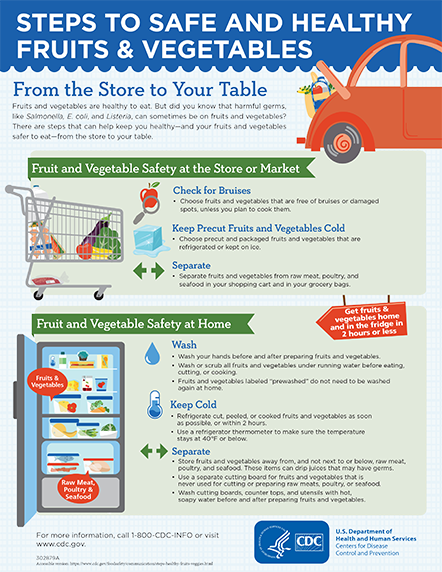
 At the store or market:
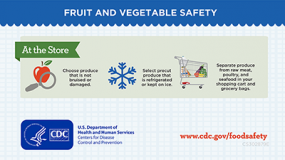
- Choose produce that isn’t bruised or damaged.
- Keep precuts fruits and vegetables cold by choosing produce that is refrigerated or kept on ice.
- Separate fruits and vegetables from raw meat, poultry, and seafood in your shopping cart and in your grocery bags.

 FoodWorld