Monthly Archives: January 2018

Canada – Updated Food Recall Warning – Imperial Caviar & Seafood brand Whitefish Roe recalled due to potential presence of dangerous bacteria – Clostridium

CFIA

Recall details

Ottawa, January 19, 2018 – The food recall warning issued on January 12, 2018 has been updated to include additional product information. This additional information was identified during the Canadian Food Inspection Agency’s (CFIA) food safety investigation.

Imperial Caviar & Seafood is recalling Imperial Caviar & Seafood brand Whitefish Roe from the marketplace because it may permit the growth of Clostridium botulinum. Consumers should not consume the recalled product described below.

Recalled products

Brand Name Common Name Size Code(s) on Product UPC
Imperial Caviar & Seafood Whitefish Roe 50 g Lot #: 14017-01
BB/MA: 29-MAI-2018
1 86866 90027 9

UK – James Hall recalls BBQ Pulled Pork because it may contain Salmonella

FSA

James Hall is recalling SPAR BBQ Pulled Pork and Woodland BBQ Pulled Pork because the products may contain salmonella. Both products have been sold at SPAR stores.

Product details

Product: SPAR BBQ Pulled Pork 2 for £3.50
Pack size: 110g
‘Use by’ date: Up to and including 25 January 2018
Product code: 413151

Product: Woodland BBQ Pulled Pork 2 for £3.50
Pack size: 110g
‘Use by’ date: Up to and including 25 January 2018
Product code: 561092

No other James Hall products are known to be affected.

Risk

The products listed above might be contaminated with salmonella. Symptoms caused by salmonella usually include fever, diarrhoea and abdominal cramps.

Our advise to consumers

If you have bought any of the above products, do not eat it. Instead, return it to the store from where it was bought for a full refund.

Action taken by the company

James Hall is recalling the above products. Point of sale notices will be displayed in all retail stores that are selling this/these products. These notices explain to customers why the products are being recalled and tell them what to do if they have bought the product. Please see the attached notice.

Research – Different strains of same bacteria trigger widely varying immune responses

Science Daily 


Genetic differences between different strains of the same pathogenic bacterial species appear to result in widely varying immune system responses, according to new research published in PLOS Pathogens.


Previous research has found that different people vary in their susceptibility to infection with the same species of pathogenic bacteria. Individual differences in people’s immune systems may explain this variability, but differences between bacterial strains could play a role, too.

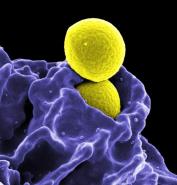
To better understand this role, Uri Sela of The Rockefeller University, New York, and colleagues studied different strains of two major species of pathogenic bacteria: Staphylococcus aureus and Streptococcus pyogenes. They tested how immune system T and B cells in donated human blood samples responded after exposure to different strains of each species.

The researchers found that, in blood from a single person, different strains of each species produced widely varied responses by T and B cells of the adaptive immune system — the portion of the immune system responsible for creating “memory” of specific pathogens to protect against future infection. The same distinct responses to different strains were seen in blood samples from 10 additional donors.

Next, the research team created mutant bacteria in which they deactivated “accessory” genes that are responsible for between-strain differences, leaving the “core” genome of the species intact. They found that the mutant strains triggered a dampened T cell response, suggesting that differences in “accessory” genes were responsible for the varied responses seen for unmutated strains.

These findings suggest that differences in bacterial “accessory” genes — not just differences between people — may help explain the clinical variation generally found among patients infected with the same bacterial species.

Previous research has often described “signature” immune responses to different bacteria using only a single strain for each species. However, based on findings of the current study, the researchers propose that immune response signatures should instead be defined according to the specific strain or the species’ common “core genome.” Such a shift could aid development of strategies for predicting disease outcomes in patients.

“The current practice with infected patient is to only identify the bacterial species,” the authors elaborate. “Our findings raise the possibility that in the future we might need to define the specific infecting strain as part of the patient evaluation and treatment.”

Story Source:

Materials provided by PLOS. Note: Content may be edited for style and length.

USA – El Toro Norovirus Outbreak Tops at 542

Food Poison Journal Norwalk_Caspid

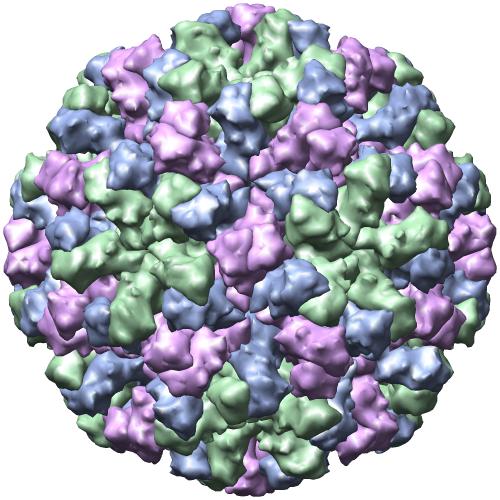
The Tacoma/Pierce County Department of Health updated the El Toro Norovirus outbreak this afternoon. As of today, the Health Department has a total of 542 cases—520 from the Tacoma location and 22 suspect cases from the University Place location. We have a lab confirmation of norovirus from the Tacoma location.

South Africa – More Listeriosis cases and deaths, What’s being done?

Outbreak News Today

In just a matter of a few days, the Listeriosis outbreak, described as the ” largest documented listeriosis outbreak South Africa has ever experienced”, has grown by 19 cases, with a new outbreak total of 767 laboratory-confirmed listeriosis cases as of Jan. 16.

The National Institute of Communicable Diseases (NICD) now puts the death toll at 81.

New data shows most cases have been reported from Gauteng Province (60%, 462/767) followed by Western Cape (13%, 101/767) and KwaZuluNatal (7%, 55/767) provinces.

At present, the source of the outbreak is not known.

What is the South African government doing about this outbreak?

Hong Kong – Food Alert – *Updated on 18 Jan 2018 Suspected contamination of French infant and young children formulae with salmonella

CFS

<!—->

Issue Date 2017-12-12
Source of Information Rapid Alert System for Food and Feed of the European Commission
Food Product Infant and young children formula products
Name of Importer
Product name and Description (1) Product name: Inovital Infant milk from 0 to 6 months (No. 1)
Brand: Mon petit
Manufacturer: Lactalis International
Place of origin: France
Importer: Jumbo Smart Development Limited
Net weight: 900 grams
Best before dates: March 13, 2019 and June 22, 2019*Updated on 14 Dec 2017
Best before date: June 19, 2019

(2) Product name: Inovital Follow-on milk from 6 to 12 months (No. 2)
Brand: Mon petit
Manufacturer: Lactalis International
Place of origin: France
Manufacturer: Jumbo Smart Development Limited
Net weight: 900 grams
Best before dates: March 16, 2019 and June 27, 2019

(3) Product name: Inovital Growing-up milk from 1 to 3 years (No.3)
Brand: Mon petit
Manufacturer: Lactalis International
Place of origin: France
Importer: Jumbo Smart Development Limited
Net weight: 900 grams
Best before date: March 15, 2019

*Updated on 18 Jan 2018
(4) Product name: Inovital Infant milk from 0 to 6 months (No. 1)
Brand: Mon petit
Manufacturer: Lactalis International
Place of origin: France
Importer: Jumbo Smart Development Limited
Net weight: 900 grams

(5) Product name: Inovital Follow-on milk from 6 to 12 months (No. 2)
Brand: Mon petit
Manufacturer: Lactalis International
Place of origin: France
Manufacturer: Jumbo Smart Development Limited
Net weight: 900 grams

(6) Product name: Inovital Growing-up milk from 1 to 3 years (No.3)
Brand: Mon petit
Manufacturer: Lactalis International
Place of origin: France
Importer: Jumbo Smart Development Limited
Net weight: 900 grams

Reason For Issuing Alert


– The French authorities about the recall of 12 batches of infant formulae by Lactalis in early December. The Centre for Food Safety (CFS) immediately contacted the sole agent of Lactalis in Hong Kong, major local importers and retailers to follow up. Preliminary investigations showed that the products concerned had not been imported or sold in Hong Kong. The CFS issued a food incident post to inform local trade of the incident on December 4.

– Following the French authorities’ announcement on December 10 that the recall of products by Lactalis has been extended to cover all products produced by one processing plant (Lactalis Craon Factory) since February 15, 2017, the CFS has been proactively following up on the incident. CFS’ investigation showed that the importer concerned had imported about 28 000 cartons of the affected products and some of them had been distributed for sale.

*Updated on 14 Dec 2017
– In view of a further notification from the Rapid Alert System for Food and Feed of the European Commission that the recall of French infant and young children formula products suspected to be contaminated with salmonella has been expanded to more batches, CFS’ investigation found that the importer concerned has imported the affected infant formula product of one of those additional batches into Hong Kong.

*Updated on 18 Jan 2018
– In view of the latest notification from the Rapid Alert System for Food and Feed of the European Commission that the recall of French infant and young children formula products suspected to be contaminated with salmonella has been expanded to cover all batches of products produced by Lactalis Craon Factory as a precautionary measure.

Action Taken by the Centre for Food Safety


– The CFS has instructed the importer concerned to stop sale and remove from shelves the affected batches of the products, and recall the products concerned.

– The remaining stock in the importer’s warehouse has been immediately marked and sealed by the CFS. In addition, 15 000 cartons are being shipped to Hong Kong which will also be marked and sealed by the CFS on their arrival.

– The CFS has enhanced surveillance of dairy products available in local market since the incident.

– The CFS will continue to closely monitor the latest development of the incident and take appropriate follow-up action.

*Updated on 18 Jan 2018
– The CFS has instructed the local importer concerned to implement the recall.

Advice to the Trade


– Stop selling the products concerned immediately if they possess them.
Advice to Consumers
*Updated on 18 Jan 2018
– Not to let infants and young children consume the affected products, regardless of batches.- To seek medical treatment for infants or young children who felt unwell after taking the above products.

– Powdered infant formula is not a sterile product which may be contaminated with pathogens such as salmonella and Enterobacter sakazakii (Cronobacter spp.). The Food and Agriculture Organization of the United Nations/World Health Organization advise that powdered infant formula should be prepared with boiled water that is no cooler than 70 degree Celsius which can significantly inactivate pathogens including Salmonella. Reconstituted powdered infant formula should then be cooled to feeding temperature and consumed immediately.

– Reconstituted powdered infant formula that has not been consumed within two hours should be discarded.

– For high-risk infants, including pre-term infants, infants less than two months of age, low-birth-weight infants (< 2.5 kilograms) and immunocompromised infants etc, who are not breastfed, caregivers should use commercially sterile liquid formula whenever possible.

Further Information The CFS press release (12 Dec 2017)
The CFS press release (14 Dec 2017)
The CFS press release (18 Jan 2018)*Updated on 14 Dec 2017
The Centre has also marked and sealed the remaining stock in the importer’s warehouse. Furthermore, the CFS found that the importer had imported another batch of product which was produced by the processing plant concerned (Lactalis Craon Factory) after February 15, 2017. Although this batch is not on the recall list, for the sake of prudence, the importer has voluntarily recalled this batch of the product according to CFS’ advice. Product details are as follows:

(7) Product name: Inovital Growing-up milk from 1 to 3 years (No.3)
Brand: Mon petit
Manufacturer: Lactalis International
Place of origin: France
Importer: Jumbo Smart Development Limited
Net weight: 900 grams
Best before date: June 21, 2019

*Updated on 18 Jan 2018
The CFS has instructed the local importer concerned to implement the recall of all batches of products produced by Lactalis Craon Factory and urge members of the public not to let infants and young children consume the affected products, regardless of batches.

– Members of the public may call the hotline of the importer at 2272 1128 during office hours for enquiries about the recall.

RASFF Alerts – Salmonella – Salted Chicken Breasts – Chicken Livers – Chicken Fillets – Sesame Seeds

kswfoodworld food safety poisoning

RASFF-Salmonella (presence /25g) in frozen salted chicken half breast from Brazil in the Netherlands

RASFF-Salmonella enterica ser. Remo (present /25g) in frozen chicken livers from Brazil in Bulgaria

RASFF-Salmonella enterica ser. Typhimurium monophasic (1 ,4, [5], 12:i:-) (presence /25g) in frozen chicken fillets from Spain in France

RASFF-Salmonella (O:4 present /25g) in frozen salted chicken half breasts from Brazil in Germany

RASFF-Salmonella enterica ser. Heidelberg (presence /25g) in frozen salted chicken half breasts from Brazil in Germany

RASFF-Salmonella (in 1 out of 5 samples /25g) in frozen salted chicken half breasts from Brazil in the UK

RASFF-Salmonella enterica ser. Hato (in 2 out of 5 samples /25g) in sesame seeds from Sudan in Greece

RASFF-Salmonella (presence /25g) in frozen salted chicken half breasts from Brazil in the Netherlands

RASFF-Salmonella (presence /25g) in frozen salted chicken half breasts from Brazil in the UK


RASFF Alerts – Aflatoxin – Groundnuts – Pistachios – Dried Figs – Hazelnut Kernels

kswfoodworld food safety poisoning

RASFF-aflatoxins (B1 = 4.7; Tot. = 14.92 µg/kg – ppb) in groundnuts from the United States in the Netherlands

RASFF-aflatoxins (B1 = 6.8 µg/kg – ppb) in groundnuts from Argentina in the Netherlands

RASFF-aflatoxins (B1 = 36; Tot. = 48 µg/kg – ppb) in pistachios from Turkey in the Netherlands

RASFF-aflatoxins (Tot. = 6.8 µg/kg – ppb) in roasted groundnuts from China in France

RASFF-aflatoxins (B1 = 21; Tot. = 42 µg/kg – ppb) in dry figs from Turkey in France

RASFF-aflatoxins (B1 = 8; Tot. = 10 µg/kg – ppb) in unshelled pistachios from the United States, via Turkey in Italy

RASFF-aflatoxins (B1 = 270; Tot. = 290 µg/kg – ppb) in pistachio nuts without shell from the United States, via Germany in the Netherlands

RASFF-aflatoxins (B1 = 2.85 / B1 = 2.90 µg/kg – ppb) in blanched groundnuts from Brazil in Poland

RASFF-aflatoxins (B1 = 29.5; Tot. = 32.3 µg/kg – ppb) in organic dried figs from Turkey, via Germany in Slovenia

RASFF-aflatoxins (B1 = 5.9; Tot. = 7.1 µg/kg – ppb) in groundnuts kernels from India in Bulgaria

RASFF-aflatoxins (B1 = 7.7; Tot. = 9 µg/kg – ppb) in blanched groundnuts from Egypt in the Netherlands

RASFF-aflatoxins (B1 = 15; Tot. = 18.5 µg/kg – ppb) in hazelnut kernels from Azerbaijan in Italy

RASFF Alert – Clostridium – Organic Beef Powder.

kswfoodworld food safety poisoning

RASFF-Clostridium sulphite reducer (15000 CFU/g) in organic beef powder from Denmark in Belgium

RASFF Alert – STEC E.coli – Chilled Beef

kswfoodworld food safety poisoning

RASFF-shigatoxin-producing Escherichia coli (stx1+ eae-) in chilled beef from Uruguay in the Netherlands