Monthly Archives: January 2018

Europe – EFSA European Food Safety Authority : Updates on Salmonella Agona outbreak

4 Traders  


The withdrawal and/or recall of infant formula produced by a single French processing company will significantly reduce the risk of more infants being infected by Salmonella Agona, say EFSA and ECDC as a result of a rapid outbreak assessment.

An outbreak of S. Agona linked to the consumption of infant formula has been ongoing in France since August 2017. So far the outbreak has affected 37 children under one year of age in France. Whole genome sequencing (WGS) analysis confirmed that a Spanish case is closely related to the outbreak in France. A probable case has been identified in Greece. The last case was notified on 2 December 2017.

EFSA and ECDC recommend that competent authorities in affected Member States keep sharing information on the epidemiological, microbiological and environmental investigations and issue relevant notifications in the Rapid Alert System for Food and Feed (RASFF) and the Early Warning Response System (EWRS).

CDC – Antibiotic Resistance Map

CDC

Antibiotic resistance (AR), when germs do not respond to the drugs designed to kill them, threatens to return us to the time when simple infections were often fatal.

The AR Investment Map showcases the Centers for Disease Control & Prevention’s (CDC) activities to meet national goals to prevent drug-resistant infections. CDC’s AR Solutions Initiative puts state and local AR laboratory and epidemiological expertise in every state and makes investments in public health innovation to fight AR across healthcare settings, food, and communities.

RASFF Alert – Ochratoxin A -Organic Rye – Black Pepper

kswfoodworld food safety poisoning

RASFF-ochratoxin A (14.6 µg/kg – ppb) in organic rye (bread grain) from Poland in Germany

RASFF-ochratoxin A in black pepper from Indonesia in Portugal

New Zealand – Wild boar meal victims take recovery day by day – Clostridium

Stuff

All three had eaten a wild pork curry for dinner about six hours before. Their two children, aged seven and one, didn’t eat the dish.

Doctors and friends filled them in on the details of their illness and symptoms. It was sobering to hear. The three had to be lashed to their beds as they were prone to thrashing around. At other times they would laugh uncontrollably like children.

While this was happening, doctors were at a loss trying to determine the cause of the illness.

Clinical notes obtained by family and written by doctors at 9am on November 16 said the patients had encephalopathy, a general term that means brain disease, damage, or malfunction. The possible causes were listed as “1080 poisoning, botulism, typhoid encephalopathy.”


India – Food poisoning: 50 students still under treatment, 83 discharged

New Indian Express

THIRUVANANTHAPURAM: More than 50 of the 144 students of LP School at Thonnakal here, who were hospitalised with food poisoning symptoms, are still being treated at SAT Hospital.

Hospital authorities said the students were under observation. However, they ruled out any chances of the students being in danger. Eighty-three students were discharged on Friday after their condition was found stable.

The students – aged between four and 10 – had been admitted to the hospital after they complained of uneasiness and nausea after having food served at the school.

USA – Multistate Salmonella Outbreak Associated With Jimmy John’s Sprouts

Food Poisoning Bulletin

Another Salmonella outbreak at Jimmy John’s restaurants associated with raw sprouts has just been announced. The Illinois Department of Public Health (IDPH) has posted information about this outbreak; they say that the CDC and FDA are investigating, along with state and local health departments, but there is no information about this outbreak on those other sites.

Research – New antifungal provides hope in fight against superbugs Multi-drug resistant Candida auris no match for novel compound

Science Daily

Microscopic yeast have been wreaking havoc in hospitals around the world — creeping into catheters, ventilator tubes, and IV lines — and causing deadly invasive infection. One culprit species, Candida auris, is resistant to many antifungals, meaning once a person is infected, there are limited treatment options. But in a recent Antimicrobial Agents and Chemotherapy study, researchers confirmed a new drug compound kills drug-resistant C. auris, both in the laboratory and in a mouse model that mimics human infection.

The drug works through a novel mechanism. Unlike other antifungals that poke holes in yeast cell membranes or inhibit sterol synthesis, the new drug blocks how necessary proteins attach to the yeast cell wall. This means C. auris yeast can’t grow properly and have a harder time forming drug-resistant communities that are a stubborn source of hospital outbreaks. The drug’s target — a yeast enzyme called Gwt1 — is also highly conserved across fungal species, suggesting the new drug could treat a range of infections.

The drug is first in a new class of antifungals, which could help stave off drug resistance. Even the most troublesome strains are unlikely to have developed workarounds for its mechanism of action, says study lead Mahmoud A. Ghannoum, PhD, professor of dermatology at Case Western Reserve University School of Medicine and director of the Center for Medical Mycology at Case Western Reserve University and University Hospitals Cleveland Medical Center.

In the new study, Ghannom’s team tested the drug against 16 different C. auris strains, collected from infected patients in Germany, Japan, South Korea, and India. When they exposed the isolates to the new drug, they found it more potent than nine other currently available antifungals. According to the authors, the concentration of study drug needed to kill C. auris growing in laboratory dishes was “eight-fold lower than the next most active drug, anidulafungin, and more than 30-fold lower than all other compounds tested.”

The researchers also developed a new mouse model of invasive C. auris infection for the study. Said Ghannoum, “To help the discovery of effective drugs it will be necessary to have an animal model that mimics this infection. Our work helps this process in two ways: first we developed the needed animal model that mimics the infection caused by this devastating yeast, and second, we used the developed model to show the drug is effective in treating this infection.”

They studied immunocompromised mice infected with C. auris via their tail vein — similar to very sick humans in hospitals who experience bloodstream infections. Compared to mice treated with anidulafungin, infected mice treated with the new drug had significant reductions in kidney, lung, and brain fungal burden two days post-treatment. The results suggest the new drug could help treat even the most invasive infections.

According to Ghannoum, the most exciting element of the study is that it brings a promising antifungal one step closer to patients. It helps lay the foundation for phase 1 clinical trials that study low levels of the drug in healthy adults and test for any potential safety concerns. There is an urgent need for such studies, as C. auris infection has become a serious threat to healthcare facilities worldwide — and drug-resistance is rising.

“Limited treatment options calls for the development of new drugs that are effective against this devastating infection,” Ghannoum said. “We hope that we contributed in some way towards the development of new drugs.”

Story Source:

Materialsdetdvtxaur provided by Case Western Reserve University. Note: Content may be edited for style and length.

Research – Outbreak of Botulism Due to Illicit Prison-Brewed Alcohol: Public Health Response to a Serious and Recurrent Problem

Oxford Academic  

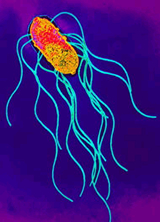
Botulism is a rare, sometimes lethal neuroparalytic illness. On 2 October 2011, an inmate at prison A developed symptoms compatible with botulism after drinking pruno, an illicit, prison-brewed alcoholic beverage. Additional illnesses were identified within several days. We conducted an investigation to determine the cause and extent of the outbreak.

Eight prisoners developed botulism; all drank pruno made with a potato. Three received mechanical ventilation. Culture of fluid from a sock that inmates reported using to filter the implicated pruno yielded C. botulinum type A. The implicated batch may have been shared between cells during delivery of meal trays. Challenges of the investigation included identifying affected inmates, overcoming inaccuracies in histories, and determining how the illicit beverage was shared. Costs to taxpayers were nearly $500000 in hospital costs alone.


India – 28 madrassa students suffer food poisoning

The Hindu

Twenty-eight students of a madrassa in Bhiwandi were hospitalised for food poisoning after they ate biryani served at a local function in Roshan Bagh on Wednesday. According to officials with the Bhiwandi Nizampura Municipal Corporation, the students study Urdu and Arabic in the madrassa. Officials said that they were invited for a Niyaaz ceremony, an Islamic custom where food is served to the underprivileged. The students were taken to a primary health care centre after complaining of nausea.

India – Food poisoning: 120 schoolchildren admitted to hospital

The Tribune India

Nearly 120 children were taken ill after eating a meal at a school and admitted to a hospital here. The children were from a lower primary school at Thonnakel in the district. Though the conditions were not serious of the affected children, they would be discharged only after monitoring their health condition, a release from the Medical College Hospital said on Friday. Parents rushed their children to local hospitals initially as they complained of uneasiness after they had noon meal served in school on Wednesday. Later they were admitted to the hospital. Samples of the food the students had were being sent for examination. — PTI.