Monthly Archives: January 2018

Research – Noncholera Vibrios

ASM Science 

Noncholera vibrio infections have emerged as an important public health concern in the United States, Canada, Japan, Taiwan, and many other countries. The majority of noncholera vibrio infections are food-borne, and the major food vehicle is raw molluscan shellfish. Most noncholera vibrios are halophilic (or salt-requiring), and their growth is enhanced by specific ranges of salinity, water temperatures, and pH. The number of noncholera vibrio infections has increased over the past few years, after years of remaining relatively stable. Over the past 10 years, and have been the most commonly isolated noncholera species. Among the 553 culture-confirmed infections reported to CDC between 1988 and 1998 through the Vibrio Surveillance System, 44% were classified as primary septicemia, 43% as wound infections, and 7% as gastroenteritis, while 6% were from other or unknown sites of infection. Noncholera strains that cause gastroenteritis are usually susceptible to antimicrobial agents used for enteric infections, although most cases of gastroenteritis are mild and self-limited, and they can effectively be treated with oral rehydration. On the other hand, wound and primary septicemia infections require antimicrobial treatment to improve the course of illness and prevent complications. The author recommends that consumers avoid eating raw or undercooked oysters, especially during the warmer months because illness is associated with consuming oysters harvested from warm water. Due to the recent increase in noncholera vibrio infections, all states should consider making infection with any species reportable.

Citation: Daniels N, Evans M, Griffin P. 2000. Noncholera Vibrios, p 137-147. In Scheld W, Craig W, Hughes J (ed), Emerging Infections 4. ASM Press, Washington, DC. doi: 10.1128/9781555816971.ch10

Information – Listeria infections in vulnerable groups

HPS Scotland

Across Europe, Listeria cases have increased among two groups of the population: people over 75 and women aged 25-44 (believed to be mainly pregnancy-related). This is one of the main conclusions of an European Food Safety Authority (EFSA) scientific opinion on Listeria monocytogenes and risks to public health from consumption of contaminated ready-to-eat food. The opinion covers the period 2008-2015.

Experts began work on the scientific opinion after the 2015 EU summary report on foodborne zoonotic diseases identified an increasing trend of listeriosis over the period 2009-2013.

EFSA experts concluded that the higher incidence of listeriosis among the elderly was likely to be linked to the increased proportion of people aged over 45 with underlying health conditions, such as cancer and diabetes. The rise in consumption of ready-to-eat foods and an improved monitoring system in some member states might also have contributed to this trend.

Most people get infected through the consumption of ready-to-eat foods such as smoked and cured fish, heat treated meat and soft and semi-soft cheese. However, other foods – such as prepared salads – can also lead to infections.

Experts estimated that one third of cases of listeriosis are due to growth of Listeria monocytogenes in food prepared and stored at home in the refrigerator. This highlights the importance of following good hygiene practices, such as respecting recommended storage temperatures and times. International organisations such as the World Health Organization advise that foods should be refrigerated below 5°C. [Source: EFSA News Release, 24 January 2018. http://www.efsa.europa.eu/en/press/news/180124]

Data on Listeria infections in Scotland can be accessed at http://www.hps.scot.nhs.uk/giz/listeria.aspx?subjectid=99 and http://www.hps.scot.nhs.uk/ewr/redirect.aspx?id=73166.


Information – Australia- Food Safety and Kids Lunch Boxes

Food Authority NSW

Young children are more at risk from food poisoning because their bodies and natural immune defences are not fully developed.

Parents and caregivers can help protect kids by following some simple tips to keep kid’s lunch boxes safe.


USA- FDA Investigates E. coli O157:H7 Outbreak Likely Linked to Leafy Greens

FDA Eurofins Food Testing UK

Fast Facts

  • CDC announced on January 25, 2018, that this outbreak appears to be over, because the last case became ill on December 12, 2017. This indicates that the food causing illness is no longer available in the marketplace or consumers’ homes.
  • Although this outbreak appears to be over, the FDA’s outbreak investigation team is continuing to work with federal, state and local partners to determine what leafy greens made people ill, what people ate, where they bought it, and identify the distribution chain — all with the goal of identifying any common food or points where the food might have become contaminated. To date, no common link has been identified.
  • Because whole genome sequencing showed that the E. coli O157:H7 strain that resulted in the U.S. illnesses was closely related genetically to the strain that caused illnesses in Canada, the FDA and CDC have been in contact with Canadian food safety authorities throughout this outbreak.


UK – FSA update on Russell Hume

FSA

The Food Standards Agency has taken action to stop any product from leaving sites operated by Russell Hume because of concerns about non-compliance with food hygiene regulations. These concerns were uncovered as the result of an unannounced audit at one site which then led to a wider investigation in the following days across all their plants and also into products held in cold stores.

Based on the evidence gathered we became concerned that there was a more systemic and widespread problem which was more serious in terms of its scale and nature. It was only at this stage issues of serious non-compliance were uncovered. These related to a number of issues including concerns about procedures and processes around use by dates. There is no indication that people have become ill from eating meat supplied by Russell Hume.

Our investigation is taking a proportionate approach based on the findings. We are working in partnership with Food Standards Scotland to do this. We are unable to provide further details which could potentially jeopardise future enforcement action.

As a result of these further investigations which highlighted the serious issues of non-compliance, Russell Hume have been required to stop all production at the plants and detain all products. We then worked with the company so that they could initiate a voluntary recall of all affected products. Until the business can provide assurances that they are complying with the relevant legislation and that they are producing safe food, no meat can leave their sites.

USA – Panera Bread Recalls Cream Cheese Over Listeria Concerns

Food Poisoning Journal 


Consumers in possession of these products should discard them immediately.

Panera Bread is conducting a nationwide preemptive, voluntary recall of all 2 oz. and 8 oz. cream cheese products sold in its U.S. bakery-cafes.  This recall was initiated after samples of one variety of 2 oz. cream cheese from a single production day showed a positive result for the presence of Listeria monocytogenes. Tests on cream cheese samples manufactured both before and after the production run in question have all come back negative.

Panera Bread is issuing a voluntary recall of all varieties of the 2 oz. and 8 oz. cream cheese.  The products included in the recall are all varieties (see below) of unexpired 2 oz. and 8 oz. cream cheese products with an expiration date on or before 4/2/18. This recall only affects cream cheese sold in Panera Bread United States bakery cafes and does not affect Panera Bread Canadian bakery cafes or any other Panera Bread food products.

Africa – Recall of Lactalis Products in Rwanda and Burundi Starts – Salmonella

All Africa

Rwandan government has begun recalling products by French food giant Lactalis days after it issued an order similar to that given by manufacturers.

Pharmacie Arc en Ciel, the distributor for Lactalis dairy products in Rwanda and Burundi, confirmed the move.

Niyonzima Leocadie, a manager at Pharmacie Arc en Ciel, the exclusive distributor for Lactalis Picot brand, said it had begun to get stock from Rwandan and Burundian retailers ahead of working out modalities for compensation.

The French giant first ordered a global recall of some of its products last December. Last week, the Rwandan Ministry of Health, also ordered Lactalis milk products, which have been linked to possible contamination with salmonella bacteria, off the shelves.

USA – Outbreak Of Pet Store Related Infection Hits New York – Campylobacter

LewisBoro Daily Voice 


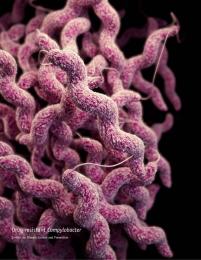
A multi-state outbreak of a drug-resistant illness linked to pet store puppies is currently under investigation, according to the CDC. 


As of December 2017, two people in both Connecticut and New York were infected with Campylobacter bacteria — which is resistant to commonly recommended, first-line antibiotics making it difficult to treat.

Epidemiologic and laboratory evidence indicates that contact with puppies sold through Petland stores is a likely source of this outbreak.

Since the last update on October 30, 2017, 30 more ill people have been reported from 11 states. The most recent illness began on Oct. 23, 2017.

As of Dec. 12, 2017, 97 people with laboratory-confirmed infections or symptoms consistent with Campylobacter infection have been linked to this outbreak. Illnesses have been reported from 17 states.

UK – Court records expose methods used in British food poisoning scam

EL Pais

An investigating judge in Palma de Mallorca has lifted the seal on court records entered in the case of a scheme that may have cheated Spanish hotels out of as much as €60 million through phony food poisoning claims filed since 2014.

British law firms promised clients up to €18,000 and a 98% success rate in claims for gastric illness caused by the hotel food. The lawyers kept 60% of the payout, and the remainder was enough to cover the client’s entire holiday package costs. Clients were sent to them by a ring operating out of Mallorca, where “sales agents” were deployed to hotels in search of targets.

The Spanish Civil Guard arrested seven members of this ring, all British nationals, in September of last year. The suspects allegedly exploited lax British legislation by persuading hotel clients to file phony food poisoning claims against their tour operators

Canada – Updated Food Recall Warning – Coconut Tree brand Shredded Young Coconut recalled due to Salmonella

CFIA

Ottawa, January 28, 2018 – The food recall warning issued on January 24, 2018 has been updated to include additional product and distribution information. This additional information was identified during the Canadian Food Inspection Agency’s (CFIA) food safety investigation.

Thai Indochine Trading Inc. is recalling Coconut Tree brand Shredded Young Coconut from the marketplace due to possible Salmonella contamination. Consumers should not consume the recalled product described below.

Recalled products

Brand Name Common Name Size Code(s) on Product UPC
Coconut Tree Shredded Young Coconut 227 g 2019-08-01 7 79139 06522 7