Monthly Archives: November 2017

USA – Spices with Salmonella Recalled

Food Poisoning Journal

Goya de Puerto Rico is recalling 28 ounces Adobo with Cumin Seasoning and 28 ounces Adobo with Pepper Seasoning because they have the potential to be contaminated with Salmonella, an organism which can cause serious and sometimes fatal infections in young children, frail or elderly people, and others with weakened immune system. No illnesses have been reported to date.

USA- Chicken Tikka Masala Recalled due to Listeria Concerns

Food Poisoning Journal

Sukhi’s Gourmet Indian Foods of Hayward, Calif., is recalling approximately 264 pounds of chicken tikka masala.The product may be contaminated with Listeria monocytogenes.

There have been no confirmed reports of adverse reactions due to consumption of these products.

USA – USDA Provides Tips and Resources for a Bacteria-Free Thanksgiving

FSIS USDA

dishes and desserts. The Thanksgiving meal is by far the largest and most stressful meal many consumers prepare all year, leaving room for mistakes that can make guests sick. But never fear, the U.S. Department of Agriculture (USDA) Food Safety and Inspection Service (FSIS) is available with tips and resources to make this Thanksgiving safe and stress-free.

“Turkey and other meat and poultry may contain Salmonella and Campylobacter that can lead to serious foodborne illness,” said acting FSIS Administrator Paul Kiecker. “By properly handling and cooking your turkey, you can avoid these harmful pathogens and ensure your family has a safe and healthy Thanksgiving feast.”

Begin by following these five steps:

Wash your hands, but not your turkey

Washing your hands before cooking is the simplest way to stop the spread of bacteria, while washing your turkey is the easiest way to spread bacteria all over your kitchen. According to the 2016 Food and Drug Administration Food Safety Survey, 68 percent of consumers wash poultry in the kitchen sink, which is not recommended by the USDA. Research shows that washing meat or poultry can splash bacteria around your kitchen by up to 3 feet, contaminating countertops, towels and other food. Washing doesn’t remove bacteria from the bird. Only cooking the turkey to the correct internal temperature will ensure all bacteria are killed.

The exception to this rule is brining. When rinsing brine off of a turkey, be sure to remove all other food or objects from the sink, layer the area with paper towels and use a slow stream of water to avoid splashing.

To stuff or not to stuff

For optimal food safety, do not stuff the turkey. Even if the turkey is cooked to the correct internal temperature, the stuffing inside may not have reached a temperature high enough to kill the bacteria. It is best to cook the stuffing in a separate dish.

Take the temperature of the bird

Although there are various ways to cook a turkey, the only way to avoid foodborne illness is to make sure it is cooked to the correct internal temperature as measured by a food thermometer. Take the bird’s temperature in three areas — the thickest part of the breast, the innermost part of the wing and the innermost part of the thigh — make sure all three locations reach 165ºF. If one of those locations does not register at 165ºF, then continue cooking until all three locations reach the correct internal temperature.

Follow the two-hour rule

Perishable foods should not be left on the table or countertops for longer than two hours. After two hours, food falls into the Danger Zone, temperatures between 40-140ºF, where bacteria can rapidly multiply. If that food is then eaten, your guests could get sick. Cut turkey into smaller slices and refrigerate along with other perishable items, such as potatoes, gravy and vegetables. Leftovers should stay safe in the refrigerator for four days.

When in doubt call the USDA Meat and Poultry Hotline

If you have questions about your Thanksgiving dinner, call the USDA Meat and Poultry Hotline at 1-888-MPHotline (1-888-674-6854) to talk to a food safety expert. You can also chat live at AskKaren.gov, available from 10 a.m. to 6 p.m. ET, Monday through Friday, in English and Spanish.

If you need help on Thanksgiving Day, the Meat and Poultry Hotline is available from 8 a.m. to 2 p.m. ET.

Consumers with food safety questions can visit FoodSafety.gov to learn more about how to safely select, thaw and prepare a turkey. For more Thanksgiving food safety tips, follow FSIS on Twitter, @USDAFoodSafety, or on Facebook, at Facebook.com/FoodSafety.gov.

 

USA – Goya Adobo Recalled for Possible Listeria Contamination

Food Poisoning Bulletin

Goya de Puerto Rico is recalling Adobo with Cumin Seasoning and Adobo with Pepper Seasoning because they may be contaminated with Listeria monocytogenes bacteria. No illnesses have been reported to date in connection with the problem.

Six hundred and sixty one cases of these products were distributed in Puerto Rico through retail stores. Goya Adobo with Cumin Seasoning is packaged in 28 ounce plastic jars with a green cap with the mark “Best by Date 10/18/22.” Goya Adobo with Pepper Seasoning is packaged in 28 ounce plastic jars with a red cap with the mark “Best by Date 10/23/22.”

If you purchased these products, do not eat them, even if you intend to cook with them. Heat does kill Listeria bacteria, but cross-contamination can occur. Throw them away in a sealed or double bagged package and place the package in a secure garbage can. You can also take the seasonings back to the store where you bought them for a full refund.

Malaysia- 110 in Muar hit by food poisoning

The Star Online

MUAR: Some 110 students and teachers from Kolej Vokasional Muar here were hit by food poisoning after consuming a seafood spread prepared by the hostel kitchen.

Johor Health, Environment, Information and Education Committee chairman Datuk Ayub Rahmat said the feast on Sunday was to celebrate the end of their school term.

He said the seafood including mussels, prawns and crabs, was served in a “shell out” style where it was placed on tabletops and eaten without plates.

“The Maharani Health Clinic started receiving food poisoning notifications starting 3.30pm Sunday when 30 students complained of symptoms such as nausea, stomach cramps and diarrhoea.

 “We have directed the hostel kitchen to be closed for three days until Nov 21 for investigations,” he said on Monday.

Ayub said the celebration was attended by 380 students and teachers, so checks were going on to determine if others might have been affected by the outbreak.

Europe – 2016 RASFF Report

EC Europa

The RASFF was put in place to provide food and feed control authorities with an effective tool to exchange information about measures taken responding to serious risks detected in relation to food or feed. This exchange of information helps Member States to act more rapidly and in a coordinated manner in response to a health threat caused by food or feed. Its effectiveness is ensured by keeping its structure simple: it consists essentially of clearly identified contact points in the Commission, EFSA, EEA and at national level in member countries, exchanging information in a clear and structured way by means of an online system called iRASFF.

USA- Hepatitis A is Hitting Utah

Food Poisoning Journal

Since January 1, 2017, Utah public health has identified 84 confirmed cases of hepatitis A virus (HAV) infection; many among persons who are homeless and/or using illicit drugs. Several cases have been linked by investigation and/or viral sequencing to a national outbreak of hepatitis A involving cases in California and Arizona. Hospitalization rates of less than 40% have been described in previous hepatitis A outbreaks; however, other jurisdictions associated with this outbreak are reporting case hospitalization rates approaching 70%. The high rate of hospitalization may be a result of cases having underlying illnesses (e.g., alcoholism), or a higher rate of hepatitis comorbidities (e.g., hepatitis B or C). In response to the outbreak, public health officials have been working to identify cases and contacts, provide education, and ensure opportunities for vaccination of close contacts to cases and vulnerable populations.

USA- Company dinner blamed for illness outbreak in Georgia

Food Safety News

Hundreds of people in Northwest Georgia became sick after eating a catered company Thanksgiving dinner in recent days according to local news reports out of Bartow County.

Local and state public health officials have confirmed that they are investigating an apparent foodborne illness outbreak related to a two-day catered event this past week at the Toyo Tire plant in White, GA.

“While we suspect this is a foodborne-related outbreak, that hasn’t been confirmed. Cause of the outbreak is not yet known,” according to a Monday statement from the Georgia Department of Health. “We know of two hospitalizations in Bartow, but there may have been more. We are working with Toyo (human resources) to determine how many people potentially may have been affected.

USA- New York officials warn against raw milk from Udder Milk – Brucellosis

Food Safety News

New York health and agriculture officials are warning the public to not buy or consume unpasteurized, raw milk from Udder Milk in New Jersey because of the danger of contracting an antibiotic-resistant form of food poisoning.

Federal law prohibits transporting unpasteurized milk across state lines for sale. New York law prohibits the sale of unpasteurized, raw milk except for “on-farm” direct-to-consumer sales. New Jersey and Rhode Island have already ordered the Udder Milk company to cease and desist its “illegal sales” of unpasteurized milk.

“A New Jersey resident was recently diagnosed with a disease called brucellosis after her reported purchase of raw milk from a home delivery company named Udder Milk in New Jersey,” according to the public health alert from the New York State Department of Agriculture and Markets, the New York State Department of Health, and the New York City Department of Health and Mental Hygiene.

UK- Scotland- Norovirus cases increase

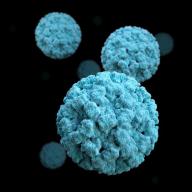
HPS Scotland Food Borne Illness - Norovirus -CDC Photo

Latest figures on norovirus show that NHS boards are experiencing increased norovirus activity with health professionals across NHS Scotland working hard to reduce the likelihood of outbreaks arising.

Norovirus is a highly infectious virus that causes outbreaks in the community, healthcare and care settings. Although it is present all year round, norovirus becomes more common in the winter when people stay indoors for longer and in larger groups. To help reduce the risk of norovirus outbreaks, HPS is once again asking anyone who thinks they have norovirus to stay at home until at least 48 hours after they are symptom-free.

As norovirus is so infectious, it is important that everyone plays their part and takes responsibility for trying to reduce the risk of outbreaks. In order to do this, hospitals may suspend access to particular wards to protect patients, staff and visitors from norovirus and to minimise disruption to healthcare services.

Health Protection Scotland (HPS) is continuing to monitor the situation and will support NHS boards as required. [HPS News Release, 17 November 2017. http://www.hps.scot.nhs.uk/news/newsdetail.aspx?id=22457]

HPS’s latest weekly norovirus report can be accessed at http://www.hps.scot.nhs.uk/giz/norovirusdashboard.html.

The Stay at Home campaign materials including digital social media toolkit can be found at http://www.healthscotland.com/resources/campaigns/norovirus.aspx. Further information on norovirus including a link to the ‘Top Tips for Preventing Infection and Norovirus Guidance’ and tools can be found at http://www.hps.scot.nhs.uk/giz/norovirus.aspx?subjectid=125.