Monthly Archives: November 2017

Europe – Surveillance of antimicrobial resistance in Europe: 2017

ECDC Europa

The results presented in this report are based on antimicrobial resistance data from invasive isolates reported to EARS-Net by 30 European Union (EU) and European Economic Area (EEA) countries in 2017 (data referring to 2016), and on trend analyses of data reported by the participating countries for the period 2013 to 2016.

Download


Research – Gastroenteritis outbreaks on cruise ships: contributing factors and thresholds for early outbreak detection

Eurosurveillance

Acute gastroenteritis (AG) is the most frequent disease among travellers and outbreaks are detected among tourists staying in accommodation every year [1], including on cruise ships [2]. The majority (97%) of AG outbreaks that were reported and diagnosed on cruise ships in the United States (US) during 2008–2014 were caused by norovirus [2]. Norovirus gastroenteritis outbreaks often involve person-to-person and environmental transmission [39] and have been recognised to have a considerable public health impact and economic burden on the tourism industry [10,11]. In addition to the public health impact and disruption of holidays, consequences include loss of personal travel funds and high ship operation costs [10]. Preventative routine measures include pre-embarkation screening, syndromic surveillance, isolation of symptomatic travellers (i.e. crew members and passengers), environmental and personal hygiene measures, crew education, and instructions to travellers and others about hand washing and symptoms reporting [12,13].

Research – Impact of Cooking Procedures and Storage Practices at Home on Consumer Exposure to Listeria Monocytogenes and Salmonella Due to the Consumption of Pork Meat

Online Wiley Library Listeria cdc

The objective of this research was to analyze the impact of different cooking procedures (i.e., gas hob and traditional static oven) and levels of cooking (i.e., rare, medium, and well-done) on inactivation of Listeria monocytogenes and Salmonella in pork loin chops. Moreover, the consumer’s exposure to both microorganisms after simulation of meat leftover storage at home was assessed. The results showed that well-done cooking in a static oven was the only treatment able to inactivate the tested pathogens. The other cooking combinations allowed to reach in the product temperatures always ≥73.6 °C, decreasing both pathogens between 6 log10 cfu/g and 7 log10 cfu/g. However, according to simulation results, the few cells surviving cooking treatments can multiply during storage by consumers up to 1 log10 cfu/g, with probabilities of 0.059 (gas hob) and 0.035 (static oven) for L. monocytogenes and 0.049 (gas hob) and 0.031 (static oven) for Salmonella. The key factors affecting consumer exposure in relation to storage practices were probability of pathogen occurrence after cooking, doneness degree, time of storage, and time of storage at room temperature. The results of this study can be combined with prevalence data and dose–response models in risk assessment models and included in guidelines for consumers on practices to be followed to manage cooking of pork meat at home.

Research – Promising new vaccine candidates against Campylobacter in broilers

Plos one 


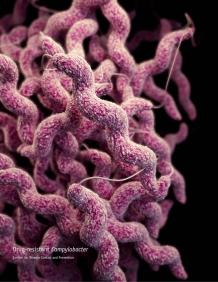
Campylobacter is the leading cause of human bacterial gastroenteritis in the European Union. Birds represent the main reservoir of the bacteria, and human campylobacteriosis mainly occurs after consuming and/or handling poultry meat. Reducing avian intestinal Campylobacter loads should impact the incidence of human diseases. At the primary production level, several measures have been identified to reach this goal, including vaccination of poultry. Despite many studies, however, no efficient vaccine is currently available. We have recently identified new vaccine candidates using the reverse vaccinology strategy. This study assessed the in vivo immune and protective potential of six newly-identified vaccine antigens. Among the candidates tested on Ross broiler chickens, four (YP_001000437.1, YP_001000562.1, YP_999817.1, and YP_999838.1) significantly reduced cecal Campylobacter loads by between 2 and 4.2 log10 CFU/g, with the concomitant development of a specific humoral immune response. In a second trial, cecal load reductions results were not statistically confirmed despite the induction of a strong immune response. These vaccine candidates need to be further investigated since they present promising features.

Research – Surveillance for Waterborne Disease Outbreaks Associated with Drinking Water — United States, 2013–2014

CDC

Provision of safe water in the United States is vital to protecting public health (1). Public health agencies in the U.S. states and territories* report information on waterborne disease outbreaks to CDC through the National Outbreak Reporting System (NORS) (https://www.cdc.gov/healthywater/surveillance/index.html). During 2013–2014, 42 drinking water–associated outbreaks were reported, accounting for at least 1,006 cases of illness, 124 hospitalizations, and 13 deaths. Legionella was associated with 57% of these outbreaks and all of the deaths. Sixty-nine percent of the reported illnesses occurred in four outbreaks in which the etiology was determined to be either a chemical or toxin or the parasite Cryptosporidium. Drinking water contamination events can cause disruptions in water service, large impacts on public health, and persistent community concern about drinking water quality. Effective water treatment and regulations can protect public drinking water supplies in the United States, and rapid detection, identification of the cause, and response to illness reports can reduce the transmission of infectious pathogens and harmful chemicals and toxins.

To provide information about drinking water–associated waterborne disease outbreaks in the United States in which the first illness occurred in 2013 or 2014 (https://www.cdc.gov/healthywater/surveillance/drinking-surveillance-reports.html), CDC analyzed outbreaks reported to the CDC Waterborne Disease and Outbreak Surveillance System through NORS (https://www.cdc.gov/nors/about.html) as of December 31, 2015. For an event to be defined as a waterborne disease outbreak, two or more cases must be linked epidemiologically by time, location of water exposure, and illness characteristics; and the epidemiologic evidence must implicate water exposure as the probable source of illness. Data requested for each outbreak include 1) the number of cases, hospitalizations, and deaths; 2) the etiologic agent (confirmed or suspected); 3) the implicated water system; 4) the setting of exposure; and 5) relevant epidemiologic and environmental data needed to understand the outbreak occurrences and for determining the deficiency classification.§ One previously unreported outbreak with onset date of first illness in 2012 is presented but is not included in the analysis of outbreaks that occurred during 2013–2014.

Public health officials from 19 states reported 42 outbreaks associated with drinking water during the surveillance period (Table 1) (https://www.cdc.gov/healthywater/surveillance/drinking-water-tables-figures.html). These outbreaks resulted in at least 1,006 cases of illness, 124 hospitalizations (12% of cases), and 13 deaths. At least one etiologic agent was identified in 41 (98%) outbreaks. Counts of etiologic agents in this report include both confirmed and suspected etiologies, which differs from previous surveillance reports. Legionella was implicated in 24 (57%) outbreaks, 130 (13%) cases, 109 (88%) hospitalizations, and all 13 deaths (Table 1). Eight outbreaks caused by two parasites resulted in 289 (29%) cases, among which 279 (97%) were caused by Cryptosporidium, and 10 (3%) were caused by Giardia duodenalis. Chemicals or toxins were implicated in four outbreaks involving 499 cases, with 13 hospitalizations, including the first reported outbreaks (two outbreaks) associated with algal toxins in drinking water.

The most commonly reported outbreak etiology was Legionella (57%), making acute respiratory illness the most common predominant illness type reported in outbreaks (Table 2). Thirty-five (83%) outbreaks were associated with public (i.e., regulated), community or noncommunity water systems, and three (7%) were associated with unregulated, individual systems. Fourteen outbreaks occurred in drinking water systems with groundwater sources and an additional 14 occurred in drinking water systems with surface water sources. The most commonly cited deficiency, which led to 24** (57%) of the 42 drinking water–associated outbreaks, was the presence of Legionella in drinking water systems. In addition, 143 (14%) cases were associated with seven (17%) outbreak reports that had a deficiency classification indicating “unknown or insufficient information.”

Among 1,006 cases attributed to drinking water–associated outbreaks, 50% of the reported cases were associated with chemical or toxin exposure, 29% were caused by parasitic infection (either Cryptosporidium or Giardia), and 13% were caused by Legionella infection (Table 2). Seventy-five percent of cases were linked to community water systems. Outbreaks in water systems supplied solely by surface water accounted for most cases (79%). Of the 1,006 cases, 86% originated from outbreaks in which the predominant illness was acute gastrointestinal illness. Three (7%) outbreaks in which treatment was not expected to remove the contaminant were associated with a chemical or toxin and resulted in 48% of all outbreak-associated cases.


Research – E. coli Bacteria Infections: Bacteria Produce Toxin Protein to Defend Themselves

Food Poisoning Bulletin

E. coli bacteria produce a toxin protein to defend themselves and kill off other bacteria, according to new research published in the journal Nucleic Acids Research. There have been many E. coli bacteria outbreaks in the United States in the past several years, including the deadly outbreak linked to I.M. Healthy SoyNut Butter earlier this year and the current outbreak at Damsy Restaurant in Rochester, Minnesota

Canada – Norovirus – Outbreaks in Quebec, Twin Cities traced to Chinese Raspberries

Food Safety News

Frozen raspberries imported from China were the source of 615 confirmed cases of norovirus in Quebec between March and July of this year, and of 15 cases in Minnesota in August of 2016.The Quebec outbreak included clients and staff at seven seniors’ residences, two daycare centers and one hotel in four separate administrative regions of the province, according to a spokesperson for Quebec’s Ministry of Health and Social Services (MSSS).


USA – Trader Joe’s employee with Hepatitis A prompts public alert

Food Safety News

It’s too late for them to receive post-exposure treatment for hepatitis A, but customers of a Trader Joe’s grocery store in Reno, NV, are being asked to monitor themselves in the coming weeks for symptoms of the highly contagious virus.Neither Trader Joe’s nor the Washoe County Health District had posted information on the situation as of 7 p.m. EST Monday. No one was immediately available to provide comment at the grocery chain headquarters or health district.

It was not known Monday evening if the Trader Joe’s employee was infected with the same strain of hepatitis A responsible for a multi-state outbreak that has sickened more than 1,200 people, hospitalizing more than 800 and killing 41.

USA -69 Marines hospitalized in California E. Coli outbreak

WHTR

SAN DIEGO (AP) — The Marine Corps says 69 recruits in Southern California are being treated for apparent exposure to E. coli and nine have developed a serious complication.

Those being treated Friday include 14 new cases among some 5,500 recruits at Camp Pendleton and the San Diego recruiting depot. The military says nine developed haemolytic uremic syndrome, a problem that can cause anaemia and kidney damage.

Overall, about 300 Marines have been affected by a week-old outbreak of the diarrheal illness.

The source of the outbreak is under investigation.

Training continues and some 500 Marines graduated from training on Friday.

The Marine Corps says efforts will be made to allow recruits who had to miss training to make it up.

Canada – Food Recall Warning – Imperial Caviar & Seafood and VIP Caviar Club brand Trout Roe recalled due to potential presence of dangerous bacteria – Clostridium botulinum

CFIA

Recall details

Ottawa, November 25, 2017 – Imperial Caviar & Seafood is recalling Imperial Caviar & Seafood and VIP Caviar Club brand Trout Roe from the marketplace because they may permit the growth of Clostridium botulinum. Consumers should not consume the recalled products described below.

Recalled products

Brand Name Common Name Size Code(s) on Product UPC
Imperial Caviar & Seafood Trout Roe 100 g BB-24-AVR-2018
11417-02
1 86866 51017 1
Imperial Caviar & Seafood Trout Roe 50 g BB-24-AVR-2018
11417-01
1 86866 51016 4
VIP Caviar Club Trout Roe 50 g BB-08-NOV-2018
31217-01
1 86866 51016 4

What you should do

If you think you became sick from consuming a recalled product, call your doctor.

Check to see if you have recalled products in your home. Recalled products should be thrown out or returned to the store where they were purchased.

Food contaminated with Clostridium botulinum toxin may not look or smell spoiled but can still make you sick.

Symptoms can include facial paralysis or loss of facial expression, unreactive or fixed pupils, difficulty swallowing, drooping eyelids, blurred or double vision, difficulty speaking or slurred speech, and a change in sound of voice, including hoarseness.