Monthly Archives: July 2017

Research – Growth Kinetics of Listeria monocyotgenes in Cut Produce

Growth Kinetics of Listeria monocytogenes in Cut Produce

Journal of Food Protection

Cut produce continues to constitute a significant portion of the fresh fruit and vegetables sold directly to consumers. As such, the safety of these items during storage, handling, and display remains a concern. Cut tomatoes, cut leafy greens, and cut melons, which have been studied in relation to their ability to support pathogen growth, have been specifically identified as needing temperature control for safety. Data are needed on the growth behavior of foodborne pathogens in other types of cut produce items that are commonly offered for retail purchase and are potentially held without temperature control. This study assessed the survival and growth of Listeria monocytogenes in cut produce items that are commonly offered for retail purchase, specifically broccoli, green and red bell peppers, yellow onions, canned green and black olives, fresh green olives, cantaloupe flesh and rind, avocado pulp, cucumbers, and button mushrooms. The survival of L. monocytogenes strains representing serotypes 1/2a, 1/2b, and 4b was determined on the cut produce items for each strain individually at 5, 10, and 25°C for up to 720 h. The modified Baranyi model was used to determine the growth kinetics (the maximum growth rates and maximum population increases) in the L. monocytogenes populations. The products that supported the most rapid growth of L. monocytogenes, considering the fastest growth and resulting population levels, were cantaloupe flesh and avocado pulp. When stored at 25°C, the maximum growth rates for these products were 0.093 to 0.138 log CFU/g/h and 0.130 to 0.193 log CFU/g/h, respectively, depending on the strain. Green olives and broccoli did not support growth at any temperature. These results can be used to inform discussions surrounding whether specific time and temperature storage conditions should be recommended for additional cut produce items.
USA – Another Food Poisoning Incident at a Seattle Restaurant

Food Poisoning Bulletin Vibrio

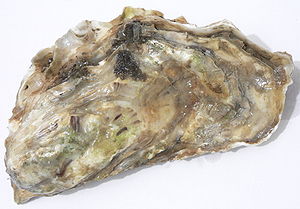
Another food poisoning outbreak associated with the consumption of raw oysters has sickened people in Seattle, Washington. This time it’s at the White Swan Public House at 1001 Fairview Avenue North.

Canada – Salmonella Outbreak in Canada Linked to Frozen Raw Chicken Products

Food Poisoning Bulletin Campylobacter kswfoodworld

The Public Health Agency of Canada has stated that the Salmonella Enteritidis outbreak in that country announced in late June, 2017 has been linked to a recalled frozen chicken product. Twelve people in four different provinces are sick.

USA – Florida Reports Vibrio vulnificans Cases

Outbreak News Today Vibrio_vulnificus_01a

The Florida Department of Health has seen an average of 33 Vibrio vulnificus cases since 2008, including 10 fatalities.

To date in 2017, health officials have reported 10 cases, including one death.

Three cases have been seen in Sumter County, while the following counties have reported one case each: Charlotte, Citrus, Duval, Lee, Orange, Pasco and Santa Rosa. The Orange County patient is the one fatality reported to date, according to DOH numbers.

Last year, Florida reported 46 cases, including 10 deaths.

UK – Macsween of Edinburgh Ltd recalls various products because of inadequate procedures to control Clostridium botulinum.

Macsween of Edinburgh Ltd recalls various products because of inadequate procedures to control Clostridium botulinum

FSA

Macsween of Edinburgh Ltd has recalled a number of its products, including products manufactured for Lidl and Marks & Spencer, as a precautionary measure, because of concerns over the company’s procedures in place to control Clostridium botulinum.

Product Details

Brand Product Name Sizes ‘Use by’ Date
Macsween of Edinburgh Delicious Every Day Haggis 227g, 454g, 500g Up to and including 18/08/2017
Macsween of Edinburgh In a Hurry Haggis 130g Up to and including 18/08/2017
Macsween of Edinburgh Haggis 1kg, 1.36kg Up to and including 18/08/2017
Macsween of Edinburgh Traditional Haggis 454g, 907g Up to and including 18/08/2017
Macsween of Edinburgh Delicious Every Day Haggis Gluten Free 454g Up to and including 18/08/2017
Macsween of Edinburgh Haggis Canapes All sizes Up to and including 18/08/2017
Macsween of Edinburgh 3 Bird Haggis All sizes Up to and including 18/08/2017
Macsween of Edinburgh In a Hurry Vegetarian Haggis 130g Up to and including 18/08/2017
Macsween of Edinburgh Delicious Every Day Vegetarian Haggis 227g, 454g, 500g Up to and including 18/08/2017
Macsween of Edinburgh Vegetarian Haggis 1.36kg Up to and including 18/08/2017
Macsween of Edinburgh In a Hurry Black Pudding 130g Up to and including 18/08/2017
Macsween of Edinburgh Delicious Every Day Black Pudding 454g Up to and including 18/08/2017
Lidl Donald & Sons Scottish Haggis 454 All date codes
Lidl Donald & Sons Haggis Slice 227g All date codes
Lidl Donald & Sons Black Pudding 300g All date codes
Lidl Donald & Sons Black Pudding Slices 227g All date codes
Lidl Warren & Sons Sliced Black Pudding 227g All date codes
Marks & Spencer Scottish Haggis 454g Up to and Including 26/07/2017
Marks & Spencer Scottish 2 Haggis Slices 130g Up to and Including 26/07/2017
Marks & Spencer Black Pudding 200g Up to and Including 28/07/2017
Marks & Spencer 4 Black Pudding Slices 227g Up to and Including 27/07/2017
Marks & Spencer White Pudding 200g Up to and Including 28/07/2017

No other Macsween of Edinburgh Ltd, Lidl and Marks & Spencer products are known to be affected

Risk

Manufacturing controls that could potentially affect the safety of the products could not be demonstrated satisfactorily by the manufacturer.

The issue relates to controlling factors to prevent the growth and toxin production of Clostridium botulinum. Botulinum toxin may cause a serious form of food poisoning called botulism and can be fatal.  A recall from customers is being carried out as a precautionary measure.

Our advice to consumers

If you have bought any of the above products, do not eat it. Instead, return it to the store from where it was bought for a full refund.

Europe – Hepatitis E: Raw Pork is the main cause of Infection

Hepatitis E: raw pork is main cause of infection in EU

EFSA

Consumption of raw or undercooked pork meat and liver is the most common cause of hepatitis E infection in the EU, said EFSA.

More than 21,000 cases of hepatitis E infections have been reported in humans over the last 10 years, with an overall 10-fold increase in this period.

Rosina Girones, chair of EFSA’s working group on hepatitis E, said: “Even if it is not as widespread as other foodborne diseases, hepatitis E is a growing concern in the EU. In the past, people thought the main source of infection was drinking contaminated water while travelling outside the EU. But now we know the main source of transmission of the disease in Europe is food.”

Domestic pigs are the main carriers of hepatitis E in the EU. Wild boars can also carry the virus, but meat from these animals is less commonly consumed.

Experts from EFSA’s Panel on Biological Hazards recommend that Member States increase awareness of public health risks associated with raw and undercooked pork meat and advise consumers to cook pork meat thoroughly. They also recommend the development of suitable methods for detecting hepatitis E in food.

This scientific advice builds on a previous scientific opinion on the occurrence and control of foodborne viruses published in 2011.

The European Centre for Disease Prevention and Control (ECDC) has today also published a report on hepatitis E in humans which assesses testing, diagnosis and monitoring methods and reviews available epidemiological data.

Key facts about hepatitis E

  • Hepatitis E is a liver disease caused by the hepatitis E virus (HEV).
  • Most people who contract hepatitis E display no or mild symptoms. However, in some cases especially for those with liver damage or patients with a weak immune system, it can lead to liver failure – which can be fatal.

RASFF Alerts – Salmonella – Chicken Breast – Chicken Leg – Meat Spread – Frozen Shrimps – Chicken Eggs – Chinese Convolulus – Poutry Meat Preparation- Meat for Mincing

kswfoodworld rasff

RASFF – Salmonella enterica ser. Heidelberg (presence /25g) and Salmonella enterica ser. Typhimurium (presence /25g) in frozen chicken breasts from Brazil in Spain

RASFF-Salmonella (presence /25g) in frozen salted chicken half breasts from Brazil in Germany

RASFF-Salmonella (present /25g) in meat spread from Belgium in Belgium

RASFF-Salmonella (presence /25g) in frozen shrimps from India in Spain

RASFF-Salmonella (present /25g) in chicken eggs from the Netherlands, packaged in Germany in Germany

RASFF-Salmonella enterica ser. Enteritidis (presence /25g) in frozen chicken fillets from Italy in France

RASFF-Salmonella (presence /25g) in frozen whole chicken legs from Brazil in France

RASFF-Salmonella enterica ser. Newport (positive /25g) in chinese convolvulus from Thailand in Finland

RASFF-Salmonella (presence /25g) in frozen salted chicken half breast fillets from Brazil in the Netherlands

RASFF-Salmonella (presence /25g) in frozen poultry meat preparation from Brazil in the Netherlands

RASFF-Salmonella (presence /25g) in frozen salted chicken breasts from Thailand in the UK

RASFF-Salmonella (present /25g) in beef for mincing from Austria in Germany

RASFF-Salmonella (presence /25g) in frozen salted chicken half breasts from Brazil in the Netherlands

RASFF-Salmonella (presence /25g) in frozen salted chicken half breasts from Brazil in the Netherlands

RASFF Alerts – Aflatoxin – Groundnuts – Hazlenuts – Dried Figs – Peanut Halva – Nutmeg – Dried Fig Jam- Crushed Red Chilli- Pistachios

kswfoodworld rasff

RASFF – aflatoxins (B1 = 4.1; Tot. = 4.8 µg/kg – ppb) in blanched groundnuts from China in France

RASFF-aflatoxins (B1 = 4.7; Tot. = 25.3 µg/kg – ppb) in hazelnut kernels from Georgia in Bulgaria

RASFF-aflatoxins (B1 = 5; Tot. = 12 / B1 = 2.5; Tot. = 6.0 µg/kg – ppb) in groundnuts from Argentina in the Netherlands

RASFF-aflatoxins (B1 = 6.9; Tot. = 14.8 µg/kg – ppb) in dried figs from Turkey in France

RASFF-aflatoxins (B1 = 7.93; Tot. = 9.26 µg/kg – ppb) in peanut halva from Ukraine in Latvia

RASFF-aflatoxins (B1 = 16 µg/kg – ppb) in nutmeg from Indonesia in the Netherlands

RASFF-aflatoxins (B1 = 14.2; Tot. = 18.4 µg/kg – ppb) in dried figs from Turkey in France

RASFF-aflatoxins (B1 = 10; Tot. = 11.4 / B1 = 74; Tot. = 88 µg/kg – ppb) in groundnut kernels from India in the Netherlands

RASFF-aflatoxins (B1 = 22; Tot. = 26 µg/kg – ppb) in groundnut kernels from Argentina in the Netherlands

RASFF-aflatoxins (B1 = 3.4; Tot. = 6.0 µg/kg – ppb) in dry fig jam from Turkey in France

RASFF-aflatoxins (B1 = 9.5 µg/kg – ppb) in crushed red chilli from India in the UK

RASFF-aflatoxins (B1 = 4.9 µg/kg – ppb) in groundnuts from the United States in the Netherlands

RASFF-aflatoxins (B1 = 10.5; Tot. = 12.7 / B1 = 2.9; Tot. = 30.1 µg/kg – ppb) in raw groundnuts from China in Spain

RASFF-aflatoxins (B1 = 18.6; Tot. = 22.6 µg/kg – ppb) in pistachio nuts with shell from Iran in Germany

RASFF-aflatoxins (B1 = 11.9; Tot. = 13.5 µg/kg – ppb) in dried figs from Turkey in Germany

RASFF-aflatoxins (B1 = 58.3; Tot. = 60.4 µg/kg – ppb) in crushed chilli from Sri Lanka in Italy

RASFF Alert – Norovirus – Frozen Raspberries

kswfoodworld rasff

RASFF – norovirus (GI /25g) in frozen raspberries from Bulgaria in France


RASFF Alerts – Histamine – Tuna Flakes – Canned Tuna in Sunflower Oil – Anchovy Fillets in Sunflower Oil

kswfoodworld rasff

RASFF  – histamine (517 mg/kg – ppm) in frozen pre-cooked tuna flakes from Indonesia, via the Netherlands in France

RASFF-histamine (326 mg/kg – ppm) in canned tuna in sunflower oil from Portugal in Italy

RASFF-histamine (772 mg/kg – ppm) in anchovy fillets in sunflower oil from Italy in Italy