CDC – Personas en riesgo: Mujeres embarazadas y recién nacidos
CDC-La listeriosis es una infección grave generalmente causada por el consumo de alimentos contaminados con la bacteria Listeria monocytogenes
CDC-Prevención
CDC-Recursos educativos

CDC – Personas en riesgo: Mujeres embarazadas y recién nacidos
CDC-La listeriosis es una infección grave generalmente causada por el consumo de alimentos contaminados con la bacteria Listeria monocytogenes
CDC-Prevención
CDC-Recursos educativos
Posted in Uncategorized
Each year in the United States, ∼260,000 people get sick from contaminated fish. Fish is also the most commonly implicated food category in outbreaks. We reviewed the Centers for Disease Control and Prevention Foodborne Disease Outbreak Surveillance System for outbreaks resulting from consumption of fish during the period 1998-2015. We found 857 outbreaks associated with fish, resulting in 4815 illnesses, 359 hospitalizations, and 4 deaths. The median number of illnesses per outbreak was three (range: 2-425). The annual number of fish-associated outbreaks declined from an average of 62 per year during the period 1998-2006 to 34 per year during the period 2007-2015. Hawaii (221 outbreaks [26%]) and Florida (203 [24%]) reported the most outbreaks. Among 637 outbreaks (74%) with a confirmed etiology, scombrotoxin (349 [55%]) and ciguatoxin (227 [36%]) were by far most common. Most outbreak-associated illnesses were caused by scombrotoxin (1299 [34%]), Salmonella (978 [26%]), and ciguatoxin (894 [23%]). Most hospitalizations were caused by Salmonella (97 [31%]) and ciguatoxin (96 [31%]). Norovirus (105 average illnesses; range: [6-380]) and Salmonella (54 [3-425]) caused the largest outbreaks. Fish types implicated most often were tuna (37%), mahi-mahi (10%), and grouper (9%). The etiology-fish pairs responsible for the most outbreaks were scombrotoxin and tuna (223 outbreaks), scombrotoxin and mahi-mahi (64), and ciguatoxin and grouper (54). The pairs responsible for the most illnesses were scombrotoxin and tuna (720 illnesses) and Salmonella and tuna (660). Of the 840 outbreaks (98%) with a single location of food preparation, 52% were associated with fish prepared in a restaurant and 33% with fish prepared in a private home. Upstream control measures targeted to the most common etiologies and controls during processing and preparation could further reduce outbreaks caused by fish.
Posted in Uncategorized
The Idaho Foodbank is recalling approximately 27,000 pounds of Coconut Beverage, Broccoli Cheddar Soup, Eggs, and Cheese Product.
These products are being recalled because they were not continuously maintained or stored at the required temperature due to a malfunction in the cooler. This could result in contamination by spoilage organisms or pathogens, which could lead to life-threatening illness if consumed. The Idaho Foodbank discovered the problem after reviewing cooler temperature records during high heat.
Affected Products were distributed in Southwest and North-Central Idaho:
Southwest Idaho – Magic Valley and Wood River Areas:
| Products Distributed(See product photos) | Facilities that Received Affected Products | Dates Products Were Distributed |
|---|---|---|
| Coconut Beverage |
|
July 10, 2017 – July 14, 2017 |
| Broccoli and Cheesy Cheddar Soup | ||
| Medium Eggs in shell | ||
| Pasteurized Process American Cheese |
North-Central Idaho:
| Products Distributed (See product photos) | Facilities that Received Affected Products | Dates Products Were Distributed |
|---|---|---|
| Coconut Beverage |
|
July 10, 2017 – July 14, 2017 |
Consumers who obtained any of these identified products should not consume these products and immediately throw them away.
No reported illnesses or injuries have been reported or confirmed to date.
The Idaho Foodbank is committed to consumer safety and takes all product quality concerns very seriously. This recall affects less than 2% of the 1.5 million pounds of food IFB distributes statewide each month. We are recalling the products out of an abundance of caution, and are instructing consumers who received them not to eat these products and to immediately dispose of them.
Consumers with questions or concerns about this recall can contact Jennifer Erickson by phone at 208-336-9643 (8am to 5pm MST) or via email at jerickson@idahofoodbank.org.
Posted in Uncategorized
Another brand of protein snacks, Bhu Foods of San Diego, is under recall because they contain organic sunflower seeds from Hudson Valley Foods Inc., which reported finding Listeria monocytogenes in its production facility in recent weeks.
“As a result of a recall of sunflower seeds from Hudson Valley Foods Inc., Bhu Foods’ supplier of organic sunflower seeds, advised Bhu Foods that ingredients sold to the company have the potential to be contaminated with Listeria monocytogenes,” according to the recall notice posted Friday evening by the Food and Drug Administration.
Posted in Uncategorized
Papayas Sicken 47 in 12 States with Salmonella – 1 Death
Illnesses in Iowa, 1, Kentucky, 1, Louisiana, 1, Maryland, 5, Massachusetts, 1, Minnesota, 1, New Jersey, 12, New York, 13, Pennsylvania, 4, Texas, 1, Utah, 1 and Virginia, 6.
The CDC, public health and regulatory officials in several states, and the U.S. Food and Drug Administration (FDA) are investigating a multistate outbreak of Salmonella Kiambu infections.
As of July 21, 2017, 47 people infected with the outbreak strain of Salmonella Kiambu have been reported from 12 states. A list of the states and the number of cases in each can be found on the Case Count Map page. WGS showed that isolates from people infected with Salmonella Kiambu are closely related genetically. This close genetic relationship means that people in this outbreak are more likely to share a common source of infection.
Illnesses started on dates ranging from May 17, 2017 to June 28, 2017. Ill people range in age from less than 1 year to 95, with a median age of 27. Among ill people, 67% are female. Among 31 people with available information, 18 (58%) are of Hispanic ethnicity. Among 33 people with available information, 12 (36%) report being hospitalized. One death was reported from New York City.
Posted July 21, 2017 4:00 PM ET
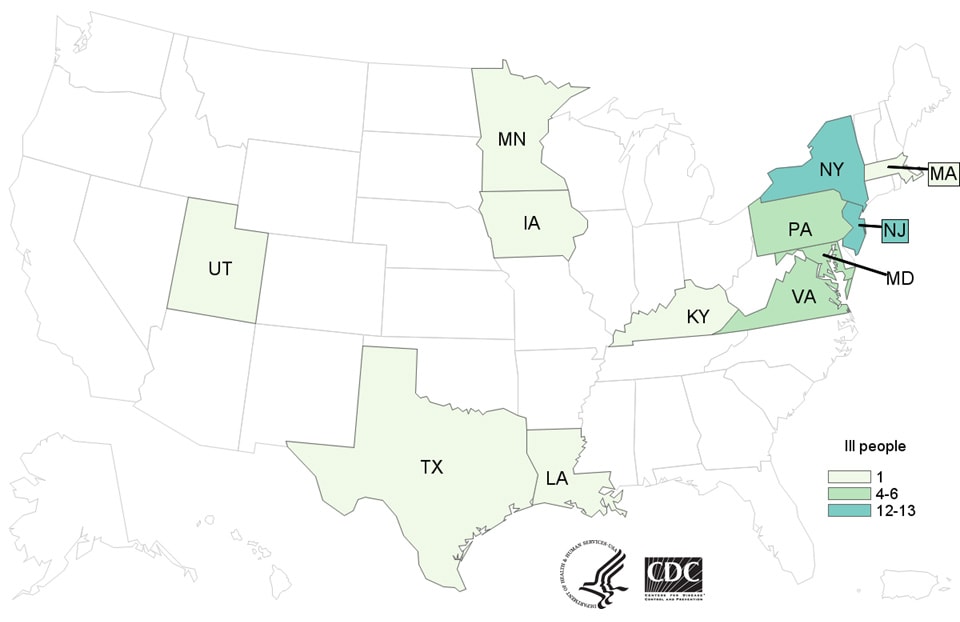
| States | Case Count |
|---|
Posted in Uncategorized
Updated Food Recall Warning – Various brands of butter recalled due to Listeria monocytogenes
Ottawa, July 22, 2017 – The food recall warning issued on July 11, 2017 has been updated to include additional product information. This additional information was identified during the Canadian Food Inspection Agency’s (CFIA) food safety investigation.
Industry is recalling various brands of butter from the marketplace due to possible Listeria monocytogenes contamination. Consumers should not consume the recalled products described below.
The following products have been sold in Quebec.
| Brand Name | Common Name | Size | Code(s) on Product | UPC |
|---|---|---|---|---|
| St Laurent | Butter | 454 g | All lots sold up to and including July 22, 2017 |
0 62260 00454 9 |
| St Laurent | Light Butter | 454 g | All lots sold up to and including July 22, 2017 |
0 62260 00456 3 |
| Beurre du Lac | Butter | 454 g | All lots sold up to and including July 22, 2017 |
0 62260 00455 6 |
| Perron | Butter | 454 g | All lots sold up to and including July 22, 2017 |
7 72622 72454 0 |
| Nutrinor | Butter | 454 g | All lots sold up to and including July 22, 2017 |
0 65244 45827 7 |
| Nutrinor | Light Butter | 454 g | All lots sold up to and including July 22, 2017 |
0 65244 15500 8 |
Posted in Uncategorized
RAW COW’S MILK
1 litre, 2 litre, 3 litre
Date marking: NONE
MS & HJ TYLER is conducting a recall of the above product. The product has been available for sale online and at farm gate in SA.
Problem: The recall is due to microbial (Cryptosporidium) contamination
Food safety hazard: Food products contaminated with (Cryptosporidium) may cause illness if consumed.
What to do: Any consumers concerned about their health should seek medical advice and should return the product to the place of purchase for a full refund.
For further information please contact:
Mark Tyler
0414492466
mooviewdairy.com.au
Posted in Uncategorized
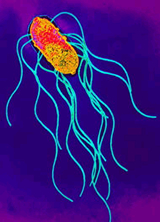
Image CDC
Human S. typhimurium infections linked to exposure to microbiology laboratories
CDC and public health officials in several states have identified a multistate outbreak of Salmonella Typhimurium infections linked to various clinical, commercial, and teaching microbiology laboratories. Twenty-four people infected with the outbreak strain of Salmonella Typhimurium were reported from 16 states.
Six ill people were hospitalized. No deaths were reported. This strain of Salmonella Typhimurium has previously been associated with infections linked to microbiology laboratory exposure in 2011 and 2014. Laboratory-associated salmonellosis continues to be a public health problem. This outbreak is a reminder that bacteria used in microbiology laboratories can sicken people who work in labs.
Posted in Uncategorized
Crypto infections linked to raw milk in South Australia
Officials with SA Health in Australia are reporting five cases of cryptosporidiosis linked to the consumption of Moo View Dairy’s unpasteurized cow’s milk prompting a recall and a health warning.
Kevin Buckett, Director of Public Health at SA Health said they’ve seen some recent cases of people getting sick from raw milk. ” I wanted to remind people that it really isn’t wise to be drinking raw cow’s milk”, he said. “We pasteurize milk for a reason, as it’s much safer”.
Pasteurized milk is milk that has gone through a process called pasteurization. This process usually involves heating milk to a specific temperature for a certain period of time to kill any harmful organisms that can be present in milk.
Raw milk, also known as unpasteurized milk, is milk that has not been pasteurized to kill harmful bacteria.
Posted in Uncategorized
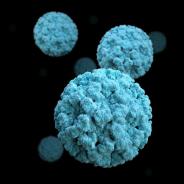
Sterling Chipotle linked to as many as 60 possible Norovirus cases
The Loudoun County Health Department (LCHD) continues to investigate the reports of illness at a Chipotle restaurant in Sterling and has identified approximately 60 ill individuals who reported being at the establishment last week. “One ill patron has tested positive for norovirus,” said Dr. David Goodfriend, director of the LCHD. “This provides additional information but is not sufficient to determine the cause of the outbreak. The Health Department is awaiting further test results, which should be available early next week.”
Customers who ate at the restaurant and became ill are encouraged to contact the Health Department at 703-771-5411. Additional questions or concerns can be addressed by contacting the Health Department at health@loudoun.gov.
Posted in Uncategorized


 FoodWorld