Monthly Archives: July 2017

USA – Alaska shellfish farms temporarily shuttered due to deadly toxin

Seafoodsource

High levels of paralytic shellfish poison (PSP) have temporarily left some of Alaska’s shellfish and oyster farmers out of commission.

Although the toxin has been previously spotted in areas such as Southeast Alaska, Prince William Sound and Kodiak, the last couple of years have seen PSP and its affects travel to troubling new locales, Kimberly Stryker, program manager for Alaska’s Food Safety and Sanitation Program, told Alaska Dispatch News.

“This is definitely something that is concerning for us,” Stryker told the newspaper. “We are very fortunate to have pristine water in Alaska, but we have a long history with PSP. And it’s a scary thing.”
High levels of paralytic shellfish poison (PSP) have temporarily left some of Alaska’s shellfish and oyster farmers out of commission.Although the toxin has been previously spotted in areas such as Southeast Alaska, Prince William Sound and Kodiak, the last couple of years have seen PSP and its affects travel to troubling new locales, Kimberly Stryker, program manager for Alaska’s Food Safety and Sanitation Program, told Alaska Dispatch News. “This is definitely something that is concerning for us,” Stryker told the newspaper. “We are very fortunate to have pristine water in Alaska, but we have a long history with PSP. And it’s a scary thing.”

EU Research – Legionnaires’ disease in Europe, 2011 to 2015

Eurosurveillance 


Under the coordination of the European Centre for Disease Prevention and Control (ECDC), the European Legionnaires’ disease Surveillance Network (ELDSNet) conducts surveillance of Legionnaires’ disease (LD) in Europe. Between 2011 and 2015, 29 countries reported 30,532 LD cases to ECDC (28,188 (92.3%) confirmed and 2,344 (7.7%) probable). Four countries (France, Germany, Italy and Spain) accounted for 70.3% of all reported cases, although their combined populations represented only 49.9% of the study population. The age-standardised rate of all cases increased from 0.97 cases/100,000 population in 2011 to 1.30 cases/100,000 population in 2015, corresponding to an annual average increase of 0.09 cases/100,000 population (95%CI 0.02–0.14; p = 0.02). Demographics and infection setting remained unchanged with ca 70% of cases being community-acquired and 80% occurring in people aged 50 years and older. Clinical outcome was known for 23,164 cases, of whom 2,161 (9.3%) died. The overall case fatality ratio decreased steadily from 10.5% in 2011 to 8.1% in 2015, probably reflecting improved reporting completeness. Five countries (Austria, Czech Republic, Germany, Italy, and Norway) had increasing age-standardised LD notification rates over the 2011−15 period, but there was no increase in notification rates in countries where the 2011 rate was below 0.5/100,000 population.

Research – CDC Raw Milk Information

CDC

“Getting back to nature” – that’s what many Americans are trying to do with the foods that we buy and eat. We are shopping at farmer’s markets, purchasing organic food, participating in food cooperatives, and even growing our own food. Many people are eating food with minimal processing, and some are even choosing to drink raw milk.

Raw milk and products made from it, however, can pose severe health risks, including death. That’s because raw milk has not undergone a process called pasteurization that kills disease-causing germs.

Research – USA – CDC – Botulism – Information

CDC

Botulism is a rare but serious illness caused by a toxin that attacks the body’s nerves.

Symptoms(https://www.cdc.gov/botulism/symptoms.html) of botulism usually start with weakness of the muscles that control the eyes, face, mouth, and throat. This weakness may spread to the neck, arms, torso, and legs. Botulism also can weaken the muscles involved in breathing, which can lead to difficulty breathing and even death.

If you or someone you know has symptoms of botulism, see your doctor or go to the emergency room immediately.

CDC – National Botulism Survey 2015

Canada – Food Recall Warning – St Laurent brand Butter recalled due to Listeria monocytogenes

CFIA

Ottawa, July 5, 2017 – Maurice St-Laurent Limitée is recalling St Laurent brand Butter from the marketplace due to possible Listeria monocytogenes contamination. Consumers should not consume the recalled product described below.

Recalled products

Brand Name Common Name Size Code(s) on Product UPC
St Laurent Butter 454 g 156 074 0 62260 00454 9

UK – Scotland – Algal toxins and E. coli – shellfish warning

HPS Scotland

Further to Current note 51/2407 (at http://www.hps.scot.nhs.uk/ewr/redirect.aspx?id=73579), routine monitoring by Argyll and Bute Council has found raised levels of naturally occurring algal toxins in two areas, Loch Melfort and Seil Sound. This means shellfish have toxins levels above the legally permitted levels for harvest and members of the public are asked not to harvest them.

The naturally occurring toxins accumulate in molluscs such as mussels, oysters, cockles and razor clams. When levels breach statutory limits, harvesting of affected species is prohibited.

Elsewhere, raised levels of Escherichia coli (E. coli) bacteria have been identified in Oitor Mhor Bay. This follows discovery of raised levels at Kerrera West, Loch Craignish, Kilfinichen Bay and Castle Stalker.

All raised levels were discovered due to monitoring work by Argyll and Bute Council’s Environmental Health team, carried out as part of their work to maintain the quality of Argyll shellfish. In addition, a potential risk of raised levels of E. coli has been found at Dunstaffnage, Kerrera East, Loch na Cillie and Loch Riddon.

Eating shellfish such as cockles, mussels, oysters and razor fish from affected areas can pose a risk to human health. Notices to warn the public and casual gatherers have been posted along the shore. Commercial shellfish harvesters in these areas have been contacted by the Council and steps taken to postpone harvesting until bacterial levels subside. People are advised to avoid eating shellfish from these areas until further notice as a precaution. When levels subside, the warning notices will be removed. [Source: Argyll and Bute Council News Release, 30 June 2017. https://www.argyll-bute.gov.uk/news/2017/jun/algal-and-shellfish-toxins-war…]

UK – Scotland – Food Standards Scotland urges men not to let Pink Chicken spoil summer

FSS

29 June 2017

Food Standards Scotland (FSS), the country’s food body, is launching a summer food safety campaign aimed at reducing barbecue-related food poisoning today (30 June 2017). The campaign is targeted at men, who are often the main cooks when it comes to barbecuing*, but the key messages on good hygiene and cooking practice are important for everyone.

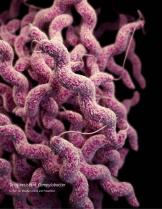
The campaign raises awareness of the risks of campylobacter – a nasty bug found on raw chicken and the biggest cause of food poisoning in Scotland. Reports show that the number of people who become ill from campylobacter food poisoning increases by 60% in the summer months (between mid-May and August), compared to the rest of the year.. Evidence also suggests that campylobacter food poisoning in Scotland is approximately 20% higher among men compared to women, so it’s important they know how to avoid it.

Cooking chicken properly is key to getting rid of campylobacter and this can be a challenge on the barbecue. FSS wants to remind barbecue cooks of the simple rules that will help them to protect themselves and their guests from an unpleasant bout of food poisoning, which in some cases can also have serious effects on health.

The campaign will see the return of ‘Pink Chicken’, who will be doing his best to spoil summer. The humorous campaign has a serious message and aims to raise awareness of the risks associated with not cooking chicken on the barbecue properly. Whether barbecuing in the park, on the beach or at home, Pink Chicken could be lurking anywhere.

The Pink Chicken campaign will run throughout the summer on social media, digital and outdoor advertising to highlight the risks associated with unsafe cooking practices on the barbecue.

Dr Jacqui McElhiney, Head of Food Safety Science at Food Standards Scotland, said: “Despite our unpredictable weather, summer is a time to enjoy ourselves and barbecues are a big part of this. However, we do see a dramatic rise in the number of cases of campylobacter poisoning across Scotland at this time of year.

“Campylobacter is the biggest cause of food poisoning in Scotland so to enjoy chicken safely, it’s vital that everyone follows good hygiene and cooking practice.

“Making sure that there’s no pink meat, the juices run clear and  it’s cooked to 75°C is the best way to avoid a nasty bout of food poisoning from chicken. Always use separate tongs, utensils and plates for raw and cooked chicken, and regularly wash your hands. Don’t let Pink Chicken spoil your summer.”

USA – Research – Hunt for source of two deadly E. coli infections underway in Utah

Food Safety News

Two Utah children are dead from E. coli infections in recent days,  and local  health officials do not know how the victims were exposed to the pathogen.  The children were both residents of the polygamist enclave of Hildale, UT where Deputy Marshal Daniel Musser says it’s possible other  children  in the area might have also been exposed to the bacteria.

Europe – EU – EU Action Plan on Antimicrobial Resistance (AMR): Guidelines for the prudent use of antimicrobials in human health adopted today!

EU

Today, the European Commission has adopted its new EU ‘One Health’ Action Plan to tackle AMR, along with its first deliverable, EU Guidelines for the prudent use of antimicrobials in human health. The Guidelines aim to reduce inappropriate use and promote prudent use of antimicrobials in humans, with a special focus on antibacterial agents. They target all actors – national, regional and local governments, doctors, nurses, pharmacists, hospital administrators and others who play a role in antimicrobial use. They complement infection prevention and control guidelines which may exist at national level and will be published in all official EU languages.

The guidelines are based on a technical report prepared by the European Centre for Disease Prevention and Control (ECDC) with input from experts and stakeholders. They suggest measures, good clinical practices, systems and processes for EU countries to consider when developing and implementing their national strategies. They also include activities that may be taken by international organisations and agencies in support of national strategy development and implementation.

Background

Antimicrobial resistance (AMR) is a priority for the Commission and progress towards more prudent use of antimicrobials in both humans and animals are key objectives of the EU Action Plan on AMR. Guidelines on prudent use of antimicrobials in veterinary medicines were published in 2015. In 2016 Council Conclusions called on the Commission and Member States to develop EU guidelines on prudent use of antimicrobials in human medicine to support national guidelines and recommendations.

EU

Denmark – Campylobacter to blame for most foodborne infections in Denmark

Medical Express 


Campylobacter is to blame for more than 4,600 foodborne infections in Denmark and is thus still the most common cause of foodborne disease. This is one of the findings of the annual report for 2016 on the incidence of diseases that can be transmitted from animals and food to humans. The report was prepared by the National Food Institute, Technical University of Denmark, in cooperation with Statens Serum Institut – the national institute of public health – and the Danish Veterinary and Food Administration. Researchers, government agencies and industry are considering initiatives that can lead to the bacteria making fewer Danes fall ill.