Monthly Archives: May 2017

RASFF Alerts – Animal Feed – Salmonella – Rapeseed Meal

kswfoodworld rasff

RASFF – Salmonella enterica ser. Tennessee (presence /25g) in rapeseed meal from Russia in Finland

RASFF-Salmonella enterica ser. Tennessee (presence /25g) in rapeseed meal from Russia in Finland

RASFF-Salmonella enterica ser. Tennessee (presence /25g) in rape seed meal from Germany in Finland

Information – Food safety answers: What’s in your water? — Videos

Good Fruit Grower Waterfall

What water sampling will FSMA require me to do next year?

The current regulatory language of the FSMA Produce Safety Rule requires growers to follow a specific process of taking a series of water samples on each water source to establish a Microbial Water Quality Profile (MWQP) that is updated with new samples each year.

However, the Food and Drug Administration announced in March 2017 that the agency is reconsidering the entire water quality section of the rule, including sampling standards and methodologies, due to concerns raised by the industry regarding its complexity and difficulty to implement on the farm.

Industry associations like the Northwest Horticultural Council (NHC) and Washington Tree Fruit Research Commission (WTFRC) will be weighing in with FDA as this process moves forward.

In the interim, growers should consider holding off on making new investments in meeting the specific water requirements of the Produce Safety Rule until this process is complete.

However, it is expected that water sampling in some form will still be required, so training on good water sampling techniques including training courses offered by the Washington State Tree Fruit Association (WSTFA) continues to be valuable.

Please remember that the nonwater provisions of the Produce Safety Rule (PSR) are expected to remain the same.


USA – Botulism update: Possibly linked to nacho cheese sauce

Outbreak News Today Clost

In a follow-up on the botulism outbreak in Sacramento County, California state and local health officials report the source of their illnesses appears to be prepared food, particularly nacho cheese sauce, from the Valley Oak Food and Fuel gas station in Walnut Grove, based on the investigation and preliminary data.

The sale of prepared food at this location was halted on May 5, by Sacramento County Department of Environmental Management.

To date, five patients were hospitalized for foodborne botulism and an additional patient with suspected foodborne botulism is currently under investigation.

Botulism is a rare but serious paralytic illness caused by a nerve toxin that is produced by the bacterium Clostridium botulinum. Symptoms can include double vision, blurred vision, drooping eyelids, slurred speech, difficulty swallowing, dry mouth, and muscle weakness.


Canada – Updated Food Recall Warning – Various pie and tart shells recalled due to E. coli O121

CFIA

Ottawa, May 11, 2017 – The food recall warning issued on April 25, 2017 has been updated to include additional product information. This additional information was identified during the Canadian Food Inspection Agency’s (CFIA) food safety investigation.

Industry is recalling various pie and tart shells from the marketplace due to possible E. coli O121 contamination. Consumers should not consume the recalled products described below.

The following products have been sold in Ontario from the locations identified below.

Recalled products

Brand Name Common Name Size Code(s) on Product UPC Additional Info
Briwood Farm Mkt. 10″ Pie Shells 2 pieces All units sold from March 22, 2017 up to and including April 28, 2017 None This product was sold from Briwood Farm Market, 1030 Talbot Street, St. Thomas, Ontario
Lynn’s Bakery & Deli 2″ Unsweetened Tart Shells N/A All units sold from December 23, 2016 up to and including April 27, 2017 0200603 307999 This product was sold from Lynn’s Bakery & Deli, 2190 Dundas Street, London, Ontario
None – Prepared for Apple Valley Foods Corporation /RiccoFoods Unsweetened Tart Shells 40 x 2″ 1.3 lbs All units sold from February 10, 2017 up to and including April 27, 2017 None This product was sold from Lenover’s Quality Meats & Seafoods Ltd., 525 Park Avenue East, Chatham, Ontario
None – Prepared for Apple Valley Foods Corporation /Sysco Unsweetened Tart Shells 40 x 2″ 1.3 lbs All units sold from February 8, 2017 up to and including April 27, 2017 None This product was sold from Lenover’s Quality Meats & Seafoods Ltd., 525 Park Avenue East, Chatham, Ontario

Spain – Scombroid fish poisoning affects dozens in Spain, Tuna recalled

Outbreak News Today Histamine3d

At least 35 people across Spain have been affected by a form of food poisoning known as Scombroid fish poisoning, prompting an advisory from the Agency for Consumption, Food Safety and Nutrition (Aecosan) not to consume and recall lots of tuna from Almeria purchased between April 25 and May 5, according to a El Mundo report (computer translated).

The bulk of the cases have been reported from Andalusia and Madrid.

The tuna involved in the outbreak was marketed in different lots by the Almerian company Garciden and was distributed in the autonomous communities of Murcia, Valencia, Aragon, Andalusia, Castilla y León, the Basque Country, Madrid and Catalonia, and at the European level in Germany, Italy and Portugal.

Murcia Today

Euroweekly

A 14,000 kilo batch of contaminated tuna has prompted the Junta de Andalucia to issue health warnings across the region after consumers fell ill in Cordoba, Granada, Jaen, Malaga and Sevilla.

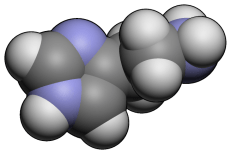
The Andalucian Ministry of Health has reported more than 50 cases of histamine poisoning since May 5, all caused by fresh tuna originating from Garciden, an Almeria-based supplier.

Symptoms include a sore throat, headaches, hot flushes, sweating, nausea and vomiting.

An official statement advises consumers to avoid eating tuna purchased between April 25 and May 5, some of which may still be on sale.

Six batches with barcodes ending in 170501, 170502, 170503, 170504, 170505, and 170506 have been removed from the market.


Research – Contaminated Stream Water as Source for Escherichia coli O157 Illness in Children

CDC O157

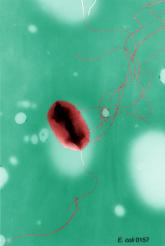
In May 2016, an outbreak of Shiga toxin–producing Escherichia coli O157 infections occurred among children who had played in a stream flowing through a park. Analysis of E. coli isolates from the patients, stream water, and deer and coyote scat showed that feces from deer were the most likely source of contamination.

USA – Kabob’s Acquisition, Inc. Recalls Meat and Poultry Products Due to Possible Listeria Contamination

FSIS – USDA

WASHINGTON, May 10, 2017 – Kabob’s Acquisition, Inc., a Lake City, Ga. establishment, is recalling approximately 5,946 pounds of turkey and ham sandwich products which included a non-meat ingredient that was recalled due to Listeria monocytogenes, the U.S. Department of Agriculture’s Food Safety and Inspection Service (FSIS) announced today.

The Monte Cristo (turkey, ham, cheese, on French toast) sandwiches were produced from May 1, 2014 through February 1, 2017. The following products are subject to recall: [View Label (PDF Only)]

  • 13.25-lb. bulk cases containing 200 “Kabobs MONTE CRISTO TURKEY BREAST, HAM AND CHEESE SANDWICH” in shrink wrapped plastic trays and bearing case codes: PM14E27, PM14H14, PM14J10, PM14E01, PM14E12, PM14E13, PM15C26, PM15E06, PM15G23, PM14L18, PM15A08, PM15C26, PM15K20, PM16B08, PM16B09, PM16F22, PM16F24, and PM17B01.

The products subject to recall bear establishment number “P-6640” inside the USDA mark of inspection. These items were shipped to institutional locations in Florida, Georgia, South Carolina, and Texas.

The problem was discovered when Kabob’s Acquisition, Inc., was notified by their French toast ingredient supplier, that the French toast used in the sandwich products was recalled due to potential Lm contamination. There have been no confirmed reports of adverse reactions due to consumption of these products.

Consumption of food contaminated with L. monocytogenes can cause listeriosis, a serious infection that primarily affects older adults, persons with weakened immune systems, and pregnant women and their newborns. Less commonly, persons outside these risk groups are affected.

UK – We’ve learned lessons but we’re not telling anyone: Public Health England accused of E. coli O55 cover up

Barf Blog

In Dec. 2014, an outbreak of E. coli 055 was identified in Dorset, U.K. with at least 31 sickened. Public Health England (PHE) and local environmental health officials investigated and found nothing, other than cats were also being affected.

France – 300 French schoolchildren sickened by ‘gone-off cheese’

Barf Blog

Katie Forster of The Independent reports a dodgy batch of smelly French cheese has been blamed for a mass food poisoning outbreak at schools in Normandy.

All French cheese smalls bad. Dodgy is not a microbiologically–specific term.

An investigation launched after 300 children fell ill in the town of Rouen named the culprit as gone-off cheese served up by school canteens.

One parent said her child would be avoiding school meals after the scandal, telling local media: “I’d prefer to take them to a fast food place”.

Local authorities inspected the producers of the cheese – a soft, mould-ripened local variety called neufchâtel – but were unable to identify the origin of the contamination.

The children began to suffer headaches, vomiting and stomach aches after eating the cheese at 54 different primary schools and nurseries on 27 April.

A survey of 1,000 parents of children in the region, both those affected and not affected by the outbreak, found a “strong association between the consumption of the cheese and the appearance of digestive symptoms,” according to the local health board.

Research – How cells combat Salmonella

Outbreak News Today kswfoodworld Salmonella

All bacteria have developed clever mechanisms for survival and propagation within host cells. Salmonella are a typical example: usually they hide in membrane-bound particles with only very few bacteria escaping to the cell’s interior. Those escapees are extremely dangerous as they proliferate and spread at enormous speed. To stop such an invasion, cells have developed very effective defense strategies. An interdisciplinary team around Prof. Ivan Dikic (Institute of Biochemistry II) and Prof. Mike Heilemann (Institute of Physical and Theoretical Chemistry), both from Goethe University Frankfurt, now studied such a cellular defense mechanism by visualizing protein patterns at the near-molecular level.