Monthly Archives: February 2017

USA -Sargento Expands Recall of Cheese for Possible Listeria monocytogenes

Food Poisoning Bulletin

Sargento has expanded its recall of cheeses on February 10, 2017 for possible Listeria monocytogenes contamination and is adding sell by dates to previously recalled cheeses. Sargento has ended its relationship with the supplier, Deutsch Kase Haus. That company supplied Sargento with the affected cheese. No illnesses have been reported to date in connection with this issue.

USA -FDA Releases 2016 Food Safety Survey Report

FDA

The Food Safety Survey is a periodic national telephone survey of adults (18 years and older) in the 50 states and the District of Columbia.

FDA in collaboration with the U.S. Department of Agriculture (USDA), Food Safety and Inspection Service (FSIS) has been commissioning the survey since 1988. The survey is intended to help FDA and USDA make informed regulatory, education, and other decisions by providing a better understanding of consumer knowledge, attitudes, and practices related to food safety.

The 2016 survey was the seventh iteration of the survey. It was the first time that the survey sampled cell phone users in addition to users of landline phones. This change was instituted to ensure that we could reach respondents who only have cell phones. The survey consisted of interviews with 4,169 participants between October 2015 and January 2016. An overview of the survey methodology is included at the end of the document.

USA -Secondary Cheese Recalls for Listeria Monocytogenes

Food Poisoning Bulletin

There have been more than half a dozen secondary recalls of cheeses under different brand names for possible Listeria monocytogenes contamination in the past week. Those products were distributed by MDS Foods of Massillon, Ohio and were provided to them by Deutsch Kase Haus, LLC of Middlebury, Indiana.

The recall notice states, “Deutsch Kase Haus, LLC of Middlebury, Indiana, supplied MDS Foods with Colby and Colby Jack minihorn cheeses that have been found to be contaminated with the pathogenic organism which can cause serious and sometimes fatal infections in young children, frail or elderly people, and others with weakened immune systems.” No illnesses have been reported to date in connection with the consumption of these products.

Ireland-Recall of Batches of Tesco Cheeses of Ireland Wicklow Blue Due to Possible Presence of Listeria monocytogenes

FSAI

As a precautionary measure, Tesco is recalling the above batches of Tesco Cheeses of Ireland Wicklow Blue, due to the possible presence of Listeria monocytogenes. Tesco is issuing point of sale recall notices requesting customers who have bought an implicated batch to return it to their store.

Summary
Category 2: For Information
Alert Notification: 2017.04
Product: Tesco Cheeses of Ireland Wicklow Blue; pack size: 120g; Approval Number IE 1089 EC
Batch Code: Use by Dates: 23/02/2017 and 25/02/2017
Country Of Origin: Ireland

Research -Use of novel specific primers targeted to pheS and tuf gene for species and subspecies identification and differentiation of the Bacillus subtilis subsp. subtilis, Bacillus amyloliquefaciens and Bacillus licheniformis

Bacillus_cereus_01African Journal of Microbiology

To clearly delimit the members of the Bacillus subtilis group (BSG), is difficult using common phenotypic and genotypic methods. This study described the use of pheS and tuf gene as targets for interspecies discrimination within the BSG, and also to develop specific PCR and SNP primers for species and subspecies identification and differentiation. The average sequence similarity values of the pheS and tuf gene among type strains were 85.1 and 94.7%, respectively, and all members of the BSG could be clearly distinguished based on phylogenetic analyses of pheS gene sequence. In addition, the specific primers were designed according to pheS and tuf gene sequence. The primers were shown to specifically identify B. subtilis subsp. subtilis, B. amyloliquefaciens and Bacillus licheniformis, and clearly differentiate the subspecies of B. amyloliquefaciens using specific-PCR, combined with two-plex minisequencing method. In conclusion, we have successfully established a comparative sequence analysis and rapid molecular diagnosis techniques for determination of interspecies within the BSG.

Research -Multidrug resistant Campylobacter in faecal and carcasses of commercially produced poultry

African Journal of Microbiology Research Campylobacter kswfoodworld

Poultry meat and products are major transmission routes of human campylobacteriosis. The aim of this study was to determine the numbers and antibiogram profile of Campylobacter isolates from slaughtered broiler and layer birds. One hundred and sixty caecal and one hundred and thirty two carcasses were randomly sampled at the Kejetia poultry slaughter, isolated on charcoal-cefoperazone-deoxycholate agar (CCDA) and confirmed by API CAMPY and their resistance profiles assessed by Kirby-Bauer disk diffusion. Prevalence was 22.5 and 21.9% in the faecal and carcasses, respectively with no significant differences. Species identified among faecal isolates were Campylobacter jejuni (42%), Campylobacter coli (28%), Campylobacter lari (22%) and Campylobacter hyo-intestinalis (8%) while 79% C. jejuni, 14% C. coli, 4% C. jejuni sub sp. doylei, and 3% C. lari were obtained from the carcasses. Resistance to the β-lactams ranged from 75 to 100%, 41 to 86% to the quinolones, 14 to 36% to the aminoglycosides, 100% to erythromycin, 97 to 100% to tetracycline, 72 to 83% to chloramphenicol and 90 to 94% to trimethoprim sulfamethoxazole. All species were sensitive to imipenem, but 100% of isolates were multidrug resistant. Contamination of carcasses with multidrug resistant strains of Campylobacter is a threat to handlers and consumers and of major public health issue.


Hong Kong -Hong Kong reports Vibrio vulnificus necrotizing fasciitis case

Outbreak News Today Vibrio_vulnificus_01a

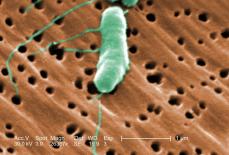
On February 7, 2017, the Hong Kong Centre for Health Protection (CHP) recorded a sporadic case of necrotizing fasciitis due to Vibrio vulnificus infection affecting a 75-year-old male with underlying illnesses.

He presented with fever and right forearm swelling since January 29. He attended the Accident and Emergency Department of a public hospital on January 30 and was admitted on same day. The clinical diagnosis was necrotizing fasciitis. Excisional debridement of right forearm was performed on January 30 and February 3.

USA -Luther College reports Norovirus on campus

Outbreak News Today

Food Borne Illness - Norovirus -CDC Photo

CDC Photo


The Decorah, IA college is reporting multiple people on campus and in the surrounding area have been experiencing symptoms of Norovirus, according to the school’s news site, the Luther College Chips Friday.

Right after the winter break, Luther College Health Services confirmed there has been an outbreak of Norovirus on campus, local media reported.

Canada -Norovirus outbreak linked to oysters climb to 221 cases

Outbreak News Today Vibrio

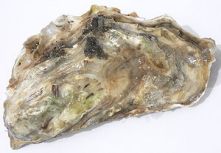
In a follow-up to a report on a norovirus outbreak in Canada linked to British Columbia oysters, the Public Health Agency of Canada reported this week the case count has climbed to 221 as of Tuesday.

The cases have been reported in the following three provinces: British Columbia (159), Alberta (36), and Ontario (26). No deaths have been reported. Individuals became sick between December 2016 and February 2017. All individuals who became ill reported having eaten oysters.

Information -Egyptian Strawberry Hepatitis A Outbreak

Food Poisoning Journal Hepatitis A kswfoodworld

Beginning in September 2016, several states, CDC, and the FDA investigated a multistate outbreak of foodborne hepatitis A. Epidemiologic and traceback evidence indicate that frozen strawberries imported from Egypt are the likely source of this outbreak. Although no discovery has been done to date to confirm how the Egyptian strawberries made it to consumers, we have learned that Tropical Smoothie had a bulk purchasing agreement with Patagonia. Patagonia bought from VLM Canada.  It is also our understanding that VLM Canada bought from ICAPP and that VLM USA was the importer.  It appears that the strawberries entered the US in Norfolk into VLM USA’s possession and then were transferred to Preferred Freezers Storage, Inc. in Chesapeake into Patagonia’s possession.  From there, ITI picked up the berries and delivered them to either Sysco Hampton Roads or Sysco VA.  Sysco delivered them to Tropical Smoothie franchisees.