Monthly Archives: February 2017

Research -Re-assessing the total burden of Norovirus circulating in the United Kingdom population

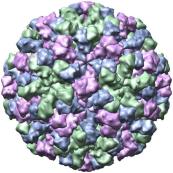
Science Direct Norwalk_Caspid

The second Infectious Intestinal Diseases study (IID2) estimated the incidence of norovirus in the UK at 47/1000 population (three million cases annually). Clinically significant norovirus was defined using a cycle threshold (ct) value of <30; a more stringent cut-off than used in diagnostic laboratories. The low infectious dose of norovirus means asymptomatic individuals potentially contribute to ongoing transmission. Using a less stringent but diagnostically relevant threshold increases the estimation of the population burden of norovirus infection by around 26% to 59/1000 person years (95% CI 52.32–64.98), equating to 3.7 million norovirus infections annually (3.3–4.1 million). With possible vaccines on the horizon for norovirus, having a good estimate of the total burden of norovirus infection, as well as symptomatic disease will be useful in helping to guide vaccination policy when candidate vaccines become available.
Research -Outbreak of Salmonella Oslo Infections Linked to Persian Cucumbers — United States, 2016

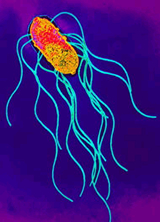
CDC Salmonella kswfoodworld

In April 2016, PulseNet, the national molecular subtyping network for foodborne disease surveillance, detected a multistate cluster of Salmonella enterica serotype Oslo infections with an indistinguishable pulsed-field gel electrophoresis (PFGE) pattern (XbaI PFGE pattern OSLX01.0090).* This PFGE pattern was new in the database; no previous infections or outbreaks have been identified. CDC, state and local health and agriculture departments and laboratories, and the Food and Drug Administration (FDA) conducted epidemiologic, traceback, and laboratory investigations to identify the source of this outbreak. A total of 14 patients in eight states were identified, with illness onsets occurring during March 21–April 9, 2016. Whole genome sequencing, a highly discriminating subtyping method, was used to further characterize PFGE pattern OSLX01.0090 isolates. Epidemiologic evidence indicates Persian cucumbers as the source of Salmonella Oslo infections in this outbreak. This is the fourth identified multistate outbreak of salmonellosis associated with cucumbers since 2013. Further research is needed to understand the mechanism and factors that contribute to contamination of cucumbers during growth, harvesting, and processing to prevent future outbreaks.

USA -Ruth’s Salad Charlotte NC is Recalling Ruth’s Original Pimento Spread 7 oz Because of Possible Health Risk. May Contain Listeria Monocytogenes

FDA

Charlotte, NC  Ruth’s Salads is undertaking a recall of Ruth’s Original Pimento Spread in 7oz plastic containers.  The product has the potential to be contaminated with Listeria Monocytogenes.

Consumers who have purchased this 7 oz Ruth’s Original Pimento Spread with the Lot #16, Sell By Date 4/30/2017 are urged to return the product to the place of purchase for a full refund.

The contamination was discovered during random testing by the NC Department of Agriculture.  Consumers with questions may contact the company at 800-532-0409 between the hours of 7AM and 3 PM Monday-Friday.  After hours, consumers may leave a message and your call will be returned as soon as possible.

Listeria monocytogenes is an organism that can cause serious and sometimes fatal infections in young children, frail or elderly people, and others with weakened immune systems. Although healthy individuals may suffer only short-term symptoms such as high fever, severe headache, stiffness, nausea, abdominal pain and diarrhea, listeria infections can cause miscarriages and stillbirths among pregnant women.

No illnesses have been reported to date in connection with this problem.

The recalled product was distributed in grocery stores  in NC, SC, GA, and parts of Virginia and Tennessee.

Information – FSIS Best Practices Guidance for Controlling Listeria monocytogenes (Lm) in Retail Delicatessens

FSIS USDA

This guidance document provides specific recommendations for actions that retailers can take in the delicatessen (deli) area to control Listeria monocytogenes (Lm) contamination of ready-to-eat (RTE) meat and poultry products.  This document is also available in PDF format. These materials highlight recommendations that are based on an evaluation of retail conditions and practices in the Interagency Risk Assessment–Listeria monocytogenes in Retail Delicatessens (Interagency Retail Lm Risk Assessment).  In addition, FSIS has included information from the Food and Drug Administration (FDA) Food Code, scientific literature, other guidance documents, and lessons learned from Food Safety and Inspection Service (FSIS) verification sampling and review of sanitation programs for Lm in meat and poultry processing establishments.

This version of the guidance document replaces the previous version of the document which was issued and announced in the Federal Register (79 FR 22082; April 21, 2014).  FSIS updated this guidance based on comments received during the public comment period, which closed on June 20, 2014.  FSIS made the following changes in response to comments:

  • Clarified that food processing equipment should be disassembled during cleaning and sanitizing.
  • Added a recommendation that retailers scrub surfaces during cleaning to prevent biofilm formation.
  • Clarified that retailers should rotate (change) sanitizers to help prevent Lm from establishing niches in the environment and forming biofilms.

RASFF Alert – Mycotoxin -Patulin- Fruit Nectar

kswfoodworld rasff

RASFF -patulin (69 µg/kg – ppb) in fruit nectar from Spain in Portugal

RASFF Alerts – Norovirus -Baby Spinach – Frozen Strawberries

kswfoodworld rasff

RASFF -norovirus (GII /25g) in baby spinach from Italy, packaged in Denmark in Denmark

RASFF-norovirus (GII /25g) in frozen strawberries from unknown origin, packaged in Poland in Denmark

RASFF-norovirus (GII /25g) in frozen strawberries from Belgium, with raw material from Serbia and Poland in Denmark

RASFF Alerts – Listeria monocytogenes -Frozen Peas and Carrots – Tomato and Bas Cheese Spread – Duck Rillettes

kswfoodworld rasff

RASFF – Listeria monocytogenes (present /25g) in frozen peas and carrots from Belgium

RASFF-Listeria monocytogenes (present /25g) in tomato and basil cheese spread from the Netherlands in the Netherlands

RASFF-Listeria monocytogenes (>15000 CFU/g) in duck rillettes from France in France

RASFF Alert – STEC E.coli -Beef

kswfoodworld rasff

RASFF – shigatoxin-producing Escherichia coli in chilled boneless beef cuts (Bos taurus) from Uruguay in Italy

RASFF Alert – Mould -Groundnuts

kswfoodworld rasff

RASFF – shelled groundnuts from Argentina infested with moulds in Greece

RASFF Alerts – Salmonella -Spiced Turkey Meat – Beef Trimmings – Chicken Fillet – Organic Hemp Seeds – Tahina – Acacia – Magosa Flower -Chicken

kswfoodworld rasff

RASFF -Salmonella (presence /25g) in frozen spiced turkey meat (Meleagris gallopavo) from Brazil in the Netherlands

RASFF-Salmonella (presence /25g) in chilled beef trimmings from the Netherlands, with raw material from the United Kingdom in Sweden

RASFF-Salmonella (presence /25g) in chicken fillet preparations from Belgium in Belgium

RASFF-Salmonella (presence /25g) in organic hemp seeds from Germany in Germany

RASFF -Salmonella (presence /25g) in tahina (sesame paste) from Lebanon in the Netherlands

RASFF-Salmonella Virchow (presence /25g) in acacia (Acacia pennata) from Thailand in Finland

RASFF-Salmonella Stanley (present /25g) in magosa flower (Azadirachta indica) in Finland

RASFF-Salmonella (presence /25g) in salted chicken from Brazil in Ireland