Monthly Archives: January 2017

USA -Hostess Brands, LLC Issues Voluntary Recall of Limited-Edition Holiday White Peppermint Hostess® Twinkies® because of Possible Health Risk – Salmonella

FDA

Hostess Brands, LLC (“Hostess”) is voluntarily recalling its Holiday White Peppermint Hostess® Twinkies® because of a recall by Blommer Chocolate Company of the confectionary coating used on the Holiday White Peppermint Hostess Twinkies product. The confectionary coating contains milk powder ingredients recalled by Valley Milk Products, LLC due to a concern of Salmonella contamination. No illnesses have been reported to date, and none of the confectionary coating sampled has tested positive for Salmonella. However, Hostess is initiating this voluntary recall out of an abundance of caution.

Fiji -Fish poisoning and what to watch out for – Ciguetera

Fiji Times

IN light of recent fish

poisoning cases where few people lost their lives and some ended up in hospital, The Fiji Times North Bureau reporter LUKE RAWALAI had an interview via electronic mail (email) with the Ministry of Health on the issue

Q: What is ciguatera fish

poi­soning and where does it

occur?

A: Ciguatera fish poisoning (CFP) is a common food-borne disease related to the consumption of subtropical and tropical marine finfish, which have accumulated naturally occurring toxins through their diet. The concerned — ciguatoxic — fish are either feeding on small algae species known as dinoflagellates or feeding on toxic herbivore fish. The main toxic dinoflagellate is found primarily in sub and tropical areas where it lives in association with other algae on dead corals.

Q: Are all tropical area and

coral reefs toxic?

A: No. The majority of coral reefs are not ciguatoxic. Outbreaks of ciguatera are limited in distribution and time and are usually much localised. Thus knowledge of toxic areas is usually based on local experience from fishermen and consumers. Toxic fish may be found in the Pacific and Indian Ocean regions and in the tropical Caribbean.

Q: How to detect ciguatera fish poisoning?

A: Clinical symptoms vary widely, but are characterised by gastrointestinal, neurological and cardiovascular disturbances often within 10 min, but also up to 24 hours after ingestion of toxic fish. The initial symptoms are similar to any other food poisoning (abdominal pain, nausea, vomiting and diarrhoea).

The most common neurological symptoms are tingling and numbness in the mouth and the extremities, muscle cramping and sensation of temperature reversal (a sensory inversion whereby hot or warm objects feel cold and cold objects may feel warm). Other symptoms include headache, vertigo, hallucinations, salivation, and perspiration. The disease is generally non-fatal and of short duration. However, in a few severe cases, symptoms can persist for months or even years.

Q: What to do in case of a

suspected ciguatera fish

poisoning case?

A: In case of a suspected ciguatera fish poisoning, consult a medical doctor.

Unfortunately, there is no single specific remedy for the treatment of ciguatera fish poisoning. The most successful management of the disease has been accomplished by supportive and symptomatic treatment, such as induced vomiting. It is important to try to obtain portions of the meal and in particular the fish to assist in confirming the diagnosis. These portions should be packaged and frozen for any subsequent analysis.

Q: What can be done to prevent or avoid ciguatera fish poisoning?

A: The ciguatoxin is very heat stable. Normal household cooking (e.g boiling, steaming, frying) will not reduce or eliminate the toxin. Consumers should exercise caution in areas of concern for particular tropical species.

Q: Which fish can be

ciguatoxic ?

A: Ciguatoxin is produced initially by microscopic algae and is stored in the tissues of fish species consuming these algae, increasing in concentration in large carnivorous fishes. Fish from some reef areas may be toxic, while those from others may not be.

The same species of fish that is ciguatoxic in one area may be safe in another. By talking to local fishermen one can learn which areas to avoid and which fish may be dangerous to eat. It is the location where a fish is caught, more than its species that determines whether a fish is ciguatoxic. Therefore, a comprehensive list of non-ciguatoxic fish cannot be provided.

About 300 to 400 species of fish have been implicated in ciguatera fish poisoning. If no information is available, it is wise not to eat any large reef fish, since such specimens may have accumulated sufficient toxin during their lifetime. However, among the large reef fish only very few have been found to be poisonous.


USA – E. coli O157 Outbreak Associated with Goat Dairy Farm Visits in 2016

Food Poisoning Bulletin Ecoli Istock

The CDC has published a study about E. coli O157 infections that were associated with goat dairy farm visits in Connecticut in 2016 in its Morbidity and Mortality Weekly Report. A cluster of seven culture-confirmed Shiga toxin-producing Escherichia coli (STEC) infection were identified by the Connecticut Department of Public Health on March 24, 2016.

Canada -My Mix Grab n’ Go brand Chocolate Pretzel Hearts recalled due to Salmonella

CFIA Salmonella kswfoodworld

Recall details

Ottawa, January 9, 2017 – Overwaitea Food Group is recalling My Mix Grab n’ Go brand Chocolate Pretzel Hearts from the marketplace due to possible Salmonella contamination. Consumers should not consume the recalled product described below.

Recalled products

Brand Name Common Name Size Code(s) on Product UPC
My Mix Grab n’ Go Chocolate Pretzel Hearts 240 g BEST BEFORE
AUGUST 2017
0 62639 35098 7

USA -Palmer Candy Company Announces Voluntary Limited Recall of Select Candy Products – Salmonella

FDA

16875_lores

CDC Photo


Palmer Candy Company (www.palmercandy.com), a privately-held, fifth-generation manufacturer of chocolate and holiday confections, announced today a limited recall of certain chocolate products after being informed by a supplier that a milk powder ingredient used in a compound chocolate coating that they supply to Palmer Candy Company has the potential to be contaminated with Salmonella. The voluntary recall, in cooperation with the U.S. Food and Drug Administration (FDA) includes selected products produced between October 20, 2016 and December 9, 2016 and shipped by Palmer Candy Company to grocery, convenience store and wholesale customers nationwide.

USA -Listeria Recall: Ready to Eat Chicken Strips

Food Poisoning Journal

The U.S. Department of Agriculture’s Food Safety and Inspection Service (FSIS) is issuing a public health alert due to concerns that ready to eat chicken strips products produced by House of Raeford, a Mocksville, N.C. establishment, may be contaminated with Listeria monocytogenes. A recall was not requested because it is believed that all products have now been consumed.

The ready to eat, fully cooked, chicken breast strips items were produced and packaged on September 29, 2016 and served to consumers in December, 2016.

These items were shipped to a distributor in Cleveland, Ohio and then shipped to various restaurants in the area as part of fajita or gyro dishes.

The problem was discovered during routine testing by the establishment. There have been no confirmed reports of adverse reactions due to consumption of these products. Anyone concerned about an illness should contact a health care provider.

Information -Salmonella outbreak traced to hazelnuts from Oregon farm

Food Safety News kswfoodworld salmonella

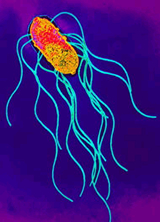
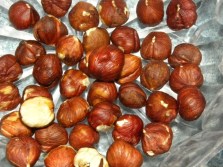
Oregon officials are warning consumers to check their homes for hazelnuts from the Schmidt Farm and Nursery farm stand and to immediately discard them because they have been named the cause of a Salmonella outbreak.

The warning Friday from the Oregon Health Authority Public Health Division reported five people have been confirmed in the outbreak of Salmonella Typhimurium. They were all infected with the same strain of the pathogen, which was also found in hazelnuts from the Schmidt Farm and Nursery farm stand on highway southwest of McMinnville, OR.

USA -Sliced deli meats served at Dion’s restaurants prompt health alert – Listeria monocytogenes

Outbreak News Today kswfoodworld Listeria monocytogenes

The U.S. Department of Agriculture’s Food Safety and Inspection Service (FSIS) is issuing a public health alert due to concerns that assorted sliced deli meat products served to customers at Dion’s restaurants may be contaminated with Listeria monocytogenes. The assorted sliced deli meats were produced by Peter DeFries Corporation, an Albuquerque, N.M. establishment.

The sliced roast beef, ham, pastrami, and turkey items were produced between Dec. 14, 2016 and Dec. 29, 2016, however product may have been available in restaurant locations through January 4, 2017.

These items were distributed to Dion’s restaurant locations in Colorado, New Mexico, and Texas. The sliced deli meat products are used on pizzas, salads, and open-faced sandwiches for customers at Dion’s restaurants.

India -20 girl students taken ill due to ‘food poisoning’

The Hindu

Owing to its bad smell, some students avoided the food and got their dinner from outside.

About 25 girl students of the Sri Seshachala College in Puttur, pursuing their B.Ed course, were taken ill on Thursday and were rushed to a private hospital. The students alleged that they were served stale food the previous night.

Information -Bailey & Scott’s Diagnostic Microbiology. Edition No. 14

Research and Markets

Bailey & Scott’s Diagnostic Microbiology. Edition No. 14

Perfect your lab skills with the gold standard in microbiology! Serving as both the #1 bench reference for practicing microbiologists and as a favourite text for students in clinical laboratory science programs, Bailey & Scott’s Diagnostic Microbiology, 14th Edition covers all the topical information and critical thinking practice you need for effective laboratory testing. This new edition also features hundreds step-by-step procedures, updated visuals, new case studies, and new material on the latest trends and equipment in clinical microbiology – including automation, automated streaking, MALDI-TOF, and incubator microscopes. It’s everything you need to get quality lab results in class and in clinical practice!