
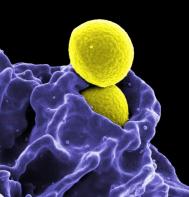
Staphylococcus aureus is a large family of Gram-positive bacteria with many genetically diverse strains that can produce skin and systemic disease in people and are important foodborne pathogens. Indiscriminate use of antibiotics in human medicine probably has played a role in the emergence of methicillin-resistant Staphylococcus aureus (MRSA), which was detected first in Great Britain in 1961. Other factors, however, likely were involved.
While most often thought of as afflicting humans, MRSA strains also have been detected in livestock, including horses, cattle, goats, chickens, pigs and even dogs and cats. Humans are the source of some of these strains, but others are genetically distinct and have been designated livestock-associated MRSA. Well-designed longitudinal studies will be necessary to clarify the public health implications of the emergence of livestock-associated MRSA, which is complicated by the diversity of the strains isolated and the bidirectional nature of transmission of the bacteria between people and animals.

 FoodWorld