Monthly Archives: November 2016

Australia -Elfa Bean Sprouts Recall – Possible Illness

FSANZ

ELFA Sprouts has recalled Elfa Bean Sprouts from Woolworths supermarkets in Far North QLD due to an incorrect use by date. This product may cause illness if consumed after 27/11/16 (correct use by date). Consumers should not eat this productand return it to the place of purchase for a full refund.

Date notified to FSANZ

21/11/2016

Food type

Mung Bean Sprouts

Product name

Elfa Bean Sprouts

Package description and size

Clear plastic sealed bag 250g

Date marking

Use By 27/12/16

Country of origin

Australia

Reason for recall

Incorrect use by date

Distribution

Woolworths supermarkets  in Far North QLD

Consumer advice

This product may cause illness if consumed after 27/11/16 (correct use by date). Consumers should not eat this product and return it to the place of purchase for a full refund.

Contact

ELFA Sprouts

07 4056 2278


Latvia -Latavia find dangerous E. coli in Biovela sausages

Barblog

Inspectors of the Food and Veterinary Service have found Shiga-toxin producing E. coli in sausages made by Lithuanian meatpacking company Biovela UAB Mesos Perdirbimo Pagalynos (Biovela), reports LETA.

Ilze Meistere, a spokeswoman for the Food and Veterinary Service, told LETA that the bacteria can cause severe diarrhea and hemolytic-uremic syndrome (HUS).

Information -One percent of cucumbers carry salmonella, FDA says

STATNEWS cucumber

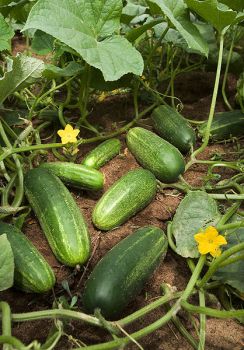
One in a hundred cucumbers carries salmonella bacteria, according to new data from the Food and Drug Administration — and for fresh hot peppers that number rises to three per hundred.

Both the vegetables were targeted by the agency’s proactive testing because of their role in previous outbreaks. Because cucumbers are often eaten raw, bacteria on them are more likely to make it into food; raw cucumbers have been blamed in five outbreaks of illness from 1996 to 2014.

Hot peppers, such as jalapeño and serrano peppers, on the other hand, are often cooked but can be a “stealth component” of multi-ingredient dishes, the FDA said. In 2008, hot peppers were implicated in an outbreak that caused 1,500 illnesses, 308 hospitalizations, and two deaths.

Philippines -‘Food poisoning’ downs 115 in South Cotabato’

News MB

Health officials in Koronadal City are determining the cause of the suspected food poisoning that downed 115 persons in Polomolok, South Cotabato on Thursday, November 17.

The victims, including 30 provincial government workers, were rushed to different hospitals, complaining severe stomach pains, diarrhea and vomiting about six hours after lunch.

Malaysia -82 students in Kangar school down with food poisoning

KANGAR, Nov 19 — Some 82 students and three staff of Maahad Tahfiz Al Quran Al Imam An Nabawi (Matin) were rushed to the Tuanku Fauziah Hospital (HTF) here, believed to be due to food poisoning yesterday. State Health director Dr Zaini Hussin said out of the total, 16 students, two girls and 14 boys, were admitted to the HTF wards for further treatment and their condition was stable. “The remaining 38 students, 12 girls and 26 boys, were treated as outpatients at HTF last night and another 31 others, including three staff were treated as outpatients in Matin,” he said in a statement here today. – See more at: http://www.themalaymailonline.com/malaysia/article/82-students-in-kangar-school-down-with-food-poisoning#sthash.cqc4mhH0.dpuf

UK -Expert reaction to the ability of Salmonella to grow on bagged salad leaves

Science Media Centre

Researchers publishing in the journal Applied and Environmental Microbiology have reported that leached juices from leafy vegetables enhance growth and harm of the food poisoning bug Salmonella.

Dr Kimon Andreas Karatzas, Assistant Professor in Food Microbiology at the University of Reading, said:

“The study presented in this paper shows how Salmonella can survive and thrive in fresh produce and more specifically in cut salad. It is an important piece of work which explains why fresh produce is responsible for most foodborne illnesses, while more specifically, cut leafy greens are responsible for approximately a fifth of foodborne illnesses over the last decade. We already knew this and it is expected, as these foods are consumed without any processing apart from washing which cannot remove all microorganisms present.

“The interesting element is that chopped fresh produce provides an environment rich in nutrients which can support pathogens such as Salmonella. On the other hand, consumption of fresh produce is important for health too and consumers need to strike a balance between the two. Consumers seem to be more preoccupied with nutritional facts, but they should not forget that foodborne pathogens can be deadly. Avoiding fresh produce is not a solution, but if possible, it would be preferable to buy uncut fresh produce over chopped, and to always wash it before you eat – even the ones that are already washed. Furthermore, keeping these foods in the refrigerator is important.


Australia -Updated Safe Food Australia guide now available

FSANZ

Food Standards Australia New Zealand (FSANZ) today released the third edition of Safe Food Australia.
Safe Food Australia is a guide to the food safety standards in the Australia New Zealand Food Standards Code.
FSANZ Chief Executive Officer Steve McCutcheon said Safe Food Australia is used by government agencies responsible for enforcing food standards. Businesses may also find it offers guidance that will help them to comply with the standards.
“The new edition includes updated evidence and information to address current food safety issues and trends. It also provides new guidance for mobile, temporary and home-based vendors,” Mr McCutcheon said.
“It is now available as a searchable online document to help readers quickly and easily access the information they are looking for.
Mr McCutcheon also launched FSANZ’s online Food Safety Hub—a one stop food safety shop—providing information for food regulators, businesses and consumers.
“The Food Safety Hub brings together food safety advice, guides, resources and tools to make it easier for users to find what they’re looking for.
“I encourage food businesses, regulators and consumers to visit the Food Safety Hub which can be accessed from the FSANZ website,” Mr McCutcheon said.
Safe Food Australia is available at www.foodstandards.gov.au/safefoodaustralia and the Food Safety Hub can be accessed at www.foodstandards.gov.au/foodsafetyhub.
Safe Food Australia was prepared by FSANZ at the request of the Implementation Subcommittee on Food Regulation. Advice and guidance on complying with the Food Standards Code should be directed to local food enforcement agencies, as FSANZ is not able to interpret the requirements of the Food Standards Code.

Media contact

0401 714 265 (Australia) or +61 401 714 265 (from New Zealand) or media@foodstandards.gov.au

More information

Visit the Food Safety Hub

Download a copy of Safe Food Australia

USA -Undercooked Chicken is Bad for Your Health

Food Poisoning Journal

Wayne Farms LLC., an Oakwood, Ga. establishment, is recalling approximately 4,059 pounds of ready-to-eat chicken products due to undercooking, resulting in the potential survival of bacterial pathogens in the products, the U.S. Department of Agriculture’s Food Safety and Inspection Service (FSIS) announced today.

The ready-to-eat grilled chicken breast items were produced on Aug. 1, 2016 and Aug. 29, 2016. The following products are subject to recall: [View Labels (PDF Only)]

  • 9-lb. foodservice bulk cases of “Fully Cooked Grilled Chicken Breast Fillets” with case code 22121.
  • 22.5-lb. foodservice bulk cases of “Fully Cooked Flame Grilled Chicken Breast Fillets” with case code 22423.

The products subject to recall bear establishment number “EST. 45411” or “P-45411” inside the USDA mark of inspection. These items were shipped to retail stores in  Florida, Iowa, Minnesota, Missouri and North Dakota.

The problem was discovered during a routine records review by the company when it was noted that a similar product had an appearance of being undercooked.

There have been no confirmed reports of adverse health effects due to consumption of these products. Anyone concerned about an injury or illness should contact a healthcare provider.

Consumers who have purchased these products are urged not to consume them.

USA -A Wedding from Salmonella Hell – 77 Sickened

Food Poisoning Journal

A private event held in Colbert County Saturday, November 12, resulted in at least 77 persons becoming ill with presumptive Salmonella gastroenteritis. Twelve persons were hospitalized at local hospitals due to the illness. All patients are recovering. Signs and symptoms include vomiting, diarrhea, stomach pain and some fever. The incubation period can range from 6 to 72 hours.


Canada -Food Recall Warning – Certain Sabra brand hummus products recalled due to Listeria monocytogenes

CFIA

Ottawa, November 19, 2016 – Sabra Canada Inc. is recalling certain Sabra brand hummus products from the marketplace due to possible Listeria monocytogenes contamination. Consumers should not consume the recalled products described below.

The following products have been sold nationally.

Recalled products

Brand Name Common Name Size Code(s) on Product UPC
Sabra Hummus Classic 283 g All ‘Best Before’ dates
up to and including
January 23, 2017
0 40822 02704 5
Sabra Hummus Classic 482 g All ‘Best Before’ dates
up to and including
January 23, 2017
0 40822 02712 0
Sabra Hummus Classic with Pretzels 129 g All ‘Best Before’ dates
up to and including
January 23, 2017
0 40822 01208 9
Sabra Hummus Classic with Pretzels 8 x 129 g All ‘Best Before’ dates
up to and including
January 23, 2017
0 40822 34213 1
Sabra Hummus Roasted Garlic 283 g All ‘Best Before’ dates
up to and including
January 23, 2017
0 40822 02706 9
Sabra Hummus Roasted Garlic 482 g All ‘Best Before’ dates
up to and including
January 23, 2017
0 40822 02713 7
Sabra Hummus Greek Olive 283 g All ‘Best Before’ dates
up to and including
January 23, 2017
0 40822 02708 3
Sabra Hummus Roasted Pine Nut 283 g All ‘Best Before’ dates
up to and including
January 23, 2017
0 40822 02705 2
Sabra Hummus Roasted Red Pepper 283 g All ‘Best Before’ dates
up to and including
January 23, 2017
0 40822 02707 6
Sabra Hummus Roasted Red Pepper 908 g All ‘Best Before’ dates
up to and including
January 23, 2017
0 40822 32862 3
Sabra Hummus Roasted Red Pepper with Pretzels 129 g All ‘Best Before’ dates
up to and including
January 23, 2017
0 40822 01209 6
Sabra Hummus Supremely Spicy 283 g All ‘Best Before’ dates
up to and including
January 23, 2017
0 40822 02709 0
Sabra Hummus Spinach and Artichoke 283 g All ‘Best Before’ dates
up to and including
January 23, 2017
0 40822 02774 8
Sabra Hummus Basil Pesto 283 g All ‘Best Before’ dates
up to and including
January 23, 2017
0 40822 34211 7
Sabra Hummus Sun Dried Tomato 283 g All ‘Best Before’ dates
up to and including
January 23, 2017
0 40822 02734 2
Sabra Hummus Roasted Red Pepper 482 g All ‘Best Before’ dates
up to and including
January 23, 2017
0 40822 34216 2
Sabra Hummus Caramelized Onion with Smoked Paprika 283 g All ‘Best Before’ dates
up to and including
January 23, 2017
0 40822 34284 1
Sabra Hummus Tuscan Herb 482 g All ‘Best Before’ dates
up to and including
January 23, 2017
0 40822 34203 2
Sabra Hummus Roasted Red Pepper 6 x 57 g (342 g) All ‘Best Before’ dates
up to and including
January 23, 2017
0 40822 34317 6
Sabra Hummus Classic 6 x 57 g (342 g) All ‘Best Before’ dates
up to and including
January 23, 2017
0 40822 34316 9
Sabra Hummus Rosemary and Sea Salt 283 g All ‘Best Before’ dates
up to and including
January 23, 2017
0 40822 34371 8
Sabra Hummus Spreads Honey Dijon 241 g All ‘Best Before’ dates
up to and including
January 23, 2017
0 40822 34395 4
Sabra Hummus Spreads Garlic Herb 241 g All ‘Best Before’ dates
up to and including
January 23, 2017
0 40822 34396 1
Sabra Hummus Spreads Sea Salt and Cracked Pepper 241 g All ‘Best Before’ dates
up to and including
January 23, 2017
0 40822 34394 7
Sabra Hummus Roasted Garlic with Pretzels 129 g All ‘Best Before’ dates
up to and including
January 23, 2017
0 40822 01210 2

What you should do

If you think you became sick from consuming a recalled product, call your doctor. Check to see if you have recalled products in your home. Recalled products should be thrown out or returned to the store where they were purchased.

Food contaminated with Listeria monocytogenes may not look or smell spoiled but can still make you sick. Symptoms can include vomiting, nausea, persistent fever, muscle aches, severe headache and neck stiffness. Pregnant women, the elderly and people with weakened immune systems are particularly at risk. Although infected pregnant women may experience only mild, flu-like symptoms, the infection can lead to premature delivery, infection of the newborn or even stillbirth. In severe cases of illness, people may die.

Background

This recall was triggered by a recall in another country. The Canadian Food Inspection Agency (CFIA) is conducting a food safety investigation, which may lead to the recall of other products. If other high-risk products are recalled, the CFIA will notify the public through updated Food Recall Warnings.

The CFIA is verifying that industry is removing recalled products from the marketplace.

Illnesses

There have been no reported illnesses associated with the consumption of these products.