Monthly Archives: November 2016

UK – Wales -Sliced chicken withdrawn from schools in Caerphilly – Listeria monocytogenes

FSA – Wales

Action has been taken to withdraw a batch of sliced cooked chicken supplied to canteens in schools in Caerphilly after potentially harmful levels of Listeria monocytogenes – the bacteria that causes listeria food poisoning – was found in the product.

No illnesses linked to the incident have been reported and the risk to the vast majority of healthy children and staff is very low.

The potentially contaminated chicken was served in 45 of 90 schools supplied, as quality checks identified no concerns prior to service. As a precaution, all chicken from this supplier has been removed from the menus.

Parents of pupils from the affected schools have been notified of the incident. At this stage it is unclear whether the whole batch of chicken was affected. The samples in which the bacteria were found were taken from schools where the catering staff noticed an unusual smell and withdrew the chicken from service.

USA -Hale and Hearty Soups, LLC Recalls Ready-To-Eat Chicken Chili Soup Due To Possible Listeria Contamination

FSIS USDA

Hale and Hearty Soups, LLC, a Brooklyn, N.Y. establishment, is recalling approximately 455 pounds of ready-to-eat chicken chili soup product that may be adulterated with Listeria monocytogenes, the U.S. Department of Agriculture’s Food Safety and Inspection Service (FSIS) announced today.

The ready-to-eat chicken chili soup product was produced and packaged on Nov. 9, 2016. The following products are subject to recall: [View Label (PDF Only)]

  • 6.9-lb. bags containing “CHICKEN CHILI SOUP” with an “Expires:12/09” date.

The products subject to recall bear establishment number “P-34800” inside the USDA mark of inspection. These items were shipped to food service distributors in Maryland, Massachusetts, New Jersey, New York and Vermont.

The problem was discovered during routine FSIS verification testing. There have been no confirmed reports of illness or adverse health effects due to consumption of the products subject to this recall.

Consumption of food contaminated with L. monocytogenes can cause listeriosis, a serious infection that primarily affects older adults, persons with weakened immune systems, and pregnant women and their newborns. Less commonly, persons outside these risk groups are affected.

Listeriosis can cause fever, muscle aches, headache, stiff neck, confusion, loss of balance and convulsions sometimes preceded by diarrhea or other gastrointestinal symptoms. An invasive infection spreads beyond the gastrointestinal tract. In pregnant women, the infection can cause miscarriages, stillbirths, premature delivery or life-threatening infection of the newborn. In addition, serious and sometimes fatal infections can occur in older adults and persons with weakened immune systems. Listeriosis is treated with antibiotics. Persons in the higher-risk categories who experience flu-like symptoms within two months after eating contaminated food should seek medical care and tell the health care provider about eating the contaminated food.

FSIS and the company are concerned that some of this recalled product may be in food service distribution refrigerators.

Consumers who have purchased these products are urged not to consume them. These products should be thrown away or returned to the place of purchase.

USA -Taylor Farms Snack Trays Recalled for Possible Listeria

Food Poisoning Bulletin

The recall of Sabra dipping products, including hummus, for possible Listeria monocytogenes contamination has triggered a secondary recall of snack trays that contain those recalled dips. The products were produced by Taylor Farms. No reports of illness have been received to date, but the illness this bacteria causes can take up to 70 days to appear.

The recalled products contain Sabra Hummus Classic 2 ounce dipping cups. They are Taylor Farms Veggie & Hummus Bistro Box, with UPC number 0 30223 01037 1 and use by dates 11/11/16 – 12/1/16. Also recalled is Schnucks Vegetable and Hummus Snack Tray, with UPC number 0 41318 09193 9 and use by dates 11/18/16 and 11/23/16. The products were distributed from October 30, 2016 through November 18, 2016. They were sold in Arkansas, California, the District of Columbia, Florida, Georgia, Iowa, Illinois, Indiana, Kansas, Kentucky, Louisiana, Maryland, Michigan, Missouri, North Carolina, Nevada, Oklahoma, Oregon, South Carolina, Tennessee, Texas, Virginia, Wisconsin, and West Virginia.

USA – LSG Sky Chefs Supply Chain Solutions is recalling sandwiches it makes for 7-Eleven stores in Northern California and Nevada because they were produced with recalled Sabra Dipping Company hummus. – Listeria monocytogenes

Food Poisoning Bulletin

LSG Sky Chefs Supply Chain Solutions is recalling sandwiches it makes for 7-Eleven stores in Northern California and Nevada because they were produced with recalled Sabra Dipping Company hummus. That product was recalled earlier for possible Listeria monocytogenes contamination. No reports of illness have been received to date, but the illness caused by this bacteria can take up to 70 days to appear.

The recalled product is Mediterranean Style Chicken with Hummus sandwiches. All of these products have been pulled from the affected 7-Eleven stores.

About 241 sandwiches were produced at LSG Sky Chefs facilities and sold at 7-Eleven stores in San Jose, California between November 18, 2016 and November 20, 2016. And 72 sandwiches were produced at the company’s Las Vegas, Nevada location during that same time frame. Look for a “best buy” date of November 19, 2016 through November 21, 2016 on the package.

FDA

“Fresh to Go Mediterranean Chicken Hummus” sandwiches (UPC 5254858888) manufactured solely for 7-Eleven Corporation are being recalled because Sabra Dipping Company has recalled the ingredient Red Pepper Hummus. Greencore, USA is voluntarily recalling these sandwiches. Sabra Dipping Company has recalled the Red Pepper Hummus ingredient used in this sandwich because of potential contamination with Listeria monocytogenes. The source of the contamination originated with Sabra Dipping Company, not Greencore.

FDA

Irving, TX – LSG Sky Chefs Supply Chain Solutions, Inc. (“LSG Sky Chefs”) announced today that it is issuing a voluntary recall for the 7-Eleven Chicken and Hummus sandwiches the company produces for 7-Eleven stores in the Pittsburgh, PA, Cleveland, OH, and the Buffalo, NY markets. The hummus spread used in the sandwiches is subject to a national recall issued by Sabra Dipping Company due to possible Listeria monocytogenes contamination. All 7-Eleven Chicken with Hummus sandwiches have already been pulled from affected 7-Eleven stores. No other products or retailers are involved in this voluntary recall.

FDA

Irving, TX – LSG Sky Chefs Supply Chain Solutions, Inc. (“LSG Sky Chefs”) announced today that it is issuing a voluntary recall of 103 units of Mediterranean Style Chicken with Hummus sandwiches. The hummus spread used in the affected sandwiches was recalled by Sabra Dipping Company due to possible contamination with Listeria monocytogenes, an organism which can cause serious and sometimes fatal infections in young children, frail or elderly people, and others with weakened immune systems. Although healthy individuals may suffer only short-term symptoms such as high fever, severe headache, stiffness, nausea, abdominal pain and diarrhea, listeria infection can cause miscarriages and stillbirths among pregnant women.


Research -Inhibitory Activity of Avocado Seed Fatty Acid Derivatives (Acetogenins) Against Listeria Monocytogenes

Wiley Online Library

Abstract

High standards regarding Listeria monocytogenes control and consumer demands for food products without synthetic additives represent a challenge to food industry. We determined the antilisterial properties of an enriched acetogenin extract (EAE) from avocado seed, compared it to two commercial antimicrobials (one enriched in avocado acetogenins), and tested purified molecules. Acetogenin composition in pulp and seed of Hass avocado was quantified. EAE were obtained by two sequential centrifuge partition chromatography separations and molecules purified by preparative chromatography and quantified by HPLC-MS-TOF and HPLC-PDA. Avocado seed extracts which are the following two: 1) EAE and 2) the commercially available antimicrobial Avosafe®, presented similar inhibition zones and chemical profiles. Minimum inhibitory concentration (MIC) values of extracts and two isolated acetogenins varied between 7.8 and 15.6 mg/L, were effective at 37 and 4 °C, and showed a bactericidal effect probably caused by increased membrane permeability and lytic effects, evidenced by flow cytometry at 10 and 100× MIC. Activity was comparable to Mirenat®. Most potent acetogenins were Persenone C (5) and A (6), and AcO-avocadenyne (1), the latter exclusively present in seed. Common features of bioactive molecules were the acetyl moiety and multiple unsaturations (2 to 3) in the aliphatic chain, some persenones also featured a trans-enone group. Seeds contained 1.6 times higher levels of acetogenins than pulp (5048.1 ± 575.5 and 3107.0 ± 207.2 mg/kg fresh weight, respectively), and total content in pulp was 199 to 398 times higher than MIC values. Therefore, acetogenin levels potentially consumed by humans are higher than inhibitory concentrations. Results document properties of avocado seed acetogenins as natural antilisterial food additives.

Practical Application

Avocado acetogenins possess antilisterial activity comparable to that of synthetic commercial antimicrobials, indicating that enriched extracts or isolated compounds from avocado fruit can potentially be incorporated into ready-to-eat (RTE) foods as natural additives to control Listeria monocytogenes. As a waste product of the industry, avocado seeds represent a good source of these molecules. Humans already consume acetogenins from avocado pulp above antilisterial levels; however, bioavailability and safety of the enriched extracts and isolated compounds needs further assessment.

UK- Scotland -EuSCAPE – European Survey on carbapenemase-producing Enterobacteriaceae

HPS – Scotland

The objective of the European Survey on CPE (EuSCAPE) was to provide the first comparable and quality-controlled data on the occurrence of the most important carbapenemase-producing Enterobacteriaceae (CPE – Klebsiella pneumoniae and Escherichia coli) as causes of infection (colonisation was not studied) in Europe and neighbouring countries, and to establish a framework for future enhanced sentinel surveillance. The survey also provides the first comparable and laboratory-substantiated data on the incidence of CPE producers across Europe.

The EuSCAPE survey has strengthened the development of diagnostic and national expert laboratory and epidemiological surveillance capability in participating countries via use of standardised (EUCAST) antimicrobial testing methodology, a training course, EQA distribution, and a standardised structured survey of cases.

Two articles have been published recently in relation to the European survey on CPE:

  1. Grundmann H, Glasner C, Albiger B et al. Occurrence of carbapenemase-producing Klebsiella pneumoniae and Escherichia coli in the European survey of carbapenemase-producing Enterobacteriaceae (EuSCAPE): a prospective, multinational study. Lancet Infectious Diseases. [Preprint] 2016. Available from: http://www.sciencedirect.com/science/article/pii/S1473309916302572. (accessed 21 November 2016).
  2. Trepanier P, Mallard K, Meunier D et al. Carbapenemase-producing Enterobacteriaceae in the UK: a national study (EuSCAPE-UK) on prevalence, incidence, laboratory detection methods and infection control measures. Journal of Antimicrobial Chemotherapy. [Preprint] 2016. Available from: http://jac.oxfordjournals.org/content/early/2016/09/28/jac.dkw414.abstract. (accessed 21 November 2016).

Between November 2013 and April 2014, 455 sentinel hospitals from 36 countries participated in EUSCAPE. Health Protection Scotland, SSSCDRL (as National Expert Laboratory), Glasgow and Edinburgh laboratories and 13 Scottish hospitals participated alongside Public Health England’s AMRHAI Reference Unit and 19 sentinel laboratories across the UK.

Across Europe, on average, 1.3 patients per 10,000 hospital admissions had CPE-positive clinical specimens and 2.51 per 100,000 patient days. The Scottish rate was 0.03 per 10,000 hospital admissions and 0.1 per 100,000 patient days.

Incidence differed greatly, with the highest rates of incidence in Mediterranean and Balkan countries (including Greece, Italy, Montenegro, Spain, and Serbia).

The project also facilitated further detailed studies within the UK (see article 2). The incidence of CPE across the UK was 0.7 per 100,000 patient-days, with north-west England the most affected region at 3.3 per 100,000 patient-days (Scotland: 0.1 per 100,000 patient days).

The UK study showed that recommended IPC measures were not universally followed in participating laboratories and hospitals, including:

  • screening high-risk patients on admission (applied by 86%);
  • using a CPE ‘flag’ on patients’ records (applied by 70%);
  • alerting neighbouring hospitals when transferring affected patients (applied by only 30%);
  • having a laboratory protocol for CPE screening (applied by 86%).

The Scottish and UK prevalence and incidence of clinically significant CPE is currently low, but these multi-drug resistant bacteria affect most UK regions. Improved infection prevention and control (IPC) measures, vigilance and monitoring are required. The emergence and spread of antibiotic resistance against last-line antibiotics increasingly erodes the ability to treat patients infected with CPE successfully, especially in countries where CPE prevalence in hospitals is high. At a time when few novel and effective antibiotic compounds have become available, containment of CPE is bound to rely on stricter IPC measures in hospitals.

Vol: 50 No: 47 Year: 2016 Type: Current Note


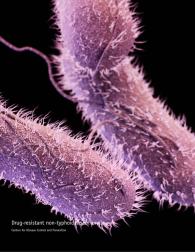
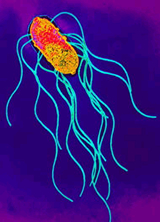
Research – Würzburg researchers develop novel technique to provide new insight into Salmonella infection process

News Medical Salmonella kswfoodworld

Technological advances are making the analysis of single bacterial infected human cells feasible, Würzburg researchers have used this technology to provide new insight into the Salmonella infection process. The study has just been published in “Nature Microbiology”.

Infectious diseases are a leading cause of mortality worldwide. The development of novel therapies or vaccines requires improved understanding of how viruses, pathogenic fungi or bacteria cause illnesses.

Some bacterial pathogens such as Salmonella invade and replicate within human cells. Science is steadily shifting its focus towards studying infected cells and how differences between individual host cells affect the cellular response to pathogens.

A research team headed by Professor Jörg Vogel from the University of Würzburg has made significant progress in this area. They have developed a novel technique that allows them to investigate the interplay of individual host cells with infecting bacteria. This study is based on close collaboration between Jörg Vogel’s team at the Institute of Molecular Infection Biology, the core unit Systems Medicine of the Medical Faculty and researchers at Imperial College in London. Their results have now been published in the scientific journal “Nature Microbiology”.

USA -Alabama Salmonella Outbreak Linked to Catered Meal

Food Poisoning Bulletin 16875_lores

A catered meal at a private event in Colbert County, Alabama is likely linked to a Salmonella outbreak that sickened at least 99 people and hospitalized 22, according to the Alabama Department of Public Health. About 150 people attended the event on November 12, 2016. Eighteen of the hospitalized persons have been discharged and are at home, and the remaining hospitalized patients are recovering.


UK -More than 200 holidaymakers DROP £1million claim against Butlin’s over claims they were ‘violently sick with food poisoning’ at Bognor Regis camp

Mail Online Food Borne Illness - Norovirus -CDC Photo

  • Butlin’s visitors claimed holiday was ruined by ‘unhygienic’ conditions 
  • 122 of them fell ill and the other 97 claim the illnesses ruined their breaks 
  • Bourne Leisure denied wrongdoing and claimants’ case has been dropped
  • Owners of Butlin’s site said Norovirus outbreak was the more likely cause


UK -Two in three chickens sold in British supermarkets are ‘infected ‘ with E.coli Superbug

The Telegraph

Two-thirds of fresh chicken sold in British supermarkets are contaminated with E.coli, a new study claims.

Contamination levels are much higher than previously thought and could be a threat to public health.

The investigation found 78 per cent of the fresh chicken sold in high streets in England was positive for an antibiotic-resistant strain of E.coli.

In Scotland the figure is 53 per cent, with levels of up to 41 per cent in Wales.

The strain of the infectious bug could be more difficult to treat because it has developed some resistance to antibiotics.