
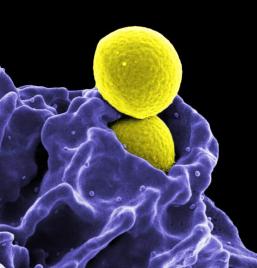
CDC Photo
To examine the association of colonization by Staphylococcus aureus and general population mortality, we followed 10,598 adults for 8.5 years on average. Methicillin-susceptible S. aureus colonization was not associated with death. Methicillin-resistant S. aureus carriage predicted death in a crude analysis but not after adjustment for socioeconomic status and co-morbidities.
Staphylococcus aureus is a common cause of mild to life-threatening infections. It is differentiated into methicillin-susceptible S. aureus (MSSA) and methicillin-resistant S. aureus (MRSA); the emergence of isolates resistant to vancomycin has raised concern that the bacterium might become untreatable with current antimicrobial drugs (1). Whether S. aureus colonization influences general population mortality remains unclear (2,3). Therefore, we examined the association in a US population representative sample followed for nearly a decade.

 FoodWorld