Monthly Archives: August 2016

Research -Estimating true incidence of O157 and non-O157 Shiga toxin-producing Escherichia coli illness in Germany based on notification data of haemolytic uraemic syndrome

Epidemiology and Infection

Shiga toxin-producing Escherichia coli (STEC) is an important cause of gastroenteritis (GE) and haemolytic uraemic syndrome (HUS). Incidence of STEC illness is largely underestimated in notification data, particularly of serogroups other than O157 (‘non-O157’). Using HUS national notification data (2008–2012, excluding 2011), we modelled true annual incidence of STEC illness in Germany separately for O157 and non-O157 STEC, taking into account the groups’ different probabilities of causing bloody diarrhoea and HUS, and the resulting difference in their under-ascertainment. Uncertainty of input parameters was evaluated by stochastic Monte Carlo simulations. Median annual incidence (per 100 000 population) of STEC-associated HUS and STEC-GE was estimated at 0·11 [95% credible interval (CrI) 0·08-0·20], and 35 (95% CrI 12-145), respectively. German notification data underestimated STEC-associated HUS and STEC-GE incidences by factors of 1·8 and 32·3, respectively. Non-O157 STEC accounted for 81% of all STEC-GE, 51% of all bloody STEC-GE and 32% of all STEC-associated HUS cases. Non-O157 serogroups dominate incidence of STEC-GE and contribute significantly to STEC-associated HUS in Germany. This might apply to many other countries considering European surveillance data on HUS. Non-O157 STEC should be considered in parallel with STEC O157 when searching aetiology in patients with GE or HUS, and accounted for in modern surveillance systems.
Research -Vegetables and Restaurant Salads as a Reservoir for Shiga Toxigenic Escherichia coli: Distribution of Virulence Factors, O-Serogroups, and Antibiotic Resistance Properties

Ingenta Connect ecoli

Close contact of vegetables with soil, polluted water, and animal manure and unsanitary conditions during processing of restaurant salads led us to study the distribution of virulence factors, O-serogroups, and antibiotic resistance properties in Shiga toxigenic Escherichia coli (STEC) isolated from vegetables and salads. Samples of vegetables and salad (n = 420) were collected and evaluated for the presence of E. coli using culture and a PCR assay. Total prevalence of E. coli in studied samples was 49.5%. E. coli was found in 49.6% of vegetable samples and 49% of salad samples. Leek and traditional salad had the highest incidence of E. coli. Significant differences in the incidence of E. coli were found between the hot and cold seasons. Of the 149 E. coli isolates from vegetable samples, 130 (87%) were STEC, and of the 59 E. coli isolates from salad samples, 50 (84%) were STEC. The most commonly detected virulence factors were stx 1 and eaeA. A significant difference was found between the frequency of the attaching and effacing and the enterohemorrhagic E. coli subtypes. Serogroups O26 (46% of isolates), O157 (14%), O121 (10%), and O128 (9%) were the most commonly detected serogroups among the STEC strains. The tetA, sul1, aac(3)-IV, dfrA1, blaSHV, and CITM antibiotic resistance genes were found in 96, 47.7, 90, 51, 27, and 93% of isolates, respectively. The highest levels of resistance were found against ampicillin (96.6% of isolates), tetracycline (87%), and gentamicin (90%). This study shows the importance of vegetables and salads as potential sources of E. coli infection

Research -Norovirus studies pinpoint global burden, build case for vaccine

Cidrap

The global economic burden of norovirus is a staggering $60 billion per year, with an annual death toll of 200,000, according to new estimates from a collection of studies on the disease and its impact.

The reports, published yesterday in Public Library of Science (PLoS) journals, came from a February 2015 symposium sponsored by the US Centers for Disease Control and Prevention (CDC) and the Bill and Melinda Gates Foundation. The goal of the meeting was to build a multidisciplinary knowledge base about the disease to help support the development of a vaccine targeted to one of the hardest-hit groups: children in the developing world.

Research -Persistence and Elimination of Human Norovirus in Food and on Food Contact Surfaces: A Critical Review

Ingenta Connect Norwalk_Caspid

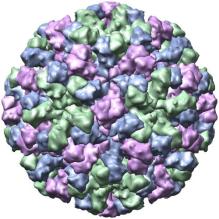
This critical review addresses the persistence of human norovirus (NoV) in water, shellfish, and processed meats; on berries, herbs, vegetables, fruits, and salads; and on food contact surfaces. The review focuses on studies using NoV; information from studies involving only surrogates is not included. It also addresses NoV elimination or inactivation by various chemical, physical, or processing treatments. In most studies, persistence or elimination was determined by detection and quantification of the viral genome, although improved methods for determining infectivity have been proposed. NoV persisted for 60 to 728 days in water, depending on water source. It also persisted on berries, vegetables, and fruit, often showing <1-log reduction within 1 to 2 weeks. NoV was resilient on carpets, Formica, stainless steel, polyvinyl chloride, and ceramic surfaces; during shellfish depuration; and to repeated freeze-thaw cycles. Copper alloy surfaces may inactivate NoV by damaging viral capsids. Disinfection was achieved for some foods or food contact surfaces using chlorine, calcium or sodium hypochlorite, chlorine dioxide, high hydrostatic pressure, high temperatures, pH values >8.0, freeze-drying, and UV radiation. Ineffective disinfectants included hydrogen peroxide, quaternary ammonium compounds, most ethanol-based disinfectants, and antiseptics at normally used concentrations. Thorough washing of herbs and produce was effective in reducing, but not eliminating, NoV in most products. Washing hands with soap generally reduced NoV by <2 log. Recommendations for future research needs are provided.

Research -Salmonellosis associated with mass catering: a survey of European Union cases over a 15-year period

Epidemiology of Infection

Salmonella spp. is the causative agent of a foodborne disease called salmonellosis, which is the second most commonly reported gastrointestinal infection in the European Union (EU). Although over the years the annual number of cases of foodborne salmonellosis within the EU has decreased markedly, in 2014, a total of 88 715 confirmed cases were still reported by 28 EU Member States. The European Food Safety Authority reported that, after the household environment, the most frequent settings for the transmission of infection were catering services. As evidenced by the reviewed literature, which was published over the last 15 years (2000–2014), the most frequently reported causative agents were Salmonella Enteritidis and Salmonella Typhimurium serovars. These studies on outbreaks indicated the involvement of various facilities, including hospital restaurants, takeaways, ethnic restaurants, hotels, in-flight catering, one fast-food outlet and the restaurant of an amusement park. The most commonly reported sources of infection were eggs and/or egg-containing foods, followed by meat- and vegetable-based preparations. Epidemiological and microbiological studies allowed common risk factors to be identified, including the occurrence of cross-contamination between heat-treated foods and raw materials or improperly cleaned food-contact surfaces.

Research -Turtle-Associated Salmonellosis, United States, 2006–2014

CDC 800px-Florida_Box_Turtle_Digon3_re-edited

During 2006–2014, a total of 15 multistate outbreaks of turtle-associated salmonellosis in humans were reported in the United States. Exposure to small pet turtles has long been recognized as a source of human salmonellosis. The risk to public health has persisted and may be increasing. Turtles are a popular reptilian pet among children, and numerous risky behaviors for the zoonotic transmission of Salmonella bacteria to children have been reported in recent outbreaks. Despite a long-standing federal ban against the sale and distribution of turtles <4 in (<10.16 cm) long, these small reptiles can be readily acquired through multiple venues and continue to be the main source of turtle-associated salmonellosis in children. Enhanced efforts are needed to minimize the disease risk associated with small turtle exposure. Prevention will require novel partnerships and a comprehensive One Health approach involving human, animal, and environmental health.


Scotland -Escherichia coli O157 outbreak – blue cheese

Health Protection Scotland

Investigations led by Health Protection Scotland (HPS) into an outbreak of E. coli O157 have pointed to a link with particular batches of a blue cheese product called Dunsyre Blue made with unpasteurised cows’ milk and manufactured by the company Errington Cheese. The company is carrying out a voluntary recall.

As members of the public who purchased this product may still have these items in their fridges at home, Food Standards Scotland (FSS) is advising on a precautionary basis that Dunsyre Blue cheeses purchased between 18 May 2016 and 29 July 2016 with the codes C22 and D14 should not be consumed. These products can be identified by the batch code on the packaging and should either be returned to the retailer, or disposed of. If consumers still have concerns, or are unable to identify batch codes they should contact Errington Cheese directly, or the retailers where they purchased the product.

Full details of the product recall are available at http://www.foodstandards.gov.scot/news/errington-cheese-company-instigates-… while further details on the outbreak can be accessed on the HPS website as investigations continue. [Source: FSS News Release, 29 July 2016. http://www.foodstandards.gov.scot/news/advice-consumers-regarding-certain-b…]


UK -Lichfield hotel fined after 33 wedding guests struck down by food poisoning – Campylobacter

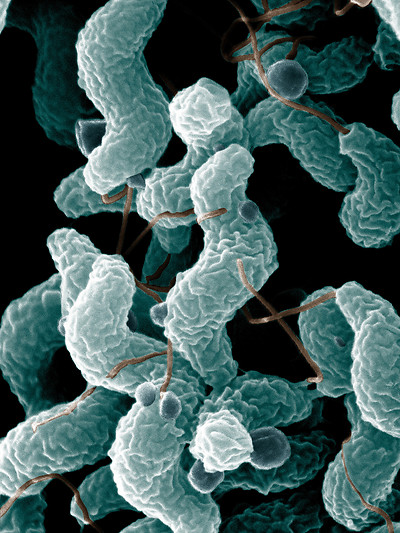
Lichfield Mercury Campylobacter

A LICHFIELD hotel has pleaded guilty to food hygiene offences after 33 wedding guests became ill after eating contaminated pate.

On July 6, Stafford Magistrates’ Court heard how guests attending a wedding at the Best Western George Hotel on Bird Street in May 2015 were served chicken liver pate that was contaminated with the campylobacter enteritis bacteria.


South Africa -80 Pupils – Food Poisoning

Eye Witness News

JOHANNESBURG – The Gauteng Health Department says more than 80 pupils have been treated for food poisoning in Ekurhuleni.

The department says the pupils from the Tholulwazi Secondary School were admitted to hospital after complaining of stomach ache and diarrhoea earlier today.

It’s understood the students, who are all in different grades, ate food provided by the school feeding scheme yesterday.

The department’s Steve Mabona says the group is still being monitored after being discharged from hospital.

Eygpt -Dozens hospitalised with food poisoning in Egypt Nile Delta village

Ahram Online

Over 40 people were hospitalised late on Saturday after they became sick from food poisoning in the Nile Delta governorate Kafr El-Sheikh, Ahram Arabic news website reported.

Fifteen ambulances were sent to those afflicted after they ate from food served at a wedding party in the village of Abu Raya.

Food poisoning is common in Egypt where basic public hygiene standards are poorly enforced.

In April, more than 80 people were hospitalised due to a similar food poisoning incident after they were served at a wedding party in a village in Beni Suef, south of Cairo.

In April 2015, over 700 people in the Nile Delta governorate of Sharqiya contracted food poisoning that was blamed on contaminated tap water.