Monthly Archives: June 2016

USA – Sunflower Seeds and Listeria monocytogenes goes On.

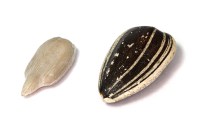
FDA Sunflower_Seeds_Kaldari

Giant Eagle supplier SunOpta has notified the retailer of a second expansion of the previously reported product recall on its sunflower seeds sold in the bulk section of the Carmel Market District due to possible Listeria monocytogenes (Listeria) contamination.

The affected product was sold in the bulk foods sections of the Carmel Market District with a PLU of 65167. The additional recalled product was available for purchase at these locations both loose within the bulk bin through June 1, 2016, and in pre-packaged containers with sell by dates through December 1, 2016. There are no confirmed illnesses to date associated with this recall.

FDA

Giant Eagle supplier SunOpta has notified the retailer of a second expansion of the previously reported product recall on its sunflower seeds sold in the bulk section of three central Ohio Market District stores due to possible Listeria monocytogenes (Listeria) contamination.

The affected product was sold in the bulk foods sections of the Kingdale, Dublin and Grandview Yard Market District locations with a PLU of 65167. The additional recalled product was available for purchase at these locations both loose within the bulk bin through June 1, 2016, and in pre-packaged containers with sell by dates through December 1, 2016. There are no confirmed illnesses to date associated with this recall.

FDA

Giant Eagle supplier SunOpta has notified the retailer of a second expansion of the previously reported product recall on its sunflower seeds sold in the bulk section of three northeast Ohio Giant Eagle, Inc. stores due to possible Listeria monocytogenes (Listeria) contamination.

The affected product was sold in the bulk foods sections of the Rocky River Giant Eagle, and the Portage Crossing and Strongsville Market District locations with a PLU of 65167. The additional recalled product was available for purchase at these locations both loose within the bulk bin through June 1, 2016, and in pre-packaged containers with sell by dates through December 1, 2016. There are no confirmed illnesses to date associated with this recall.

FDA

Giant Eagle supplier SunOpta has notified the retailer of a second expansion of the previously reported product recall on its sunflower seeds sold in the bulk section of four Pittsburgh area Market District stores due to possible Listeria monocytogenes (Listeria) contamination. Importantly, the most recent expanded recall now also includes one case of sunflower seeds sold from the Meadville Giant Eagle.

The affected product was sold in the bulk foods sections of the Waterworks Mall (Fox Chapel), Shadyside, Township of Pine and South Hills Village Market District locations with a PLU of 65167. The additional recalled product was available for purchase at these locations both loose within the bulk bin through June 1, 2016, and in pre-packaged containers with sell by dates through December 1, 2016. The affected loose product was also sold from the Meadville Giant Eagle. There are no confirmed illnesses to date associated with this recall.

FDA

Rucker’s Makin’ Batch Candies, Inc. of Bridgeport, IL is voluntarily recalling the specific code dates listed below of Dollywood Cajun Mix cello bag, due to the potential presence of Listeria Monocytogenes. Listeria monocytogenes is an organism which can cause serious and sometimes fatal infections in young children, frail or elderly people, and others with weakened immune systems. Although, healthy individuals may suffer only short-term symptoms, such as high fever, severe headache, stiffness, nausea, abdominal pain and diarrhea. Listeria monocytogenes infection can cause miscarriages and stillbirths among pregnant women.

The affected product is packaged in 9 oz. clear bag with Dollywood Theme Park label, UPC 4900005033302. This only affects packages with best by codes ranging from 01/23/16 thru 11/11/16. The product is distributed at Dollywood Theme Park in Pigeon Forge, TN.

Please note, no illnesses have been reported to date.

Rucker’s Makin’ Batch Candies, Inc. initiated the recall after being notified by our supplier that sunflower kernels used in the Cajun Mix were recalled for potential presence of Listeria monocytogenes.



UK and Ireland -Bounce Energy Balls recalled due to possible presence of Listeria monocytogenes

FSA

As a precautionary measure, Bounce Food Limited is recalling its Cashew & Pecan Vitality Lift Balls and Apple & Cinnamon Protein Punch Balls, as the products might contain listeria.

FSAI

Summary
Category 2: For Information
Alert Notification: 2016.18
Product: Bounce Cashew Pecan Vitality Lift Balls; all pack configurations with best before date ranges from 29/08/2016 to 15/02/2017

Bounce Apple & Cinnamon Protein Punch Balls; all pack configurations with best before date ranges from 28/08/2016 to 12/03/2017

Batch Code: Best before date ranges as outlined above.
Country Of Origin: United Kingdom

Message:

As a precautionary measure, Bounce Food Limited is recalling batches of its Cashew Pecan Vitality Lift Balls and its Apple & Cinnamon Protein Punch Balls, due to the possible presence of Listeria monocytogenes. Point of sale recall notices will be displayed in stores supplied with the affected batches.


Canada -Listeria and Sunflower

CFIA

June 7, 2016 – Natural High Co Pty (trading as Bounce Foods) is recalling Bounce brand Apple Cinnamon Protein Punch Energy Balls from the marketplace due to possible Listeria monocytogenes contamination. Consumers should not consume the recalled products described below.

Recalled products

Brand Name Common Name Size Code(s) on Product UPC
Bounce Apple Cinnamon Protein Punch Energy Ball 42 g All best before dates from 29OCT16 up to and including 06MAR17 8 52949 00342 6
Bounce Apple Cinnamon Protein Punch Energy Balls 12 x 42 g All best before dates from 29OCT16 up to and including 06MAR17 8 52949 00347 1


CFIA

June 7, 2016 – The food recall warning issued on June 3, 2016 has been updated to include additional product information.

Kashi Company is recalling Kashi brand Trail Mix Whole Grain Bars from the marketplace due to possible Listeria monocytogenes contamination. Consumers should not consume the recalled products described below.

Recalled products

Brand Name Common Name Size Code(s) on Product UPC
Kashi Trail Mix Whole Grain Bars 210 g
(6 bars)
2017 JA 01 RE
to
2017 JN 01 RE
inclusive
0 18627 43610 2
Kashi Whole Grain Bars 630 g
(18 bars)
2016 MA 27 EX
to
2017 JN 01 EX
inclusive
0 18627 50406 1

Research -Burgers may need higher cooking temperature to be safe from E. coli, University of Alberta researchers say

National Post Ecoli Istock

University of Alberta researchers are concerned after finding E. coli bacteria survived recommended temperatures for cooking meat.

Lynn McMullen, a food biologist, and other researchers at the U of A’s Agri-Food Discovery Place, have been performing experiments on E. coli after one of students found the bacteria in cooked beef. McMullen said that should have been impossible.

“We had a huge collection of strains of E. coli that came from meat processing plants, and we decided to screen and see if any were heat resistant,” McMullen said.

“So our student came back and said ‘This one survives 70 minutes at 60 C,’ and I said, ‘Wrong, E. coli doesn’t do that. Something’s wrong.’ ”

USA -Listeria monocytogenes – Sunflower Seeds

FDA

Atkins Nutritionals, Inc. (“company”) is issuing a voluntary recall of limited lot codes of certain bar products. These products contain or may have come in contact with equipment that processed product containing sunflower seeds distributed by supplier SunOpta, Inc. that have the potential to be contaminated with Listeria monocytogenes.

There have been no reports of illness associated with the consumption of these products. The company is initiating a voluntary recall in an abundance of caution and care for the consumer due to an expanded recall initiated by sunflower seed supplier SunOpta, Inc.


UK -Neal’s Yard Creamery recalls its ‘Hay on Wye’ unpasteurised goat’s cheese due to the presence of listeria monocytogenes

FSA

Risk

The product below is contaminated with Listeria monocytogenes.

Symptoms caused by this organism can be similar to flu and include high temperature, muscle ache or pain, chills, feeling or being sick and diarrhoea. However, in rare cases, the infection can be more severe, causing serious complications, such as meningitis.

Some people are more vulnerable to listeria infections, including those over 65 years of age, pregnant women and their unborn babies, babies less than one month old and people with weakened immune systems.

Product details

Product: ‘Hay-on-Wye’ unpasteurised goat’s cheese
Pack size: 80g
Made on: 18 May 2016
‘Best before’ date: 20 June 2016

Action taken by the company

Neal’s Yard Creamery is recalling the above product. The company has provided point-of-sale notices to be displayed in all stores and market stalls that were supplied with the affected product. These notices will tell consumers why the product is being recalled and what to do if they have bought the product.

No other Neal’s Yard Creamery products are known to be affected.

Advice to consumers

If you have bought the above product, do not eat it. Instead, return it to the store from where it was bought for a full refund.

About product recalls and withdrawals

If there is a problem with a food product that means it should not be sold, then it might be ‘withdrawn’ (taken off the shelves) or ‘recalled’ (when customers are asked to return the product). The FSA issues Product Withdrawal Information Notices and Product Recall Information Notices to let consumers and local authorities know about problems associated with food. In some cases, a ‘Food Alert for Action’ is issued. This provides local authorities with details of specific action to be taken on behalf of consumers.


Australia -Orgazmo Wood Smoked Sicilian Olives – Potential Microbial Contamination

NSW Government

The NSW Food Authority advises:

Orgazmo Smoked Foods has recalled its Wood Smoked Sicilian Olives from Farmers Markets in NSW due to potential microbial contamination.

Product details are:

  • Wood Smoked Sicilian Olives, 600g plastic container
  • Best Before 05 MAY 2017

Food products contaminated with pathogens may cause illness if consumed.

If you are concerned about your health, you should seek medical advice.

The product can be returned to the place of purchase for a full refund.

For more information contact Orgazmo Smoked Foods on 0425 213 330.

Scotland – Campylobacter Reduction

Food Safety News imagesCAYZ5I84

Both the number of raw chickens sold at retail showing campylobacter contamination and the number with the highest level of contamination are showing improvement, according to Food Standards Scotland (FSS).

Campylobacter remains the most common cause of food borne illness in throughout the United Kingdom, and FSS research has shown that a significant proportion of Scottish campylobacter cases are associated with a chicken source.

Scotland’s food safety agency is working in partnership with the Food Standards Agency (FSA) on the UK strategy to reduce campylobacter in chicken. The latest set of results have been published from FSA’s survey of campylobacter in fresh chicken sold at retail, and in the packaging.

Research -Evaluating the Performance of a New Model for Predicting the Growth of Clostridium perfringens in Cooked, Uncured Meat and Poultry Products under Isothermal, Heating, and Dynamically Cooling Conditions

Wiley Online

Abstract

Clostridium perfringens type A is a significant public health threat and its spores may germinate, outgrow, and multiply during cooling of cooked meats. This study applies a new C. perfringens growth model in the USDA Integrated Pathogen Modeling Program-Dynamic Prediction (IPMP Dynamic Prediction) Dynamic Prediction to predict the growth from spores of C. perfringens in cooked uncured meat and poultry products using isothermal, dynamic heating, and cooling data reported in the literature. The residual errors of predictions (observation–prediction) are analyzed, and the root-mean-square error (RMSE) calculated. For isothermal and heating profiles, each data point in growth curves is compared. The mean residual errors (MRE) of predictions range from –0.40 to 0.02 Log colony forming units (CFU)/g, with a RMSE of approximately 0.6 Log CFU/g. For cooling, the end point predictions are conservative in nature, with an MRE of –1.16 Log CFU/g for single-rate cooling and –0.66 Log CFU/g for dual-rate cooling. The RMSE is between 0.6 and 0.7 Log CFU/g. Compared with other models reported in the literature, this model makes more accurate and fail-safe predictions. For cooling, the percentage for accurate and fail-safe predictions is between 97.6% and 100%. Under criterion 1, the percentage of accurate predictions is 47.5% for single-rate cooling and 66.7% for dual-rate cooling, while the fail-dangerous predictions are between 0% and 2.4%. This study demonstrates that IPMP Dynamic Prediction can be used by food processors and regulatory agencies as a tool to predict the growth of C. perfringens in uncured cooked meats and evaluate the safety of cooked or heat-treated uncured meat and poultry products exposed to cooling deviations or to develop customized cooling schedules. This study also demonstrates the need for more accurate data collection during cooling.

Practical Application

Clostridium perfringens is a significant public health hazard, and can be found in many meat and poultry products regulated by the USDA Food Safety and Inspection Service. A predictive model is needed for the food industry and regulatory agencies to estimate the relative growth of C. perfringens in the event of cooling deviation. The predictive model in IPMP Dynamic Prediction provides significant higher accurate and fail-safe predictions. Its use can reduce foodborne infections caused by the growth of C. perfringens in meat and poultry products during cooling.

Research -Survival and Metabolic Activity of Listeria monocytogenes on Ready-to-Eat Roast Beef Stored at 4 °C

Wiley Online

Abstract

Three brands of commercial roast beef were purchased and artificially inoculated with a 5-strain Listeria monocytogenes cocktail at 2 inoculation levels (approximately 3 and 6 Log CFU/g). Although all 3 brands contained sodium diacetate and sodium lactate, inoculated Listeria cocktail survived for 16 d in all 3 brands; significant increases in L. monocytogenes numbers were seen on inoculated Brand B roast beef on days 12 and 16. Numbers of L. monocytogenes increased to 4.14 Log CFU/g for the 3 Log CFU/g inoculation level and increased to 7.99 Log CFU/g for the 6 Log CFU/g inoculation level by day 16, with the pH values being 5.4 and 5.8 respectively. To measure the cell viability in potential biofilms formed, an Alamar blue assay was conducted. Brand B meat homogenate had the highest metabolic activities (P < 0.05). By comparing its metabolic activities to Brands A and C and the inoculated autoclaved meat homogenates, results indicated that the microflora present in Brand B may be the reason for high metabolic activities. Based on the denaturing gradient gel electrophoresis and the Shannon–Wiener diversity index analysis, the “Brand” factor significantly impacted the diversity index (P = 0.012) and Brand B had the highest microflora diversity (Shannon index 1.636 ± 0.011). Based on this study, results showed that antimicrobials cannot completely inhibit the growth of L. monocytogenes in ready-to-eat roast beef. Native microflora (both diversity and abundance), together with product formula, pH, antimicrobial concentrations, and storage conditions may all impact the survival and growth of L. monocytogenes.

Practical Application

This study evaluated the survival and growth of Listeria monocytogenes artificially inoculated on ready-to-eat roast beef, investigated cell viability and metabolic activity in biofilm, and identified factors that may impact L. monocytogenes survival. In addition to previous literature, this study found that the diversity of native microflora in roast beef is another important factor that may impact the persistence of Listeria populations. The diversity and the abundance of the native microflora is a direct reflection of the manufacturing environment. This indicates that the control strategies taken by the ready-to-eat meat manufacturers have a direct impact on meat safety for the following storage and retail steps.