Monthly Archives: June 2016

Research -Human norovirus transmission and evolution in a changing world

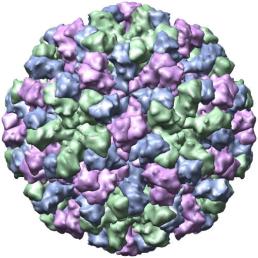
Nature Reviews Norwalk_Caspid

Norovirus infections are a major cause of gastroenteritis, and outbreaks occur frequently. Several factors are currently increasing the challenge posed by norovirus infections to global health, notably the increasing number of infections in immunocompromised individuals, who are more susceptible to disease, and the globalization of the food industry, which enables large norovirus outbreaks to occur on an international scale. Furthermore, the rapid rate of the genetic and antigenic evolution of circulating noroviruses complicates the development of vaccines and therapies that are required to counter these challenges. In this Review, we describe recent advances in the study of the transmission, pathogenesis and evolution of human noroviruses, and consider the ongoing risk of norovirus outbreaks, together with the future prospects for therapeutics, in a rapidly changing world.


USA -Ajuua’s Mexican Restaurant Employees Test Positive for Salmonella

Food Poisoning Journal

The Odessa American reports that Six Ajuua’s Mexican Restaurant employees have tested positive for Salmonella, but officials do not know if they contracted the infection before or after the outbreak was caught by Ector County health officials.

Ector County Health Department Director Gino Solla said the tests for the six employees came to the department Monday, and the number of lab-confirmed tests has increased to 10 since the outbreak was confirmed on June 6. The number of probable cases, he added, was now at 23.

USA -G & M Co. Recalls Beef Products Due To Possible E. Coli O157:H7 Contamination

FSIS

G & M Co., a Newark, N.J. establishment, is recalling approximately 3,586 pounds of beef products that may be contaminated with E. coli O157:H7, the U.S. Department of Agriculture’s Food Safety and Inspection Service (FSIS) announced today.

The bulk beef cuts and trimmings items were produced on June 8, 9, and 10, 2016. The following products are subject to recall:

  • 3,586-lbs. – Various box sizes ranging from 30-195 lb. containing plastic wrapped bulk beef cuts and trimmings marked only with plant identifier “M5476.”

The products subject to recall bear establishment number “M5476” inside the USDA mark of inspection. These items were shipped to retail locations in New Jersey and New York.

The issue was identified on June 14, 2016, when FSIS Inspection Program Personnel (IPP) conducted trace-back and trace-forward activities after the firm received a confirmed positive for Escherichia coli O157:H7 from FSIS sampling and testing. There have been no confirmed reports of adverse reactions due to consumption of these products.

USA -Listeria monocytogenes and Sunflower Seeds

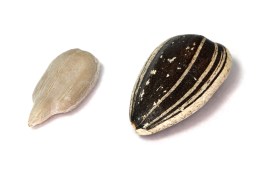
FDA Sunflower_Seeds_Kaldari

Creative Snacks Co. of Greensboro, North Carolina is expanding their recall of specific lot codes of bulk and packaged sunflower seed products due to the potential presence of Listeria monocytogenes. We have been notified by SunOpta, our sunflower seed supplier, that the company has issued a further expanded voluntary recall for sunflower seeds that were processed in their Crookston, Minnesota facility between May 31, 2015 and January 31, 2016. Listeria monocytogenes is an organism which can cause serious and sometimes fatal infections in young children, frail or elderly people, and others with weakened immune systems. Although healthy individuals may suffer only short-term symptoms such as high fever, severe headache, stiffness, nausea, abdominal pain and diarrhea, Listeria infection can cause miscarriages and stillbirths among pregnant women. It is worth noting that no illnesses have been reported to date and that the recall is a precautionary measure.

Creative Snacks is recalling all products that contain the SunOpta sunflower seeds in question. The product being recalled has been distributed to retailers nationwide and is being sold in a variety of formats including plastic rigid containers, small re-sealable bags and in bulk.

FDA

Longmont, CO. — Honey Bunchie, LLC is initiating a voluntary recall of a limited number of Honey Bunchies Gourmet Honey Bars that contain SunOpta sunflower kernels that have the potential of contamination with Listeria monocytogenes.

The recalled products were distributed directly from Honey Bunchie, LLC to distributors, retailers and online consumers between 08/05/2015 – 03/15/2016.

To date, Honey Bunchie, LLC has not received any reports of illness; however, the company is initiating this voluntary recall in an abundance of caution as part of its commitment to the health and safety of its consumers.

 

Information -Raw Milk – “Cold Pressure Sterilisation”

Safe Food imagesCAZ9J1WP

Many of you will know that I have written several articles on the dangers of consuming raw milk.  In my opinion, any perceived benefits are greatly outweighed by the real risks.

However, if you will permit me to mix metaphors, you can now have your cake and eat it.

An Australian company, Made by Cow, is offering raw milk processed by “cold pressure”.  There are few details available, but it appears that the company is using an established process (High Pressure Processing, HPP) to make the milk as safe as pasteurised milk.  The process has been approved by the New South Wales Food Authority, and the product can be sold in stores.

India -50 Gujarat police cadets hospitalised after food poisoning

News

Ahmedabad: Fifty cadets of the Gujarat State Reserve Police Force (SRPF) were on Friday admitted to the Maharaja Sayajirao Civil Hospital in Vadodara after a serious bout of food poisoning over the last two days.

Of the 50 police cadets, eight were stated to be in critical condition.

Official sources here said 250 cadets were undergoing training at the Lalbaug premises of the SRPF and of them 50 suffered from severe vomiting and diarrhoea after consuming food served to them at the training camp.

The cadets said they had been complaining to the authorities about poor quality of food at their training camp besides pathetic living conditions but to no avail.

Requesting anonymity, the cadets alleged that the food being served to them was often stale and would smell.

China – Over 60 hospitalized for suspected food poisoning in China

Trend News Agency

More than 60 villagers in central China’s Hunan Province have sought medical advice after consuming dishes sold by a supermarket, Xinhua reported citing local authorities.

On Thursday afternoon, the government of Hekou Township, Xiangtan County, started to receive reports that villagers developed symptoms of vomiting, dizziness and muscle weakness after eating stewed dishes they bought at a local supermarket, according to the county government.


UK -Old Vienna restaurateur fined nearly £60k over food safety failings

BBC

A restaurateur must pay nearly £60,000 in fines after admitting a string of food safety failings.

Routine inspections at Old Vienna in Eastwood Road, Leigh, revealed congealed dirt, broken glass, and cooked food left unrefrigerated.

The proprietor, Walter Haiser, 76, admitted food safety breaches at Southend Magistrates’ Court.

Southend Borough Council said Mr Haiser had been “failing to comply” for some time.

Research -Restaurant Cooking Trends and Increased Risk for Campylobacter Infection

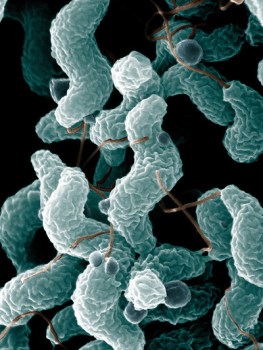
CDC Campylobacter

In the United Kingdom, outbreaks of Campylobacter infection are increasingly attributed to undercooked chicken livers, yet many recipes, including those of top chefs, advocate short cooking times and serving livers pink. During 2015, we studied preferences of chefs and the public in the United Kingdom and investigated the link between liver rareness and survival of Campylobacter. We used photographs to assess chefs’ ability to identify chicken livers meeting safe cooking guidelines. To investigate the microbiological safety of livers chefs hey preferred to serve, we modeled Campylobacter survival in infected chicken livers cooked to various temperatures. Most chefs correctly identified safely cooked livers but overestimated the public’s preference for rareness and thus preferred to serve them more rare. We estimated that 19%–52% of livers served commercially in the United Kingdom fail to reach 70°C and that predicted Campylobacter survival rates are 48%–98%. These findings indicate that cooking trends are linked to increasing Campylobacter infections.

UK -Reported norovirus outbreaks in hospitals: suspected and laboratory-confirmed outbreaks in 2016

Gov.uk

Week by week reports of suspected and laboratory-confirmed reported norovirus outbreaks in hospitals, with regional breakdown