
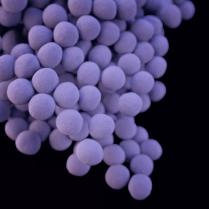
Staphylococcus aureus is considered the most common causative agent of community and hospital-acquired infections. The isolates with increased virulence and antimicrobial resistance, especially mecithillin resistant S. aureus (MRSA), represent a challenge in hospitals and health care facilities worldwide. The effect of tyrosol, a phenolic quorum sensing compound of Candida albicans, was studied on the sensitivity of clinical MRSA isolates to antibiotics. Besides having antibacterial activity, subinhibitory concentrations (3.5 – 14.3 mM) of tyrosol increased the susceptibility to antimicrobial. It gave either synergistic or additive effect when combined with gentamicin, amikacin and ciprofloxacin. Also, the effect of such concentrations on virulence factors production was investigated. Biofilm formed was significantly decreased in most of the tested isolates (P≤0.0001). In addition, it significantly decreased the production of protease and lipase enzymes. Overall, these results represent a promising method for inhibiting S. aureus either by reducing its resistance to antibiotics or decreasing the production of virulence factors.
KSWFoodWorld

 FoodWorld