Monthly Archives: February 2016

Australia -Hep A & Berries – new guidance on heat inactivation

FoodWise Virusds

Guidance for thermal inactivation of Hepatitis A virus in berries.

In addition, MPI have also published Information for processors using imported frozen berries which reminds processors and manufacturers who use imported frozen berries as an ingredient, to consider Hepatitis A as a hazard that is reasonably likely to occur and appropriate controls should be implemented in their process to address this hazard. Guidance for thermal inactivation of Hepatitis A in berries can be accessed on FSANZ’s website at www.foodstandards.gov.au/publications/Pages/Guidance-for-Thermal-Inactivation-of-Hepatitis-Avirus-in-Berries-.aspx

Information for processors using imported frozen berries is available on the Ministry for Primary Industries website at http://www.mpi.govt.nz


USA -Foods Firm Recalls Chicken Salad Products Due to Possible Listeria Contamination

FSIS

Sally Sherman Foods Firm Recalls Chicken Salad Products Due to Possible Listeria Contamination

Class I Recall 021-2016
Health Risk: High 25 Feb 2016

Congressional and Public Affairs
Nina Anand
(202) 720-9113

WASHINGTON, Feb. 25, 2016 – Sally Sherman Foods, a Mount Vernon, N.Y. establishment, is recalling approximately 3,004 pounds of various chicken products that may be adulterated with Listeria monocytogenes, the U.S. Department of Agriculture’s Food Safety and Inspection Service (FSIS) announced today.

The chicken salad items were produced on various dates between Feb. 2-18, 2016. The following products are subject to recall: [View Labels (PDF Only)]

  • 4-lb. Plastic container of Sally Sherman “Spa Chicken Salad with Greek Yogurt,” with a packaging date of Feb. 2, 9, 11, and 18, 2016 and a case code of N-026, N-096, N-114, N-184.
  • 4-lb. Plastic container of Sally Sherman “Chicken Salad All White Meat,” with a packaging date of Feb. 2, 4, 11, and 18, 2016 and a case code of N-026, N-044, N-114, N184.
  • 4-lb. Plastic container of Sally Sherman “Deluxe Chicken Salad All White Meat,” with a packaging date of Feb. 4, 11, and 18, 2016 and a case code of N-044, N-114, N184.
  • 4-lb. Plastic container of Sally Sherman “Farmcrest Chicken Salad,” with a packaging date of Feb. 2, 4, 9, 11, and 18, 2016 and a case code of N-184, N-114, N-026, N-044, N-096.
  • 4-lb. Plastic container of Sally Sherman “Cranberry Walnut Chicken Salad,” with a packaging date of Feb. 4, 9, 11, and 18, 2016 and a case code of, N-044, N-096 N-114, and N-184.

The products subject to recall bear establishment number “P-4400” inside the USDA mark of inspection. These items were shipped to distributor locations in New York, New Jersey, Virginia, Pennsylvania, and Maryland.

The problem was discovered due to in-plant sampling of products that confirmed positive for Lm. FSIS and the company have received no reports of illness due to consumption of these products.

Consumption of food contaminated with L. monocytogenes can cause listeriosis, a serious infection that primarily affects older adults, persons with weakened immune systems, and pregnant women and their newborns. Less commonly, persons outside these risk groups are affected.

Listeriosis can cause fever, muscle aches, headache, stiff neck, confusion, loss of balance, and convulsions sometimes preceded by diarrhea or other gastrointestinal symptoms. An invasive infection spreads beyond the gastrointestinal tract. In pregnant women, the infection can cause miscarriages, stillbirths, premature delivery or life-threatening infection of the newborn. In addition, serious and sometimes fatal infections in older adults and persons with weakened immune systems. Listeriosis is treated with antibiotics. Persons in the higher-risk categories who experience flu-like symptoms within two months after eating contaminated food should seek medical care and tell the health care provider about eating the contaminated food.

Consumers who have purchased these products are urged not to consume them. These products should be thrown away or returned to the place of purchase.

FSIS routinely conducts recall effectiveness checks to verify recalling firms notify their customers of the recall and that steps are taken to make certain that the product is no longer available to consumers. When available, the retail distribution list(s) will be posted on the FSIS website at www.fsis.usda.gov/recalls.

Media and consumers with questions regarding the recall can contact Thomas Recine, President of Sally Sherman Foods, at (914)-664-6262.

Consumers with food safety questions can “Ask Karen,” the FSIS virtual representative available 24 hours a day at AskKaren.gov or via smartphone at m.askkaren.gov. The toll-free USDA Meat and Poultry Hotline 1-888-MPHotline (1-888-674-6854) is available in English and Spanish and can be reached from l0 a.m. to 4 p.m. (Eastern Time) Monday through Friday. Recorded food safety messages are available 24 hours a day. The online Electronic Consumer Complaint Monitoring System can be accessed 24 hours a day at: http://www.fsis.usda.gov/reportproblem.


Rsearch -Antibiotic Resistance Patterns of Gram-Negative Psychrotrophic Bacteria from Bulk Tank Milk

Wiley Online Library

Abstract

Bacterial resistance to antibiotics is a major global health problem and resistance of Pseudomonadaceae and Enterobacteriaceae is a serious concern. We investigated the prevalence of drug-resistance in a total of 80 psychrotrophic strains from bulk milk belonging to Pseudomonas genus (n. 63) and Enterobacteriaceae group (n. 17). All the strains were tested against 16 antibiotics. Pseudomonas were further investigated for their sensitivity against 12 additional antibiotics. Pseudomonas showed a high susceptibility toward fluoroquinolones, aminoglycosides, and piperacillin and, to a lesser extent, to imipenem, ceftazidime, cefepime. Thirty-five out of 63 Pseudomonas strains were susceptible to meropenem, while among antibiotics for which recommended breakpoints are not yet available, 55% of Pseudomonas strains had no inhibition halo in presence of nitrofurantoin, highlighting a resistance toward this drug. The results obtained in this study indicate a high efficiency of fluoroquinolones, chloramphenicol (94%), and kanamycin (76%) for Enterobacteriaceae while a high prevalence of resistant strains was found to ampicillin (13/17). Serratia marcescens is highly susceptible to fluoroquinolones, chloramphenicol, and kanamycin. Moreover, mupirocin seems to be the new antibiotic with the less efficacy for Enterobacteriaceae, with 41% of strains without halo, pointing out an important resistance. Further knowledge on resistance to known and new antibiotics among Pseudomonas species and Enterobacteriaceae of milk origin was acquired.

Practical Application

Antibiotic resistance is a serious public health problem in food-related bacteria. Resistance of Pseudomonadaceae and Enterobacteriaceae of dairy origin is a growing concern. A likely new resistance against nitrofurantoin for Pseudomonas strains. Evidence of resistant Enterobacteriaceae strains against mupirocin. Further knowledge on AR patterns of psychrotrophic strains was provided.

Research -Microevolution of Monophasic Salmonella Typhimurium during Epidemic, United Kingdom

CDC

Microevolution associated with emergence and expansion of new epidemic clones of bacterial pathogens holds the key to epidemiologic success. To determine microevolution associated with monophasic Salmonella Typhimurium during an epidemic, we performed comparative whole-genome sequencing and phylogenomic analysis of isolates from the United Kingdom and Italy during 2005–2012. These isolates formed a single clade distinct from recent monophasic epidemic clones previously described from North America and Spain. The UK monophasic epidemic clones showed a novel genomic island encoding resistance to heavy metals and a composite transposon encoding antimicrobial drug resistance genes not present in other Salmonella Typhimurium isolates, which may have contributed to epidemiologic success. A remarkable amount of genotypic variation accumulated during clonal expansion that occurred during the epidemic, including multiple independent acquisitions of a novel prophage carrying the sopE gene and multiple deletion events affecting the phase II flagellin locus. This high level of microevolution may affect antigenicity, pathogenicity, and transmission.

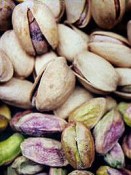
USA – FDA Recall -Pistachios Products – Salmonella

FDA Pistachios_th

Lipari Foods, LLC, of Warren, Michigan, has issued a voluntary recall of various raw pistachio products packaged by sister company JLM due to potential Salmonella risk. Salmonella is an organism that can cause serious and sometimes fatal infections in young children, frail or elderly people, and others with weakened immune systems. Healthy persons infected with Salmonella can experience fever, diarrhea (which may be bloody), nausea, vomiting, and abdominal pain. In rare circumstances, infection with Salmonella can result in the organism getting into the bloodstream and producing more severe illnesses such as arterial infections (i.e., infected aneurysms), endocarditis and arthritis.

USA – Raw Milk -Organic Pastures Dairy recalls milk

The Fresno Bee

Organic Pastures Dairy recalled its milk after E. coli was detected in tests. The tainted milk caused at least 10 illnesses, with six of those victims reporting they drank Organic Pastures raw milk, said California Department of Public Health officials

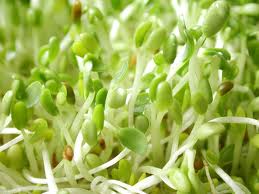
USA – Sprouts Again –

Barf Blog alfalfa

A day after publicly announcing that nine people were sick from Salmonella in sprouts in Kansas and Oklahoma, nine people have been sickened with E. coli O157:H7 in alfalfa sprouts in Minnesota and Wisconsin.

Minnesota health and agriculture officials are looking into an outbreak of foodborne illness tied to alfalfa sprouts produced by the firm Jack & The Green Sprouts.

Food Poisoning Bulletin

An E. coli outbreak linked to alfalfa sprouts produced by Jack & the Green Sprouts has sickened seven people in Minnesota and two in Wisconsin, according to the Minnesota Department of Health. Consumers should not eat and retailers and restaurants should not sell or serve Jack & the Green Sprouts brand alfalfa sprouts as E. coli can cause serious illness.


Australia – Campylobacter Cases – FNQ

The Cairns Post imagesCAYZ5I84

DODGY homemade chicken could be to blame for the highest surge in food poisoning cases in Cairns in three years.

Health officials warned Far North Queenslanders to improve their food hygiene and preparation practices, as 61 people have fallen ill with food poisoning caused by campylobacter bacteria since the start of the year.

By comparison, 55 people were diagnosed during the same month and a half period last year, 32 in 2014 and 24 in 2013.

Campylobacter is one of the most common causes of foodborne illness in Australia and is similar to salmonella.

USA – E.coli in Water Systems

The Mercury

East Pikeland >> Pikeland Village Square business owners were notified Tuesday that a boil water advisory had been issued after drinking water samples tested positive for E. coli.

The Pennsylvania Department of Environmental Protection issued the notice to the businesses at 513 Kimberton Road following the detection of the harmful bacteria in a raw water sample. All commercial businesses are required to provide alternate water to their customers (bagged ice, bottled water, canned or bottled juice or soda) until the advisory is lifted. Among the businesses located in the shopping center were Rocco’s Pizza Shoppes, Re/Max Main Line, Tips and Toes Nail Spa.

Rapid City Journal

Although researchers from the South Dakota School of Mines & Technology say they have found a dangerous toxin in Rapid Creek that could indicate the presence of E.coli bacteria, Rapid City officials have assured residents that the city’s drinking water is safe.


USA – Hepatitis A – 3000 Exposed

Food Poisoning Journal

Clackamas County Public Health, in partnership with Adventist Health, Providence Health & Services and Legacy Medical Group, will offer a vaccine clinic for those who may have been exposed to Hepatitis A recently at a Sandy theater. No one will be turned away for their inability to pay.