Monthly Archives: February 2016

Research -Which Food Is Most Likely to Give You Salmonella?

MSN Food and Drink Salmonellaa

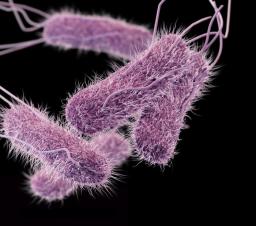
Salmonella poisoning, or salmonellosis, is an illness inspired by the consumption of one of over 2,000 foodborne salmonella strains. “Salmonella infection usually occurs when a person eats food contaminated with the feces of animals or humans carrying the bacteria,” says Foodborne Illness.

According to WebMD, salmonellosis is “more common in the summer than in the winter” and kids are most likely to get it. Those with compromised immune systems may experience severe infections. Salmonella outbreaks shut down food operations far too regularly, and it appears that without the utmost care and caution, foods that regularly contain salmonella bacteria can make it into the hands of consumers and ultimately infect them.

There are roughly one million instances of salmonella poisoning yearly in the United States. Somewhere around 400 people lose their lives because of it each year as well.

According to Dan Myers, The Daily Meal’s Senior Eat/Dine Editor, salmonella can infect “milk, eggs, poultry, and beef. Raw or undercooked eggs, raw milk, contaminated water, and raw and undercooked meats are [also] culprits, [and] it can… be transmitted by someone who doesn’t wash their hands after using the restroom; anything that they touch [can] be contaminated. Alfalfa sproutsnutscucumbers, and melons are also occasionally culpable.”

Australia -Strahan E. coli contamination: Alerts requiring residents to boil water before drinking to remain for at least a week

ABC News

It is is expected residents of Strahan on Tasmania’s west coast will need to boil their tap water for drinking for at least another week after the supply became contaminated with E. coli.

More than 500 homes are affected, after samples taken during routine testing on Tuesday were found to be contaminated with the bacteria.

TasWater crews have arrived in the town to try to work out the cause.


USA -Why You’re Hearing About Listeria Way More Often

Time

Foodborne illness might seem to be happening more frequently than ever, especially with recent headlines about Chipotle’s E. coli outbreaks and last month’s listeria contamination in Dole salads. But hearing more about these outbreaks may be a sign that the food supply is getting more safe—not less. Thanks to a new pathogen-tracking system, the government says it can connect cases that previously would have been seen as separate bouts of food illness.

India -Students taken ill: food poisoning suspected

The Hindu

Nearly 100 schoolchildren were hospitalised with suspected food poisoning Thursday after eating a free midday meal at a government-run school near Mumbai, officials said, adding that 13 were in a critical condition.

Most of the children at the rural primary school fell ill after the lunch of rice and pulses.

“Ninety-seven have been admitted to hospital, a few of them are critical,” Shrikrishna Kokate, Deputy Police Chief of Palghar district told AFP.

13 critical

Hospital officials said 247 students were initially brought for treatment late afternoon after they complained of nausea and started vomiting. “Thirteen are critical but out of danger. More than 140 were discharged after medical screening. The rest are undergoing treatment,” Ashok Khandagle, a doctor attending the sick children said. — AFP

Hong Kong – Irish Oysters Banned

Ejinsight

Raw Irish oysters are being blamed for bringing down 21 people with food poisoning in a week after eating in a Tsuen Wan restaurant.

Twelve — four men and eight women aged 27 to 30 — were taken ill over the weekend, Ming Pao Daily reports.

All 21, including an 11-year-old and an elderly customer, developed abdominal pain, vomiting and diarrhea after dining on oysters in Anchor’s Seafood and Beerhouse.

The oysters came from Ireland’s Drumcliff Bay, the report said, citing a government press release.

USA- Sprouts –

Food Safety News

Now we are seeing two being reported in the United States in the last few weeks.

  • A total of nine people infected with the outbreak strain of E. coli O157 have been reported from two states: Minnesota has seven sick and Wisconsin two. Illnesses started on dates ranging from Jan. 17 to Feb. 8. Ill people range in age from 17 years to 84, with a median age of 28. Sixty-six percent of ill people are female. Two ill people have been hospitalized. Collaborative investigative efforts of state, local, and federal public health and regulatory officials indicate that alfalfa sprouts produced by Jack & The Green Sprouts of River Falls, Wisconsin are a likely source of this outbreak.
  • A total of 13 people infected with the outbreak strain of Salmonella Muenchen have been reported from four states: Kansas has five, Missouri three, Oklahoma three and Pennsylvania two. Illnesses started on dates ranging from Dec.1, 2015, to Jan. 21 this year. Ill people range in age from 18 years to 73, with a median age of 51. Ninety-two percent of ill people are female. Among 13 ill people with available information, five reported being hospitalized. , No deaths have been reported. Collaborative investigative efforts of state, local, and federal public health and regulatory officials indicate that alfalfa sprouts produced by Sweetwater Farms of Inman, KS, are a likely source of this outbreak.

As far back as September 1998, the FDA issued a warning against sprouts


USA – Recall Update -Maytag Dairy Farms Expands Voluntary Recall Of Blue Cheese Products Due To Possible Health Risk

FDA

NEWTON, IOWA – Maytag Dairy Farms is expanding its voluntary recall of “Maytag Blue” blue cheese wedges, wheels and crumbles because they have the potential to be contaminated with Listeria monocytogenes. The organism can cause serious and sometimes fatal infections in young children, frail or elderly people, and others with weakened immune systems. Although healthy individuals may suffer only short-term symptoms such as high fever, severe headache, stiffness, nausea, abdominal pain and diarrhea, Listeria infection can cause miscarriages and stillbirths among pregnant women.

No illnesses have been reported in connection with this issue.

This expanded recall is of 35 lots of 1, 4 and 8 oz. wedges and 2 and 4 lb. wheels; and 43 batches of 8 oz. crumbles and 5 lb. crumbles. This includes the 5 lots and 15 recalled batches which were announced February 19, 2016 and are noted in the tables below.

The recalled product was sold through distributors, wholesalers, retail stores, restaurants, and direct mail orders nationwide between November 24, 2015 and February 11, 2016. Affected products are packaged as follows:

Products Lot #s
Wedges or wheels (all sizes) 150479, 150480, 150481, 150482, 150483, 150484, 150485, 150486, 150488, 150489, 150492, 150493, 150495, 150498, 150499, 150500, 150501, 150506, 150508, 150509, 150514, 150515, 150516, 150517, 150518, 150532, 150533, 150534, 150535, 150538, 150539, 150648, 150649, 150650, 150651
Product Batch #s
Crumbles (both sizes) 950804, 960020, 950805, 960037, 950806, 960040, 950807, 960041, 950808, 960049, 950809, 960054, 950813, 960069, 950818, 960070, 950825, 960071, 960072, 950830, 960073, 950848, 950826, 950849, 960053, 950851, 960067, 950853, 960068, 950855, 950856, 950858, 950859, 960001, 960002, 960004, 960025, 960034, 960036, 960051, 960055, 960065, 960066

The lot number or batch number appears on the side or the bottom of the product.

The potential for contamination was discovered after testing by the State of Iowa revealed the presence of Listeria monocytogenes in two lots of product.  Maytag Dairy Farms has voluntarily suspended production and distribution while the company collaborates with the Food and Drug Administration and the State of Iowa to determine the cause of the problem.

Consumers who have purchased these products are urged to discard them immediately and not consume them.  Customers can call Maytag Dairy Farms at 800-247-2458 or 641-791-2010 Monday – Friday 9AM-5PM CST to arrange for a refund and return of the product.

We apologize for any temporary inconvenience or concern that our voluntary recall is causing our customers and the families who have enjoyed our products for generations.  To learn more and for updates, please visit www.maytagdairyfarms.com disclaimer icon.


Brazil -Celebrities with piriri

Food Safety Brasil Blog

Dear reader here follows a compiled some famous with food toxi-infection problems as us, that while feeding on improper food, have different clinical pictures and cancel their agendas.

NB: Translated by Google

RASFF Alerts – Aflatoxin -Peanuts – Paprika – Hazlenuts -Sweet Apricot Kernels – Nutmeg -Groundnuts – Almonds – Pistachios – Ochratoxin – Paprika – Pistachios

RASFFa

RASFF-aflatoxins (B1 = 75.9; Tot. = 116.1 µg/kg – ppb) in peanuts in shell from Egypt  in Italy

RASFF-aflatoxins (B1 = 36.93; Tot. = 92.63 µg/kg – ppb) and ochratoxin A (81.29 µg/kg – ppb) in paprika powder from Ethiopia in Germany

RASFF-aflatoxins (B1 = 13.49 µg/kg – ppb) in roasted hazelnuts from Turkey in Germany

RASFF-aflatoxins (B1 = 15.3; Tot. = 16 µg/kg – ppb) in sweet apricot kernels from Turkey in Italy

RASFF-aflatoxins (B1 = 29.5; Tot. = 32.5 µg/kg – ppb) in nutmeg in shell from India, via the United States in Slovenia

RASFF-aflatoxins (B1 = 92; Tot. = 107 / B1 = 5.1; Tot. = 5.9 µg/kg – ppb) in groundnuts from Egypt in Italy

RASFF-aflatoxins (B1 = 5.3; Tot. = 6.5 µg/kg – ppb) in shelled peanuts from China in Italy

RASFF-aflatoxins (B1 = 10.4; Tot. = 11.6 µg/kg – ppb) in shelled almonds from the United States in Italy

RASFF-aflatoxins (B1 = 97.5; Tot. = 107 µg/kg – ppb) in pistachios from Iran in Belgium

RASFF-aflatoxins (B1 = 240; Tot. = 270 µg/kg – ppb) and ochratoxin A (45 µg/kg – ppb) in pistachio nuts from Iran, via Germany in the Netherlands

RASFF Alerts -Salmonella – Dried Parsley -Perilla – Raw Milk Brie – Chicken

RASFFa

RASFF Salmonella in dried parsley from Egypt in Germany

RASFF-Salmonella (in 4 out of 5 samples /25g) and high count of Escherichia coli (620 CFU/g) in fresh perilla (Perilla frutescens) from Laos, via Vietnam in the UK

RASFF-Salmonella (presence /25g) in chilled raw milk brie cheese from France in France

RASFF-Salmonella (presence /25g) in frozen raw chicken breasts from Thailand, via Denmark in Sweden