Monthly Archives: February 2015

Research – Food Safety Fact Sheet from Australia – Hepatitis A – Frozen Berries

Barfblog

Screen-Shot-2015-02-27-at-9_13_39-PM-232x300


Research – Presence and Correlation of Some Enteric Indicator Bacteria, Diarrheagenic Escherichia coli Pathotypes, and Salmonella Serotypes in Alfalfa Sprouts from Local Retail Markets in Pachuca, Mexico

ingentaconnect

Data on the presence of diarrheagenic Escherichia coli pathotypes (DEPs) in alfalfa sprouts and correlations between the presence of coliform bacteria (CB), fecal coliforms (FC), E. coli, DEPs, and Salmonella in alfalfa sprouts are not available. The presence of and correlations between CB, FC, E. coli, DEPs, and Salmonella in alfalfa sprouts were determined. One hundred sprout samples were collected from retail markets in Pachuca, Hidalgo State, Mexico. The presence of indicator bacteria and Salmonella was determined using conventional culture procedures. DEPs were identified using two multiplex PCR procedures. One hundred percent of samples were positive for CB, 90% for FC, 84% for E. coli, 10% for DEPs, and 4% for Salmonella. The populations of CB ranged from 6.2 up to 8.6 log CFU/g. The FC and E. coli concentrations were between , 3 and 1,100 most probable number (MPN)/g. The DEPs identified included enterotoxigenic E. coli (ETEC; 2%), enteropathogenic E. coli (EPEC; 3%), and Shiga toxin–producing E. coli (STEC; 5%). No E. coli O157:H7 strains were detected in any STEC-positive samples. In samples positive for DEPs, the concentrations ranged from 210 to 240 MPN/g for ETEC, 28 to 1,100 MPN/g for EPEC, and 3.6 to 460 MPN/g for STEC. The Salmonella isolates identified included Salmonella enterica serotype Typhimurium in three samples and Salmonella enterica serotype Enteritidis in one. STEC and Salmonella Typhimurium were identified together in one sample. Positive correlations were observed between FC and E. coli, between FC and DEPs, and between E. coli and DEPs. Negative correlations occurred between CB and DEPs and between CB and Salmonella. Neither FC nor E. coli correlated with Salmonella in the sprout samples. To our knowledge, this is the first report of ETEC, EPEC, and STEC isolated from alfalfa sprouts and the first report of correlations between different indicator groups versus DEPs and Salmonella.

Research – Bacterial Contamination in Saeng-go-gi, a Ready-to-Eat Fresh Raw Beef Dish Sold in Restaurants in South Korea

ingentaconnect

This study investigated the bacterial contamination levels in ready-to-eat fresh raw beef, Saeng-go-gi in Korean, sold in restaurants. A total of 462 samples were analyzed by performing an aerobic bacterial plate count, a coliform count, and an Escherichia coli O157:H7 count. Aerobic bacterial plate counts of fresh raw beef obtained from Seoul, Cheonan, Daegu, Gunsan, and Gwangju retail store restaurants were 6.46, 6.89, 6.39, 6.58, and 6.67 log CFU/g, respectively, and coliforms were 4.05, 4.97, 4.76, 3.62, and 3.32 log CFU/g, respectively. Among the 462 assessed samples, suspected E. coli O157:H7 colonies were found in 32, 24, 20, 22, and 16 samples obtained from Seoul, Cheonan, Daegu, Gunsan, and Gwangju, respectively. The identity of these isolated colonies was further assessed by using a latex agglutination kit. The agglutination assay data showed that the isolates were not E. coli O157:H7. The data from this study could be used to design better food handling practices for reducing foodborne illnesses linked to fresh raw beef consumption.

Canada CFAI Updated Recall – Mordatella – Listeria monocytogenes

CFIA

The food recall warning issued February 25, 2015 has been updated to include additional product information. This additional information was identified during the ongoing food borne illness outbreak investigation in Ontario.

Lady York Foods is recalling sliced Mortadella products from the marketplace due to possible Listeria monocytogenes contamination. Consumers should not consume the recalled products.

If other high-risk products are recalled, the CFIA will notify the public through updated Food Recall Warnings.

The following products were sold from Lady York Foods, 2939 Dufferin St., North York, Ontario.

This recall applies to all Mortadella products sliced and sold from the deli counter at Lady York Foods from December 2, 2014 to February 24, 2015. Consumers who are unsure if they have purchased an affected product are advised to contact the retailer.

Research – Antibiotic resistant salad: Resistant Listeria monocytogenes not as widespread as thought

Science Daily

Antibiotic-resistant strains of the food-poisoning microbe Listeria monocytogenes in unprocessed salad products is not quite as widespread as scientists originally suspected. A new study reveals that strains of the microbe falling into six distinct groups can all be found on such products, but 82 percent of those strains succumb to at least one of sixteen common antibiotics used in veterinary and human listeriosis treatment.

Canada – CFIA Recall – Mortadella – Listeria monocytogenes

CFIA

996660 Ontario Ltd. is recalling Monticello brand Mortadella, product of Italy, from the marketplace due to possible Listeria monocytogenes contamination. Consumers should not consume and retailers, restaurants and institutions should not to sell or use the recalled product described below.

Starting on November 13, 2014, this product was sold clerk-served from deli counters with or without a label or coding, and some product packages may not bear the same brand or product name as described above, or a brand at all. Consumers who are unsure if they have purchased the affected product are advised to contact their retailer.

Recalled products

Brand Name Common Name Size Code(s) on Product UPC
Monticello La Mortadella del Cuore – Mortadella Variable LOT: 044293
BEST BEFORE: 03/19/2015
None

Australia – Histamine – Tuna

Food Magazine Histamine3d

A tinned tuna product linked to four cases of food poisoning has been removed from the market, according to the NSW Food Authority.

Earlier this week, four people reported symptoms of scombroid, or histamine poisoning soon after consuming a takeaway tuna salad from Soul Origin, a cafe located at Town Hall station in Sydney’s CBD. Symptoms include skin rashes, dizziness, tingling in the mouth and nausea.

India – 36 Students Vomit after Eating Dish Having Lizard in it.

Odisha Samaya BeardedDragonEatting

Dindigul: As many as 36 students of a government school in Ulupakkudi area here complained of nausea after eating ‘paniyaram’ from a roadside eatery which had parts of lizard in it, police said.

Paniyaram is a fried dish available both in sweet and spicy form.


Research – Cryptosporidiosis Associated with Consumption of Unpasteurized Goat Milk — Idaho, 2014

CDC 763px-Cryptosporidium_parvum_01

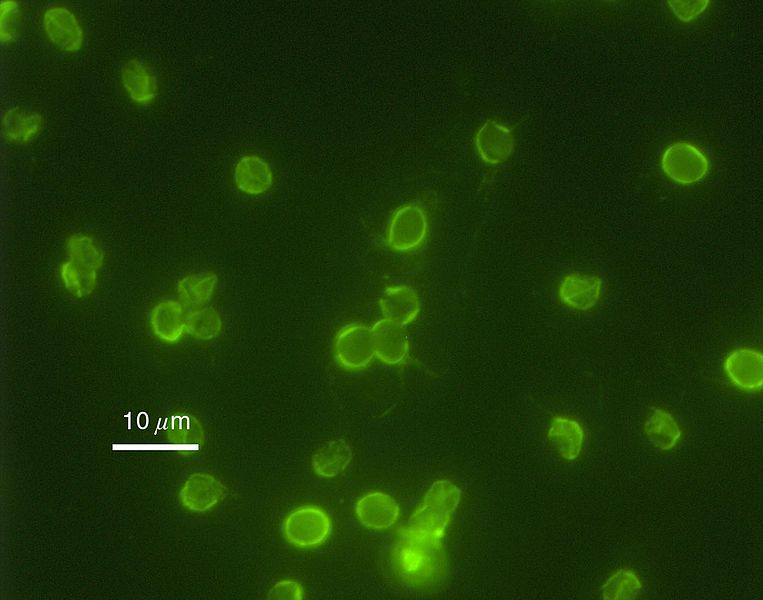
On August 27, 2014, the Idaho Department of Health and Welfare’s Division of Public Health (DPH) was notified of two cases of cryptosporidiosis in siblings aged ❤ years. Idaho’s Southwest District Health (SWDH) investigated and found that both children had consumed raw (unpasteurized) goat milk produced at a dairy licensed by the Idaho State Department of Agriculture (ISDA) and purchased at a retail store. Milk produced before August 18, the date of illness onset, was unavailable for testing from retail stores, the household, or the dairy. Samples of raw goat milk produced on August 18, 21, 25, and 28, taken from one opened container from the siblings’ household, one unopened container from the retailer, and two unopened containers from the dairy, all tested positive for Cryptosporidium by real-time polymerase chain reaction (PCR) at a commercial laboratory. On August 30, ISDA placed a hold order on all raw milk sales from the producer. ISDA and SWDH issued press releases advising persons not to consume the raw milk; SWDH issued a medical alert, and Idaho’s Central District Health Department issued an advisory to health care providers about the outbreak.


Research – How safe is European Internet cheese? A purchase and microbiological investigation

Science Direct closta

The suitability for consumers of a variety of raw milk cheeses purchased over the Internet was investigated in terms of packaging, labelling, physicochemical parameters and microbiological safety. 108 purchases from seven European countries were examined. The prevalences of Salmonella spp., Listeria monocytogenes, Escherichia coli and coagulase positive staphylococci (SA) were determined. All 108 samples were described on websites as raw milk cheeses and thereby qualified for this study. However, after delivery it was noted that 4.6% (5/108) of cheeses were labelled to be manufactured from heat-treated or pasteurized milk. Delivery duration ranged from 24 h to six days. Immediately upon receipt cheese temperatures were observed to range between 5 and 23 °C, whereas in 61.5% of all cases the temperature was higher than 15 °C. Cheese labelling was examined in respect of EC Guideline 2000/13 and Regulation No. 853/2004. Only 17.6% (19/108) of cheeses were properly labelled and fulfilled all European guideline requirements. In 50.9%, 38.8%, 46.3% and 39.8% of all cases (i) specific storage requirements, (ii) name and address of the manufacturer/packer or seller, (iii) net weight and (iv) shelf life (use by date), were missing. Even the labelling information “made from raw milk” was not apparent on 36% of all cheese items delivered. The major foodborne pathogen L. monocytogenes was detected in 1.9% of all samples, one of which had counts of 9.5 × 103 CFU/g. None of the 108 investigated cheeses showed a pH ≤ 5.0 and aw value ≤0.94 which are the limiting values for growth of L. monocytogenes. For two samples (0.9%) and 11 samples (10.2%) the pH and the aw value was ≤4.4 or ≤0.92, respectively at least at one of three stipulated time points (receipt, mid-shelf-life and at expiry). Salmonella spp. could not be detected in any of the samples. E. coli and SA could be detected in a total of 29.6% (≥10 CFU/g; 32/108) and 8.3% (≥100 CFU/g; 9/108) of samples, respectively, indicating poor conditions of hygiene. Results reveal that labelling and hygiene concerns about the safety of Internet purchased cheeses in Europe are justified.