Monthly Archives: September 2014

Research – Pregnancy-related listeriosis in France, 1984 to 2011, with a focus on 606 cases from 1999 to 2011

Eurosurveillance ecdclogo

This study describes trends in the incidence of pregnancy-related listeriosis in France between 1984 and 2011, and presents the major characteristics of 606 cases reported between 1999 and 2011 to the French Institute for Public Health Surveillance through the mandatory notification system. The incidence of pregnancy-related listeriosis decreased by a factor of 12 from 1984 to 2011. This reduction was a result of progressive implementation of specific Listeria monocytogenes control measures in food production. A lower incidence of pregnancy-related listeriosis was observed in regions with a lower prevalence of toxoplasmosis. Given that dietary recommendations in pregnancy target both toxoplasmosis and listeriosis prevention, we suppose that recommendations may have been delivered and followed more frequently in these regions. Cases reported between 1999 and 2011 (n=606) were classified as maternal infections with ongoing pregnancy (n=89, 15%), fetal loss (n=166, 27%), or live-born neonatal listeriosis (n=351, 58%). The majority of live-born neonatal listeriosis cases (n=216, 64%) were preterm births (22–36 weeks of gestation), of whom 14% (n=30) were extremely preterm births (22–27 weeks of gestation). Eighty per cent of mothers reported having eaten high risk food during pregnancy. A better awareness of dietary recommendations in pregnant women is therefore necessary

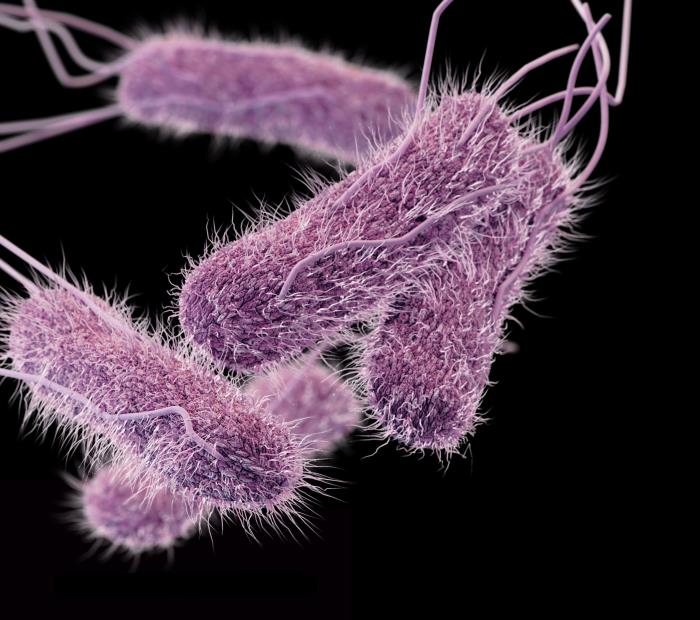
Research – Foodborne and Waterborne Pathogenic Bacteria in Selected Organisation for Economic Cooperation and Development (OECD) Countries

Wiley Online

The World Ranking Food Safety Performance reports by Charlebois in 2008 and 2010 importantly stimulated international discussion and encouraged efforts to establish realistic international benchmarks for food safety performance among Organisation for Economic Cooperation and Development (OECD) countries. This paper presents the international incidence of 5 common foodborne pathogens and describes the challenges of comparing international data. Data were compiled from surveillance authorities in the countries, such as the Natl. Notifiable Diseases Surveillance System of Australia; the Canadian Notifiable Diseases Surveillance System; the European Food Safety Authority, EFSA; the Ministry of Health, Labour and Welfare of Japan; New Zealand Food Safety Authority; and the U.S. Center for Disease Control and Prevention. The highest average rates in cases per 100000 people over the 12-y period from 2000 to 2011 for Campylobacter spp. (237.47), Salmonella spp. (67.08), Yersinia spp. (12.09), Verotoxigenic/Shiga toxin producing Escherichia coli (3.38), and Listeria monocytogenes (1.06) corresponded, in order, to New Zealand, Belgium, Finland, Canada, and Denmark. Comparatively, annual average rates for these 5 pathogens showed an increase over the 12-y period in 28%, 17%, 14%, 50%, and 6% of the countries for which data were available. Salmonella spp. showed a decrease in 56% of the countries, while incidence of L. monocytogenes was constant in most countries (94%). Variable protocols for monitoring incidence of pathogens among OECD countries remain. Nevertheless, there is evidence of sufficient standardization of monitoring protocols such as the European Surveillance System, which has contributed to reduce this gap.

USA – USDA -Recall Beef Trimmings – E.coli O157:H7

USDA

Caviness Beef Packers, a Hereford, Texas establishment, is recalling approximately 23,100 pounds of Beef Trimmings products that may be contaminated with E. coli O157:H7, the U.S. Department of Agriculture’s Food Safety and Inspection Service (FSIS) announced today.

The Beef Trimmings products were produced on August 14, 2014 and August 20, 2014. The following products are subject to recall:

  • Combo bins containing “Beef Trimmings, BNLS, 90 L”
  • Combo bins containing “Beef Trimmings, BNLS, 84 L”

The products subject to recall bear the establishment number “EST. 675” inside the USDA mark of inspection. These products were sent to establishments for further processing and will likely not bear the establishment number “EST. 675” on products available for direct consumer purchase. These products were shipped to fast food restaurants and retail distribution locations in Texas.

The problem was discovered during a food safety assessment. The products subject to recall are lots that tested negative, however were produced consecutive to the positive lots and were subsequently processed into raw ground products and distributed to retailers.


USA – Food Outbreak in April Report – Chicken Marsala – Clostridium perfringens

Food Poisoning Bulletin closta

Chicken marsala tainted with C. perfringens was the likely source of a food poisoning outbreak that sickened 216 people who attended the April Food Safety Summit in Baltimore, Maryland health officials have concluded. C. perfringens is a common source of food poisoning, sickening an estimated 1 million Americans each year, according to the Centers for Disease Control and Prevention (CDC). Outbreaks often happen at schools, banquet centers and catered events.

More than half of those who were sickened developed symptoms, which include diarrhea and abdominal cramps, within 16 hours of of exposure. For most of them, illness lasted about 28 hours, which is typical for C. perfringens poisoning.

USA – Campylobacter Outbreak – Listeria monocytogenes – Pre Cooked Chicken

Campylobacter Blog

Wisconsin state and Pepin county health officials are investigating an outbreak of Campylobacter infections in the Durand School District in Pepin County, Wisconsin. Eight people had reportedly been hospitalized with gastrointestinal illness, and dozens more were ill, including members of the high school’s football team and several coaches and managers.

Listeria Blog

Foster Farms, a Farmerville, La., establishment, is recalling approximately 39,747 pounds of frozen pre-cooked chicken products due to possible contamination with Listeria monocytogenes, the U.S. Department of Agriculture’s Food Safety and Inspection Service (FSIS) announced today.

The frozen Chicken Breast Grilled Strips product was produced on August 5, 2014, and then shipped to retail warehouse locations in California, Texas, Utah, and Washington state


Canada – CFIA – Cacciatore Sausage – Salmonella

CFIASalmonellaa

Marini Foods Limited is voluntarily recalling REA brand Sweet Cacciatore Sausages and Bona brand Sweet Cacciatore Sausages – Lot 4237.233 from the marketplace due to possible Salmonella contamination. Consumers should not consume the recalled products described in the link above.

USA – FDA -Listeria monocytogenes – VP Smoked Steelhead Salmon

FDA

Gold Star Smoked Fish Corp., located at 570 Smith Street, Brooklyn, NY 11231, is recalling Cold Smoked Steelhead in Vacuum Pack with blue and gold label due to contamination or possible contamination with Listeria monocytogenes.

The recall was initiated after sampling by New York State Department of Agriculture and Markets Food Inspectors and subsequent analysis of the product by Food Laboratory personnel revealed the presence of Listeria monocytogenes in a sample of the product being recalled. Gold Star Smoked Fish Corp. is recalling the product as a precaution.

No illnesses have been reported to date in connection with this problem. Consumers who purchased Cold Smoked Steelhead in Vacuum Pack should not consume it and should return it to the place of purchase. Consumers with any questions may contact the company directly at 718-522-5480.

Research – Fast Facts About Cutting Boards and Food Safety in Your Kitchen

Medical Express Beef

Anything that touches your food can be a source of contamination and foodborne illness – including cutting boards.

For example, if you cut up a raw chicken, and then use the same cutting board to slice a tomato for your salad, you run the risk of cross-contamination – with bacteria from the chicken being transferred to the tomato. That, of course, would be bad.

And vegetarians aren’t off the hook either. Fruits and vegetables can also carry pathogens (and transfer them to cutting boards).

To reduce the risk of in your kitchen, here are some things you should know about cutting boards.

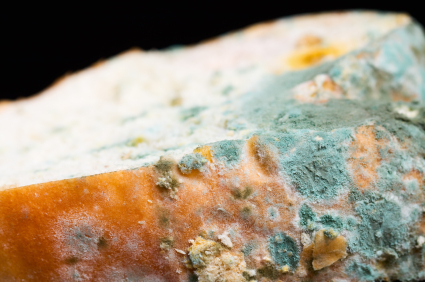
Research – Mycotoxins – A Mycotoxin Present in Many Foods Affect the Regeneration of Neurons

ruvid Moldy Bread

Biomedical Sciences, University CEU Cardenal Herrera, in collaboration with the University of Valencia have confirmed by experiments in vitro and in vivo in experimental animals the potential negative effect for Neuroregeneration a mycotoxin Ochratoxin A, present in many foods, especially cereals and their derivatives. La investigación ha permitido demostrar que la Ocratoxina A afecta a la formación de nuevas neuronas en el cerebro, proceso conocido como neurogénesis, concretamente en la mayor zona neurogénica del cerebro adulto: la zona subventricular. Research has demonstrated that OTA affects the formation of new neurons in the brain, a process known as neurogenesis, particular in larger area neurogenic adult brain: the subventricular zone.

Europe – EFSA Report on the Recent Salmonella Outbreak

EFSA efsa

The recently detected 38 cases of monophasic Salmonella Typhimurium with MLVA profile 3-12-17-NA-211 and 3-12-18-NA-211 occurring in six Member States are likely to be part of the same cluster. Given the typing delay and the fact that not all countries are performing MLVA typing, the number of cases currently detected is most likely to be underestimated. These two profiles emerged simultaneously in several Member States in June and July 2014, indicating a simultaneous exposure to the clonal strain at several locations within the EU. Based on limited available information from food investigations, meats are the suspected vehicle of human infection at present. It is important to interview new cases to identify a common exposure and to report all new cases with matching MLVA typing results through the TESSy molecular surveillance service and EPIS FWD in order to assess the evolution of the cluster. There is a need to gather information on the findings of these MLVA profiles in feed, animals, and foods (of animal origin and non-animal origin) in order to narrow the hypothesis for further epidemiological studies. This cluster highlights the need to ensure a rapid exchange of information between the public health and food safety health authorities in order to assess the situation and the need for further epidemiological studies as quickly as possible.