
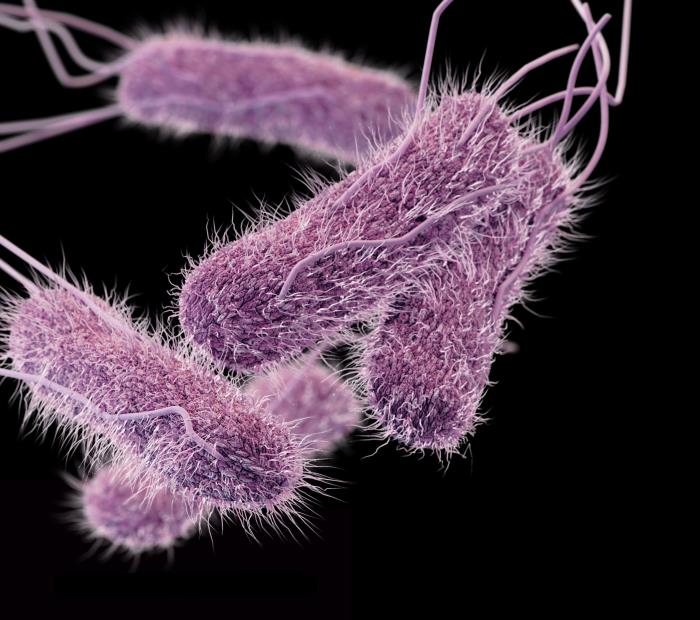
Salmonella has long been recognised as an important food-borne zoonotic pathogen of economic significance in animals and in humans. The main reservoir of Salmonella is the intestinal tract of a wide range of domestic and wild animals, which may result in contamination of a variety of foodstuffs of both animal and plant origin. This risk has been taken seriously by food business operators (FBO) and policy makers in the European Union (EU). The incremental implementation of an integrated legislative approach to monitor and control Salmonella along the food chain, from primary production to consumption, over the last ten years has thus brought about important progress, however, challenges remain as a paper by Kinross et al. about an ongoing EU-wide outbreak of S. Stanley in this issue demonstrates [1].
Animal and human surveillance of food-borne diseases in the European Union
In the EU, surveillance of food-borne salmonellosis in humans is mandatory [2, 3]. Food-borne outbreaks need to be thoroughly epidemiologically investigated [4]. Zoonoses and zoonotic agents, including Salmonella, are consistently monitored in food-producing animals and food thereof in EU countries [4]. Data on humans, animals and food are compiled and analysed jointly by the European Food Safety Agency (EFSA) and the European Centre for Disease Prevention and Control (ECDC) and presented annually in the EU Summary Report on trends and sources of zoonoses, zoonotic agents and foodborne outbreaks.

 FoodWorld